About Class 10 Economics Notes: Development
Understanding development is the first step in grasping the concepts of Class 10 Economics. The chapter on Development introduces students to the idea that progress is not measured only by income but also by quality of life, access to resources, and opportunities. It explains how different people may have different developmental goals, depending on their needs and priorities. For example, a farmer may want better irrigation facilities, while a student may look for better education.
The chapter highlights the importance of per capita income as one of the key indicators of development. However, it also stresses that this alone is not enough to judge the progress of a country. Other factors such as literacy rate, life expectancy, gender equality, health care, and employment opportunities play a major role. The chapter introduces the concept of the Human Development Index (HDI), which compares countries based on life expectancy, educational level, and per capita income. Students also learn about the sustainability of development. Development today should not compromise the needs of future generations. Overuse of resources, pollution, and environmental damage can harm sustainable progress. Hence, the balance between economic growth and environmental protection is a key idea covered in this class 10 notes economics chapter. These class 10 notes will help students to prepare effectively for CBSE Class 10 exams by providing clear explanations of important terms such as average income, public facilities, and sustainable development. Understanding these concepts builds a strong foundation for higher studies in economics and social science.
Introduction
- Development is a complex issue as development means different things to different people.
- Development is a comprehensive term which involves development of political, social and economic life of the people.
- To understand development it is also important to understand our past as the way we live today is influenced by the past.
- We can achieve the goal of development through the democratic political process.
- Development means all round changes for betterment.
Do Check - Money and Credit
Development – Different People, Different Goals
Different persons have different notions because each of them seeks different things. They seek things that are most important for them, i.e., which can fulfill their aspirations or desires. Different people have different goals because they are different and they are leading their life in different situation but their general goal is progress.
There are two things
- Different persons can have different development goals.
- What may be development for one may not be development for other. It may even be distruction for other.
Traditional Notion Of Development:
- With the independence of the third world countries there arose a need for economic development. Till 1960s, the term economic development was generally used as a synonym of economic growth. But now it is no longer considered identical with economic growth.
- Definitely notion about the meaning of term development is changing but it is also a hard fact that there is no unanimity among economists with regard to the meaning on definition of economic development.
- However all agree that economic development is more than the economic growth. Hence it is taken to mean growth plus progressive changes in certain variables of material welfare.
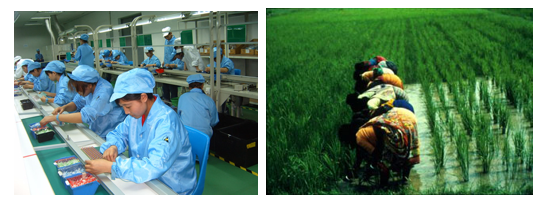
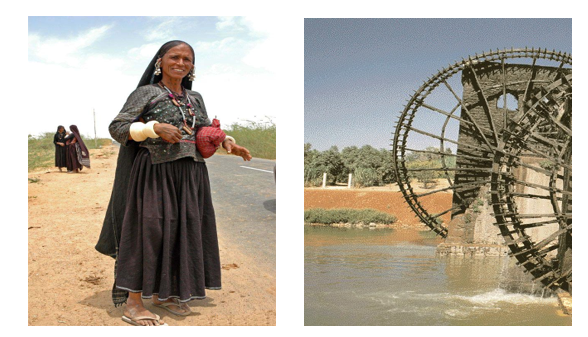
Changes in The Traditional Notion of Development:
- The increase in income is not sufficient for a nation. Income can be a major base of economic growth of a nation. But experiences had shown that economic growth could not automatically translated into the improvement of levels of living of the poor masses. Therefore, economists redefined the concept of economic development in terms of the reduction of poverty, unemployment and inequality in the context of a growing economy.
- Now-a-days redistribution and growth have become the popular slogan in most of the progressive nations, including India. The concept of economic growth is related to the increase in output of goods and services in an economy. This can be expressed in two ways: (i) increase in total output or increase in gross domestic product (GDP): and (ii) rise in per capita income or rise in per capita GDP.
- Economic development is a broader concept than economic growth. Development concerns not only man's material needs but also the improvement of social conditions of life. 1t is, therefore, not only economic growth but growth plus change in social, cultural and institutional pattern. It includes both growth aspect and distribution aspect. Development must, therefore, be conceived of as a multidimensional concept.
Do Check - Sectors of the Indian Economy
Income and Other Goals
- Sustained increases in income through wages, decent price for the crops are few primary goal of development.
- Money, or material things that one, can buy with it, is one factor on which our life depends.
- But the quality of our life also depends on non-material things mentioned above.
- If it is not obvious to you, then just think of the role of your friends in your life. You may desire their friendship.
- Similarly, there are many things that are not easily measured but they mean a lot to our lives.
- Apart from income people requires freedom, security and respect in the society which are non-material goods.
- There are many things that are not easily measured but they mean a lot for our lives.
- Sometimes people prefer regular and steady income, rather than fluctuating income
- Thus we can conclude that people look at mix of goals, for development. Goals are not only about income
How to Compare Development in Different Countries or States?
For comparing countries, their income is considered to be one of the most important attributes. Countries with higher income are more developed than others with less income. To find the income of a country we have to find out the National Income of that country and its per capita income.
- National Income:
National Income is defined as the total value of all the goods and services produced within a country plus income coming from abroad.
- Per Capita Income:
When the total national income is divided by the total population it gives us the Per Capita Income. In World Development Report 2006, brought out by the World Bank, this criterion is used in classifying countries. Countries with per capita income of Rs. 453000 per annum and above in 2004, are called rich countries and those with per capita income of Rs 37000 or less are called low – income countries. India comes in the category of low income countries because its per capita income in 2004 was just Rs 28000 per annum
Do Check - Globalisation and Indian Economy
"While Averages Are Useful For Comparison, They Also Hide Disparities":
Let us consider two countries, A and B. For the sake of simplicity, we have assumed that they have only five citizens each.
Comparison Of Two Countries
|
Country |
Monthly incomes of citizens in 2007 (in rupees) |
|||||
|
I |
II |
III |
IV |
V |
Average |
|
|
Country A |
9500 |
10500 |
9800 |
10000 |
10200 |
50,000 |
|
Country B |
500 |
500 |
500 |
500 |
48000 |
50,000 |
Will you be equally happy to live in both these countries? Are both equally developed? Perhaps some of us may like to live in country B if we are assured of being its fifth citizen but if it is a lottery that decides our citizenship number then perhaps most of us will prefer to live in country A. Even though both the countries have identical average income, country A is preferred because it has more equitable distribution. In this country people are neither very rich nor extremely poor. On the other hand most citizens in country B are poor and one person is extremely rich. Hence, while average income is useful for comparison it does not tell us how this income is distributed among people.
Income and Other Criteria
- Apart from income people require basic services like health and education facilities.
- High income alone cannot guarantee these basic services. These services are to be provided by the government then only Human development is possible.
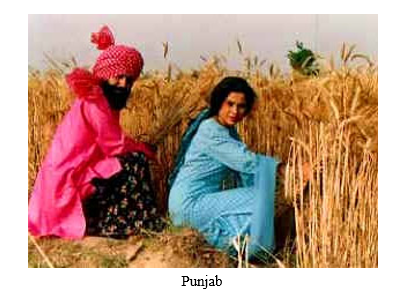
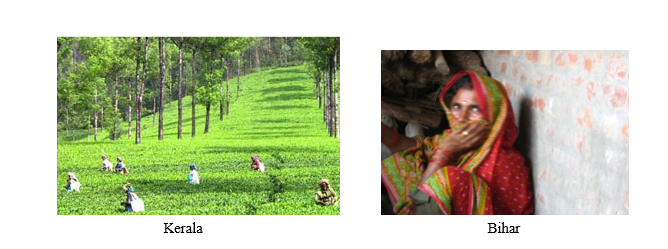
- For example Punjab has a highest per capita income out of three states Kerala is at the bottom has very low (11) infant mortality rate as compared to Punjab (49).
- In Kerala literacy rate is 91% which is only 70% in Punjab.
Some Comparative Data On Punjab, Kerala And Bihar:
|
State |
Infant Mortality Rate per 1,000 (2003) |
Literacy Rate (%) (2001) |
Net Attendance Ratio for Class I-V (1995-96) |
|
Punjab Kerala Bihar |
49 11 60 |
70 91 47 |
81 91 41 |
Explanation of some of the terms used in this table:
- Infant Mortality Rate (or IMR) indicates the number of children that die before the age years as a proportion of 1000 live children born in that particular year.
- Literacy Rate measure the proportion of literate population in the 7 and above age group
- Net Attendance Ratio is the total number of children of age group 6-10 attending school as a percentage of total number of children in the same age group.
Must check - Consumer Rights
Human Development Report
Today human development is the core of United Nations Development Programme (UNDP), which presents it into a new perspective of political and economic freedom and deepening of democracy at global level, which is economically productive and socially and environmentally sound. The United Nations Development Programme (UNDP), in its first Human Development Report, 1990 introduces the concept of Human Development Index (HDl). The HDI is the cumulative measurement of the (a) Longevity, (B) Knowledge, and (C) Decent standard of living.
Longevity is a choice to live a long and healthy life. It is measured in terms of life expectancy (years). Knowledge is a choice to acquire literacy/ information. It is measured by educational attainment percentage, which is a combined gross enrolment ratio in primary, secondary and tertiary levels.
Decent Standard of living is a choice to enjoy a quality and standard life. It is measured by national income or income per capita in Purchasing Power Parity in US dollar (PPP, US $).
The rank of, a country is determined by the overall achievements in these three basic dimensions of human development. HD ranks countries in relation to each other to tell them how far a country has traveled, and how far it has yet to travel the path of development. In this way HDI is indicative to the levels of human development and not the complete measurement of development.
Some Data Regarding India And Its Neighbours For 2004:
|
Country |
Per Capita income in US$ |
Life expectancy at birth |
Literacy rate for 15+ yrs population |
Gross enrolment ration for three levels |
HDI rank in the world |
|
Sri lanka India Myanmar Pakistan Nepal Bangladesh |
4390 3139 1027 2225 1490 1870 |
74 64 61 63 62 63 |
91 61 90 50 50 41 |
69 60 48 35 61 53 |
93 126 130 134 138 137 |
Notes:
- HDI stands for human development index. HDI ranks in above table are out 177 countries in all.
- Life expectancy at birth denotes, as the name suggests. Average expected length of life of a person at the time of birth.
- Gross Enrolment Ratio for three levels means enrolment ration for primary school, secondary school and higher education beyond secondary school.
- Per Capita Income is calculated in dollars for all countries so that it can be compared. It is also done in a way so that every dollar would buy the same amount of goods and services in any country.
On the basis of HDI, 177 countries of the world have been classified into high, medium and low human development categories. India is placed into the group of medium human development countries with 126th rank.
- Life Expectancy in years = 64 years
- Combined gross enrolment ratio = 60
- GDP per capita US $ = 3139
Must check - NCERT Solutions for Class 10
Human Development and Economic Development:
- Economic development is a broader concept. It is economic growth plus something more than economic growth. The basic ideas in economic development are rise in productivity decline in unemployment, poverty and inequality from high levels. Economic development alone cannot promote human development. Human development is the process of both quantitative change and qualitative growth.
- The concept of human development was taken into a broader sense. It touches social, economic, political and cultural aspects of human life with special emphasis on reduction in poverty and minimizing gap between rich and poor. There should not be unemployment problem in the economy. The concept of human development touches all aspects of human life.
Sustainability of Development
- The concept of sustainability of development has gained momentum due to environmental concerns and the rate of resource depletion
- Ground water is an example of renewable resource but the rate at which we are using then it may not be replenished by rain water.
- Sustainability of development means that development should take place at the same time environment should be conserved from degradation.
- Sustainability of development also means that needs of the present generation should not be compromised and at the same time resource should be conserved for coming generation.
- Non renewable resources are those resources which will get exhausted after years of use. So we have to use them Judiciously.
- The consequences of environmental degradation do not respect national or state boundaries and is no longer region or nation specific.
- Sustainability of development is a new area of knowledge in which scientists, economists, Philosophers and other social scientists are working together.
- Few examples to suggest the need for sustainable development.
Crude Oil Reserves:
|
Region / country |
Reserve (Billion) |
No. of years it will last |
|
Middle east USA World |
89 4 137 |
93 10 43 |
Important Terms
- National Income: Total value of all goods and services produced within a country plus income coming from abroad.
- Per Capita Income (Average Income): It is obtained by dividing the national income by the population of the country,
Per Capita Income = National Income / Mid - Year Popluation
Other factors like equitable distribution of income should also be taken into consideration while comparing per capita income of different countries.
- Infant Mortality Rate (IMR): In a year, number of children that die before the age of one year per 1000 children born live.
- Gross Enrolment Ratio: It refers to enrolment ratio for primary schools, secondary schools and higher education beyond secondary schools.
- Economic Development: A sustained increase in real per capita income that promotes economic welfare by reducing poverty, unemployment and inequalities in distribution of income.
Do Check - CBSE Class 10 Syllabus
Class 10 Economics Notes – Chapter-Development Solved Questions
- Discuss the concept of Development.
Ans. Development is a comprehensive issue which includes sustained increase in countries per capita income, fulfillment of basic facilities of life like better education and availability of non-monetary services like clean environment.
- Define infant mortality-rate
Ans. Number of death before the age of one year per thousand of population.
- Define literary-rate
Ans. Percentage of adult population who can read and write with understating
- What do you a mean by basic services?
Ans. Basic services are provided by the government which includes Health facilities, education, sanitation, facilities and provisions like PDS (Public distribution system).
- “For development people look at mix goals” comment.
Ans. Yes, as development is a comprehensive issue.
Development requires highest income at the same time people needs social security, safety of jobs, education for children’s, a good neighbors etc
- How to compare different countries or states on development?
Ans. On the basis of per capita income: Countries with per capita income of Rs. 45,3000 per annum and above are called development or rich countries. Countries with per capita income of Rs. 37,000 or less are called low income countries.
- Difference between the criterions used by the World Bank and UNDP for measuring development
Ans. World Bank uses the criterion of per capita income to measure development
UNDP takes into account educational level, Health status and per capita income.
- Punjab has higher per capita income than Kerala but Kerala has a better human development index “why”.
Ans. It shows that money or higher income alone cannot bring development.
Kerala has a better human development ranking, as Kerala has adequate provision of basic health facilities. PDS system is working well in Kerala.
- What is the meaning of sustainability of Development?
Ans. It means that development should take place but without polluting the environment.
It also means that resources should be used to meet our present needs at the same time it should be conserved for the coming generations.
- Kerala, with lower per capita income has a better human development ranking than Punjab. Hence, per capita income is not a useful criterion at all and should not be used to compare states. Do you agree? Discuss.
Ans. Yes, I agree that money income or per capita income is not the only factor/criterion behind human development or human welfare. Factors like Infant Mortality Rate, Literacy Rate and Net Attendance Ratio is also very crucial for overall human development. In these factors Kerala is a better than Punjab.
(i) Infant Mortality Rate in Kerala was 11 as compared to 49 in Punjab (in the year 2003).
(ii) Literacy rate(%) was 91 in Kerala as compared to 70 in Punjab, (in the year 2001).
(iii) Net Attendance Ratio from class I to V was 91 in Kerala as compared to 81 in Punjab (in 1995-96)
- “The earth has enough resources to meet the needs of all but not enough to satisfy the greed of even one person”. How is this statement relevant to the discussion of development? Discuss.
Ans. This statement implies that human beings are overusing the natural resources of the earth in the name of development and industrial revolution. This has led to many environmental problems. Resources are being depleted.
- List a few examples of environmental degradation that you may have observed around you.
Ans. Air pollution, water contamination, soil erosion, deforestation and wildlife extinction.
- Development of a country can generally be determined by
(a) its per capita income
(b) its average literacy level
(c) health status of its people
(d) all the above
Ans. (d)
Do Check - Consumer Rights
- Which of the following neighbouring countries has better performance in terms of Human Development than India?
(a) Bangladesh
(b) Sri Lanka
(c) Nepal
(d) Pakistan
Ans. (b)
- Assume there are four families in a country. The average per capita income of these families is Rs.5000. If the income of three families is Rs.4000, Rs.7000 and Rs.3000 respectively, what is the income of the fourth family?
(a) 7,500
(b) Rs.3,000
(c) 2,000
(d) Rs.6,000
Ans. (d)
- Besides income people want for development
(a) Freedom
(b) Security
(c) Equal treatment
(d) All the above
Ans. (d)
- According to World Development Report 2004, low-income countries are those which have per capita income of
(a) $ 900 or less
(b) $ 1000 or less
(c) $ 825 or less
(d) $ 500 or less
Ans. (c)
- Kerala, with lower per capital income has a better human development ranking than Punjab. Hence, per capital income is not a useful criterion at all and should not be used to compare states. Do you agree? Discuss.
Ans. Per capital in a useful indicator but not the best indicator. To find the level of development we should also include other aspect which has to be provided collectively like health, education better sanitation facility etc.
- What is the main criterion used by the World Bank in classifying different countries? What are the limitations of this criterion, if any?
Ans. (i) It uses per capital income on the criterion for measuring development.
(ii) Its limitation is that it does not take into other factors that money can’t buy but are equally important for development.
- In what respects is the criterion used by the UNDP for measuring development different from the one used by the World Bank?
Ans. (i) UNDP uses the criterion of HDI which includes GDP; life expectancy and knowledge level.
(ii) This is a much broader holistic approach.
- Why do we use averages? Are there any limitations to their use? Illustrate with your own examples related to development.
Ans. (i) We use averages as it gives a better picture of development. Total income of a Nation do not tells us about whether the fruits of development are shared by all.
(ii) Yes these are limitation of average income also. It does not tell us how the national income is actually distributed between people.
- Why is the issue of sustainability important for development?
Ans. (i) The issue of sustainability is important as it will lead to conservation of environment.
(ii) It is also important that resources are conserved for coming generation.
(iii) It is important as our life is dependent on the resources.
(iv) Their depletion is going to affect our very survival.
Class 10 Economics Notes - Development Exercise 1
- The number of children that die before the age of one year in 1000 births
(a) Birth Rate
(b) Death Rate
(c) Growth Rate
(d) Infant Mortality Rate
- Total number of children of age group 6-10 attending school as a percentage of total number of children in the same age-group.
(a) Attendance
(b) Enrolment Ratio
(c) Net Attendance Ratio
(d) None of the above
- Average expected length of life of a person at the time of birth
(a) Total life
(b) Overall age
(c) Average age
(d) Life expectancy at Birth
- National income of a country divided by its total population
(a) Gross Domestic Product
(b) Per Capita Income
(c) Net Domestic product
(d) Depreciation
- Country which possesses the characteristics of a modern technology
(a) Developed country
(b) Underdeveloped country
(c) Developing country
(d) none of the above
- Countries whose per capita income is more than __________ are considered as part of high income group
(a) Rs. 435000
(b) Rs. 453000
(c) Rs. 345000
(d) Rs. 543000
- Development of a person according to his fuller capacity
(a) Economic development
(b) Social development
(c) Human development
(d) National development
- India's per capita income according to the year 2004 was
(a) Rs.2800 annually
(b) Rs. 28000 annually
(c) Rs. 25000 annually
(d) Rs 27500annually
- Countries having per capita income less than $825 per annum are considered as
(a) Developed countries
(b) Developing countries
(c) European countries
(d) American countries
- Which of the following neighboring countries has better performance in terms of human development than India?
(a) Bangladesh
(b) Sri Lanka
(c) Nepal
(d) Pakistan
- Which organization publishes the HDI
(a) UNO
(b) WHO
(c) World bank
(d) UNDP
- In India which organization collects information on average income:
(a) Ministry of Agriculture
(b) Finance minister
(c) NSSO
(d) COM
- Amongst the following states which has lowest IMR
(a) Bihar
(b) Kerala
(c) Punjab
(d) Orissa
- In which state PDS is functioning efficiently
(a) Kerala
(b) Punjab
(c) Haryana
(d) Bihar
- Which organization is using per capital income as a criterion for development
(a) UNDP
(b) WHO
(c) World Bank
(d) RBI
- Which group will be adversely affected by the construction of dams
(a) Industrialist
(b) Tribals
(c) Farmers
(d) All the above
ANSWERS TO EXERCISE - 1
- (d)
- (c)
- (d)
- (b)
- (a)
- (b)
- (c)
- (b)
- (b)
- (b)
- (d)
- (c)
- (b)
- (a)
- (c)
- (b)
Class 10 Economics Notes - Development Exercise 2
- What is per capita income?
- What is human development?
- According to the World Bank rating, which countries were regarded as rich or developed?
- Why is Kerala regarded as more developed than Punjab?
- Besides size of per capita income, what other property of income is important in comparing two or more societies?
- Suppose records show that the average income in a country has been increasing over a period. From this, can we conclude that all sections of the economy have become better? Illustrate your answer with an example.
- Define Infant Mortality Rate.
- Does availability of good health and educational facilities depends only on amount of money spent by the government on these facilities? What other factors could be relevant?
- Differentiate between human development and economic development.
- What lessons can you draw about the importance of income from the fact that Kerala, with lower per capita income has a better human development ranking than Punjab?
- What is the main criterion used by the World Bank in classifying different countries? What are the limitations of this criterion, if any?
- In what respect is the criterion used by the UNDP for measuring development different form the one used by the World Bank?
- Why do we use averages? Are there any limitations to their use? Illustrate with your own examples related to development.
- Do you think the increase in income alone is sufficient for a nation? If not, explain your idea with some facts.
- What is Human Development Index? How it is measured?
- Why is the issue of sustainability important for development? Explain its features.