Class 10 Geography Notes – Forest and Wildlife Resources
India is one of the richest countries in terms of biodiversity. Forests and wildlife are vital for ecological balance, economic development, and human survival. The chapter Forest and Wildlife Resources in Class 10 Geography explains the importance of conservation, types of forests, wildlife species, threats to biodiversity, and strategies for sustainable management.
Importance of Forests
Forests are natural renewable resources that perform ecological, economic, and social functions:
-
Ecological Functions: Maintain oxygen balance, regulate climate, prevent soil erosion, conserve water, and provide habitat to wildlife.
-
Economic Functions: Provide timber, wood, fuel, fruits, medicinal plants, and raw materials for industries.
-
Social Functions: Offer livelihood to tribal communities, provide cultural and spiritual value, and promote eco-tourism.
Important Terms and Definitions
- Biodiversity: Rich and varied plant and animal species that exist in a particular area.
- Ecosystem: Interrelationship between all the plants and animals in a given area.
- Vulnerable Species: Species which are rapidly declining and are likely to become endangered in the near future. Example: Blue sheep, Asiatic elephant.
- Endemic Species: Species which are confined to certain areas, isolated by natural or geographical barriers.
- Extinct Species: Species which are not found on the earth. Example: Asiatic cheetah, Pink head duck.
- Flora: Natural vegetation cover consisting of forests, grasslands and shrubs. Fauna: Animals found on the earth in natural environment.
- Reserved Forests: Forests meant for conservation of timber and other forest products.
- Protected Forests: Forest area which is protected from depletion.
- Unclassed Forests: Forests and wastelands that is common to government, private individuals and communities.
Importance of Forests for Human Beings
Economic Importance:
- It supports a variety of Industries.
- It provides livelihood for many communities.
Ecological Importance:
- Improve the quality of environment.
- Modify local climate, controls soil erosion.
- Regulate stream flow, provide fertility to the soil.
- Provide environmental stability and maintain ecological balance.
Important: Today, environmental stability and maintenance of ecological balance are more important than the direct economic benefit.
Flora and Fauna in India
India is one of the world's richest countries in terms of its vast array of biological diversity, and has nearly eight per cent of the total number of species in the world (estimated to be one point six million). This is possibly twice or thrice the number yet to be discovered. These diverse flora and fauna are under great stress mainly due to insensitivity to our environment.
Critical Status: At least ten percent of India's recorded wild flora and twenty per cent of its mammals are on the threatened list. Many of these would now be categorized as critical that is on the verge of extinction like the cheetah, pink-headed duck, mountain quail, forest spotted owlet, and plants like madhuca insignis (a wild variety of mahua) and hubbardia heptaneuron, (a specie of grass).
81,000+ Species of Fauna 47,000+ Species of Flora 15,000 Indigenous Flowering Plants ~10% Endangered Wild Flora ~20% Endangered Mammals
| Category | Number of Species |
| Fauna or Animal Life | More than 81,000 species |
| Flora or Plant Life | More than 47,000 species |
| Indigenous Flowering Plants | About 15,000 species |
| Endangered Wild Flora | About 10% |
| Endangered Mammals | About 20% |
Vanishing Forests
The dimensions of deforestation in India are staggering. The forest cover in the country is estimated at 637,293 sq km, which is 19.39 per cent of the total geographical area. 11.48% Dense Forest 7.76% Open Forest 0.15% Mangrove
Note: According to the State of Forest Report (1999), the dense forest cover has increased by 10,098 sq km since 1997. However, this apparent increase in the forest cover is due to plantation by different agencies. The State of Forest Report does not differentiate between natural forests and plantations. Therefore, these reports fail to deliver.
List of Critically Endangered Species:
- Cheetah
- Pink-headed Duck
- Mountain Quail
- Forest Spotted Owl
- Madhucha insignis (wild mahua)
- Hubbardia heptaneuron (a grass species)
Classification Based on the International Union for Conservation of Nature and Natural Resources (IUCN)
- Normal Species: Species whose population levels are considered to be normal for their survival, such as cattle, sal, pine, rodents, etc.
- Endangered Species: These are species which are in danger of extinction. The survival of such species is difficult if the negative factors that have led to a decline in their population continue to operate. The examples of such species are black buck, crocodile, Indian wild ass, Indian rhino, lion tailed macaque, sangai (brow anter deer in Manipur), etc.
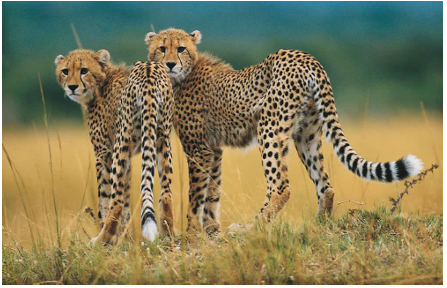
- Vulnerable Species: These are species whose population has declined to levels from where it is likely to move into the endangered category in the near future if the negative factors continue to operate. The examples of such species are blue sheep, Asiatic elephant, Gangetic dolphin, etc.
- Rare Species: Species with small population may move into the endangered or vulnerable category if the negative factors affecting them continue to operate. The examples of such species are the Himalayan brown bear, wild Asiatic buffalo, desert fox and hornbill, etc.
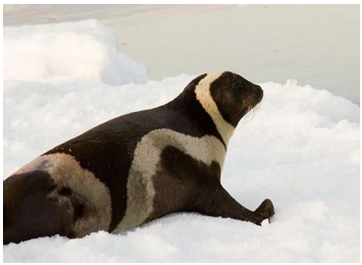
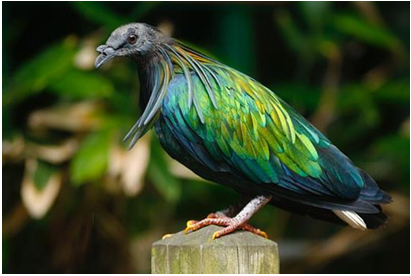
- Endemic Species: These are species which are only found in some particular areas usually isolated by natural or geographical barriers. Examples of such species are the Andaman teal, Nicobar pigeon, Andaman wild pig, mithun in Arunchal Pradesh.
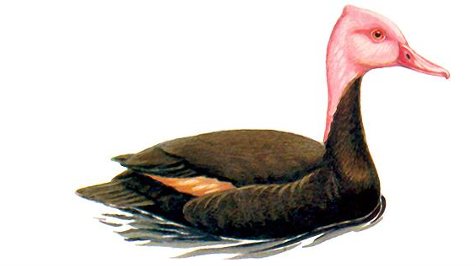
- Extinct Species: These are species which are not found after searches of known or likely areas where they may occur. A species may be extinct from a local area, region, country, continent or the entire earth. Examples of such species are the Asiatic cheetah, pink head duck.
Number of Endangered Species
- 79 species of mammals
- 44 species of birds
- 15 species of reptiles
- 3 species of amphibians
- 1,500 plant species
Forest Cover Statistics
- Total Forest cover: 637,293 sq km (19.39% of total geographical area)
- Dense forest: 11.48%
- Open forest: 7.76%
- Mangrove: 0.15%
Causes of Depletion of Flora and Fauna
- Agricultural Expansion: Between 1951 and 1980, according to the Forest Survey of India, over 26,200 sq. km. of forest area was converted into agricultural land all over India. Substantial parts of the tribal belts, especially in the northeastern and central India, have been deforested or degraded by shifting cultivation (jhum), a type of 'slash and burn' agriculture.
- Enrichment Plantation: Promotion of a few favoured species, in many parts of India, has been carried through the ironically-termed "enrichment plantation", in which a single commercially valuable species was extensively planted and other species eliminated.
- Development Projects: Large-scale development projects have also contributed significantly to the loss of forests. Since 1951, over 5,000 sq km of forest was cleared for river valley projects. Clearing of forests is still continuing with projects like the Narmada Sagar Project in Madhya Pradesh, which would inundate 40,000 hectares of forest.
- Mining: The Buxa Tiger Reserve in West Bengal is seriously threatened by the ongoing dolomite mining. It has disturbed the natural habitat of many species and blocked the migration route of several others, including the great Indian elephant.
- Unequal Access to Resources: The richest five per cent of Indian society probably cause more ecological damage because of the amount they consume than the poorest 25 per cent. The former shares minimum responsibilities for environmental well-being.
Social Effect of Resource Depletion
In many societies, women bear the major responsibility of collection of fuel, fodder, water and other basic subsistence needs. As these resources are depleted, the drudgery of women increases and sometimes they have to walk for more than 10 km to collect these resources. This causes serious health problems for women and negligence of home and children because of the increased hours of work, which often has serious social implications.
The indirect impact of degradation such as severe drought or deforestation-induced floods, etc. also hits the poor the hardest. Poverty in these cases is a direct outcome of environmental destruction.
The destruction of forests and wildlife is not just a biological issue. The biological loss is strongly correlated with the loss of cultural diversity. Such losses have increasingly marginalised and impoverished many indigenous and other forest-dependent communities, who directly depend on various components of the forest and wildlife for food, drink, medicine, culture, spirituality, etc.
Conservation of Forest and Wildlife in India
Conservation in the background of rapid decline in wildlife population and forestry has become essential. Conservation preserves the ecological diversity and our life support systems - water, air and soil. It also preserves the genetic diversity of plants and animals for better growth of species and breeding.
- Wildlife Protection Act- In the 1960s and 1970s, conservationists demanded a national wildlife protection programme. The Indian Wildlife (Protection) Act was implemented in 1972, with various provisions for protecting habitats. An all India list of protected species was also published.
- National Parks and Wildlife Sanctuaries- Central and many state governments have established national parks and wildlife sanctuaries and several projects for protecting specific animals, the tiger, the one-horned rhinoceros, the Kashmir stag, hangul, three types of crocodiles - fresh water crocodile, saltwater crocodile and the Gharial, the Asiatic lion, and others. Most recently the Indian elephant, black buck (chinkara), the great Indian bustard (godawan) and the snow leopard, etc. have been given full or partial legal protection against hunting and trade throughout India.
- Protection of Other Species- In the notification under Wildlife Act of 1980 and 1986, several hundred butterflies, moths, beetles, and one dragonfly have been added to the list of protected species. In 1991, for the first time plants were also added to the list, starting with six species.
- Project Tiger- "Project Tiger", one of the well-published wildlife campaigns in the world, was launched in 1973. There are 27 tiger reserves in India covering an area of 37,761 sq.km.
Types of Forests in India
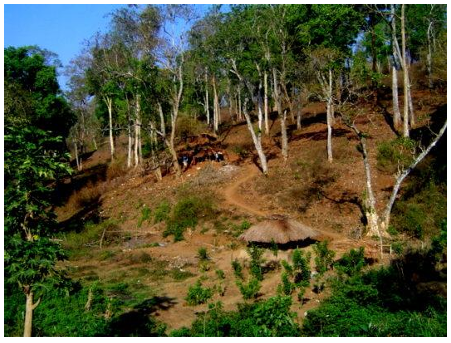
- Reserved Forests: Permanently earmarked either to production of timber or other forest produce, right of grazing and cultivation is seldom allowed, covers 54.4% of total forest area. More than half of the total forests are regarded as the most valuable, as far as the conservation of forest and wildlife resources are concerned.
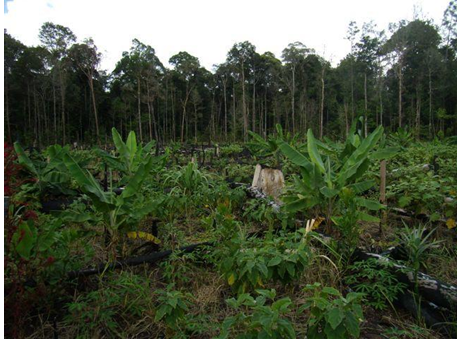
- Protected Forests: Right of grazing and cultivation is allowed, subject to a few minor restrictions, covers 29% of the total forest area, almost one third of the total forest area is protected forest as declared by the Forest Department. This forest land is protected from any further depletion.
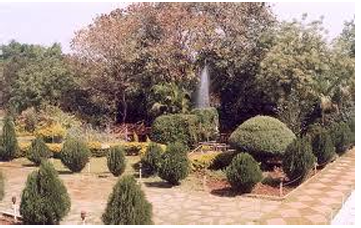
- Unclassed Forests: Consists largely of inaccessible forests or unoccupied wastes, covers 16% of the total forest area, forests and wastelands belonging to both government and private individuals and communities.
New Trends in Conservation Policy
Increase Biodiversity:
The conservation projects are now focusing on biodiversity rather than on a few of its components. There is now a more intensive search for different conservation measures. Increasingly, even insects are beginning to find a place in conservation planning. In the notification under Wildlife Act of 1980 and 1986, several hundred butterflies, moths, beetles, and one dragonfly have been added to the list of protected species. In 1991, for the first time plants were also added to the list, starting with six species.
Community and Conservation:
- In some areas of India, local communities are struggling to conserve these habitats along with government officials, recognising that only this will secure their own long-term livelihood.
- In Sariska Tiger Reserve, Rajasthan, villagers have fought against mining by citing the Wildlife Protection Act. In many areas, villagers themselves are protecting habitats and explicitly rejecting government involvement. The inhabitants of five villages in the Alwar district of Rajasthan have declared 1,200 hectares of forest as the Bhairodev Dakav 'Sonchuri', declaring their own set of rules and regulations which do not allow hunting, and are protecting the wildlife against any outside encroachments.
- Nature worship is an age old tribal belief based on the premise that all creations of nature have to be protected. Such beliefs have preserved several virgin forests in pristine form called Sacred Groves (the forests of God and Goddesses). These patches of forest or parts of large forests have been left untouched by the local people and any interference with them is banned. Certain societies reserve a particular tree which they have preserved from time immemorial.
- The Mundas and the Santhal of Chhota Nagpur region worship mahua (Bassia latifolia) and kadamba (Anthocaphalus cadamba) trees, and the tribals of Orissa and Bihar worship the tamarind (Tamarindus indica) and mango (Mangifera indica) trees during weddings. To many of us, peepal and banyan trees are considered sacred.
- Indian society comprises several cultures, each with its own set of traditional methods of conserving nature and its creations. Sacred qualities are often ascribed to springs, mountain peaks, plants and animals which are closely protected. You will find troops of macaques and langurs around many temples. They are fed daily and treated as a part of temple devotees. In and around Bishnoi villages in Rajasthan, herds of blackbuck, (chinkara), nilgai and peacocks can be seen as an integral part of the community and nobody harms them.
- The famous Chipko movement in the Himalayas has not only successfully resisted deforestation in several areas but has also shown that community afforestation with indigenous species can be enormously successful.
- Farmers and citizen's groups like the Beej Bachao Andolan in Tehri and Navdanya have shown that adequate levels of diversified crop production without the use of synthetic chemicals are possible and economically viable.
- In India joint forest management (JFM) programme furnishes a good example for involving local communities in the management and restoration of degraded forests. The programme has been in formal existence since 1988 when the state of Orissa passed the first resolution for joint forest management. JFM depends on the formation of local (village) institutions that undertake protection activities mostly on degraded forest land managed by the forest department. In return, the members of these communities are entitled to intermediary benefits like non-timber forest produces and share in the timber harvested by 'successful protection'.
- The clear lesson from the dynamics of both environmental destruction and reconstruction in India is that local communities everywhere have to be involved in some kind of natural resource management. But there is still a long way to go before local communities are at the centre-stage in decision-making. Accept only those economic or developmental activities, that are people centric, environment-friendly and economically rewarding.
Project Tiger
In 1973, the tiger population had dwindled to 1,827 from an estimated 55,000 at the turn of the century.
Threats for Tiger Population:
- Poaching for trade
- Shrinking habitat
- Depletion of prey base species
- Growing human population etc.
"Project Tiger", one of the well publicized wildlife campaigns in the world, was launched in 1973
Success Rate: Tiger Population:
| Year | Population |
|---|---|
| 1985 | 4,002 |
| 1989 | 4,334 |
| 1993 | 3,600 |
Important Tiger Reserves:
- Corbett national Park in Uttranchal
- Sunderbans National Park in West Bengal
- Bandhavgarh National Park in Madhya Pradesh
- Sariska Wildlife sanctuary in Rajasthan
- Manas Tiger reserve in Assam
- Periyar Tiger Reserve in Kerala
Joint Forest Management (JFM)
- In India joint forest management (JFM) programme furnishes a good example for involving local communities in the management and restoration of degraded forests.
- The programme has been in formal existence since 1988 when the state of Orissa passed the first resolution for joint forest management JFM depends on the formation of local (village) institutions that undertake protection activities mostly on degraded forest land managed by the forest department.
- In return, the members of these communities are entitled to intermediary benefits like non-timber forest produces and share in the timber harvested by 'successful protection'.
Solved Questions
Q1. There is need to conserve wildlife in India. Give two reasons.
Ans. There is a need to conserve wildlife in India due to
- The depletion of forests has endangered wildlife.
- In order to preserve natural habitat so that animals do not get extinct.
Q2. Mention any four states having more than sixty per cent of their area covered with forests.
Ans. Four states having more than 60% of their area covered with forests are Madhya Pradesh, Jammu and Kashmir, Uttaranchal and Kerala.
Q3. What are reserved forests? What is the percentage of total forest cover under this category?
Ans. Reserved forests are mainly meant for producing timber and their forest products. More than half of the total forest land has been declared reserved forests.
Q4. How does deforestation affect ecosystem? Give two examples.
Ans. Deforestation affects the ecosystem in the following ways:
- Increases soil erosion.
- It leads to disappearance of wildlife as wild variety of plants resulting in deterioration of genetic reserve.
Q5. Name any two north-eastern states of India having over 60 per cent of forest cover. Give two reasons.
Ans. The two north-eastern states having over 60 per cent of forest cover are Arunachal Pradesh and Meghalaya, Manipur, Mizoram. These states have high percentage of forest cover due to hilly terrain and high rainfall dense forests grow here.
Q6. How do forests check soil erosion? Give two examples.
Ans. Forest can check soil erosion by the following ways:
- Trees can help binding the soil.
- Trees can reduce the flow of running water thus reducing the soil erosion.
Q7. Name the species preserved by Bishnois of Rajasthan.
Ans. Bishnois of Rajasthan preserved the species of blackbuck, nilgai and peacocks.
Q8. What are endangered species? Give two examples.
Ans. Endangered species are those species which are on the verge of extinction, e.g., black buck, Indian rhino, wild ass, crocodile, etc.
Q9. List out the factors responsible for declining Tiger population in India.
Ans. Tiger population is declining rapidly due to
- Loss of habitat
- Poaching for trade
- Lack of prey animals.
Q10. When was 'Project Tiger' launched? List out the salient features of this project.
Ans.
- 'Project Tiger' was launched in 1973 for conservation of tiger population in India. It has contributed to increase in Tiger population substantially to 4002 in 1985 and 4334 in 1989.
- Under this project 27 tiger reserves have been set up in 14 states of India.
- This project has not only helped in preservation of endangered species but also conservation of biodiversity on a large scale.
Q11. What steps have been taken by the government towards conservation of wildlife? Give four points.
Ans. Following steps have been taken by the government for the conservation of wildlife:
- Wildlife Protection Act was enacted in 1972.
- Setting up of national parks, wildlife, sanctuaries, bird sanctuaries.
- Use of animal products (Pashmina Shawl) and hunting of animals is banned by law.
- Special programmes like 'Project Tiger', 'Project Rhino' have been taken up to conserve these species.
Q12. Explain the term Biodiversity and also explain its importance for us with suitable examples.
Ans.
- Biodiversity or Biological Diversity is immensely rich in plant and animal species which are diverse in form and function but closely integrated in a given environment or habitat through multiple network of interferences.
- Importance of Biodiversity for us:
- (a) We humans are part and parcel of biodiversity and very much dependent on this system for our existence.
- (b) Plants, animals and micro-organisms re-create the quality of air we breathe, the water we drink and the soil that produces food for our survival.
Q13. Name the three categories of Indian forests classified for the purpose of administration and state the main characteristic of each of them.
Ans.
(a) Three categories of Indian forests are:
- Reserved Forests
- Protected Forests
- Un-classed Forests
(b) Characteristics:
(i) Reserved Forests: (i) More than half of the total forest land has been declared as reserved forest; (ii) These are most valuable for the production of timber and other forest products, (iii) They also called permanent forest estates maintained for the protection of forest and wildlife; (iv) Madhya Pradesh has the largest area under permanent forest.
(ii) Protected Forests: (i) Almost one-third of the total forest area is protected forests; (ii) They are protected from any further depletion; (iii) Bihar, Haryana, Punjab, Himachal Pradesh, Orissa and Rajasthan have a bulk of its forest area under protected forest.
(iii) Un-classed Forests: (i) These are the forests of wastelands and inaccessible areas; (ii) They belong to both government and individuals and communities; (iii) Very high percentage of these forests is found in north-eastern states and in Gujarat.
Q14. Describe the main characteristics of each of the following: (i) Chipko Movement; (ii) Beej Bachao Andolan and Navdanya and (iii) Joint forest Management.
Ans.
- Chipko Movement: It has successfully resisted deforestation in several areas of the Himalayas.
- Beej Bachao Andolan and Navdanya are ecological farming methods in which different crops are produced without the use of synthetic chemicals.
- Joint Forest Management (JFM): (i) It is a joint effort of both Government and local bodies of the villagers to undertake protection activities on degraded forestland. (ii) Villagers in return get non-timber forest produces and share in the timber harvested.
Q15. State the main objective behind the protection and development of forest wealth in India. Mention the steps that can be taken to conserve forests.
Ans. The main objective behind the protection and development of forest wealth in India are:
- Over utilization of forests would result in depletion of forests.
- Deforestation would increase soil erosion and reduce the subsoil water.
- This may lead to serious deterioration of genetic reserve.
For protection, conservation and development of forest in the country, the National Forest policy holds the following objectives:
- Conserve natural heritage.
- Check soil erosion.
- Check on extension of sand dunes.
- Increase the productivity of forests.
- Encourage efficient use of forest produce.
- Create massive movement with involvement of women to achieve the objectives and minimize pressure on existing forests, e.g., Chipko Movement, Narmada Bachao Andolan.
Q16. Explain the contribution of forests in the economic development of our country giving any six points.
Ans. Forests are renewable resources and contribute greatly to our economic development. They perform various types of functions:
(a) Productive
(b) Protective
Productive functions are:
- Provide livelihood for forest communities.
- Provide wood, timber, wood pulp, fuel wood and fodder for the animals.
Protection functions are:
- Enhances the quality of the environment.
- Modify the local climate.
- Control soil erosion.
- Provide habitat for wildlife.
- Adds humus and makes the soil fertile.
Q17. Explain any four factors which are responsible for the depletion of forests and wildlife in India.
Ans. Factors which are responsible for the depletion of forests and wildlife in India are as follows:
- Obtaining large variety of products such as wood, rubber, medicines, dyes, food, fuel, fodder etc.
- Expansion of railways, agriculture, commercial and scientific forestry and mining activities during the colonial period.
- Large areas of north-eastern and central Indian have been deforested by shifting cultivation, a type of 'slash and burn' agriculture.
- Development projects are also the cause for the loss of forest. About 5000 sq. km of forest were cleared for river valley projects since 1951.
- Mining is also an important factor behind deforestation. Deforestation has seriously disturbed the natural habitat of wildlife.
Q18. Match the following animals with their category of existence.
| Animals/Plants | Category of existence |
|---|---|
| 1. Black buck | (a) Extinct |
| 2. Asiatic elephant | (b) Rare |
| 3. Andaman wild pig | (c) Endangered |
| 4. Himalayan brown bear | (d) Vulnerable |
| 5. Pink head duck | (e) Endemic |
Ans. 1. (c), 2. (d), 3. (e), 4. (b), 5. (a)
Q19. Match the following.
| Forest Type | Description |
|---|---|
| 1. Reserved forests | (a) other forests and wastelands belonging to both government and private individuals and communities |
| 2. Protected forests | (b) are regarded as most valuable as far as the conservation of forest and wildlife resources |
| 3. Unclassed forests | (c) lands are protected from any further depletion |
Ans. 1. (b), 2. (c), 3. (a)
Q20. Answer the following questions in about 30 words.
(i) What is biodiversity? Why is biodiversity important for human lives?
(ii) How have human activities affected the depletion of flora and fauna? Explain.
Ans.
- Bio-diversity is the term which includes flora and fauna in great diversity but closely integrated in an ecological system through a network of interdependencies.
- There is regularity in the depletion of flora and fauna in a given area. Among the causes, human activities have become one of the important causes as population growing, their demand for land resources has also increased thus deforestation and hunting of wild life for commercial purpose has also multiplied. Many developmental projects have also eaten up forest land thus bringing a natural death to wildlife.
Q21. Answer the following questions in about 120 words.
(i) Describe how communities have conserved and protected forests and wildlife in India?
(ii) Write a note on good practices towards conserving forest and wildlife.
Ans.
(i) India is a multicultural and multi-religious society where protection of forest and wildlife is a part of their daily life. There are communities such as:
- (a) Bishnoi of Rajasthan protecting traditional blackbuck, Nilgai and Peacock.
- (b) The Mundas and the Santhal of Chhota Nagpur region worship Mahua Tree and Kadamba.
- (c) Tribals of Orissa and Bihar worship the Tamarind.
- (d) People of Rajasthan around Sariska Tiger Reserves have fought against mining to protect this National Park.
- (e) Chipko Movement of Uttaranchal state to protect forest as forests are the base of hilly people.
(ii) In the conservation of forests and wildlife many good practices have been evolved over the years which are social-cultural on one hand and legal on the other hand:
- Worshipping of many Sacred Trees
- Worshipping of many sacred animals to see their ecological importance
- Use of flora and fauna in religious rites. Such as wedding day or birth of a child.
- Making of National Parks, Wildlife Sanctuary and Bio-Reserves to protect endanger species of animal and plant.
- Marking of Law/Act to declare killing of animals and cutting of trees is banned and a punishable act.
- Involving mass-media and newspaper to highlight problem of environmental degradation.
- Making of school children aware of the conservation of flora and fauna.
Exercise – 1 (Multiple Choice Questions)
Q1. Which of these statements is not a valid reason for the depletion of flora and fauna?
(a) Agricultural expansion
(b) Large scale developmental projects
(c) Grazing and fuel wood collection
(d) Rapid industrialization and urbanization
Q2. Which of the following conservation strategies community participation?
(a) Joint forest management
(b) Chipko Movement
(c) Beej Bachao Andolan
(d) Demarcation of Wildlife sanctuaries
Q3. JFM first started in which state
(a) Assam
(b) Orissa
(c) Madhya Pradesh
(d) Jammu and Kashmir
Q4. Which of the following animal is endemic species?
(a) Desert fox
(b) Gangetic dolphin
(c) Nicobar pigeon
(d) Asiatic cheetah
Q5. Which of the following is a rare species?
(a) Desert fox
(b) Gangetic dolphin
(c) Nicobar pigeon
(d) blue sheep
Q6. Which of the following animal is a extinct species?
(a) Desert fox
(b) Gangetic dolphin
(c) Andaman teal
(d) Asiatic cheetah
Q7. How many species are found in our country?
(a) 81,000 and 47,000
(b) 18,000 and 47,000
(c) 86,000 and 49,000
(d) 78,000 and 54,000
Q8. What is the percentage of reserved forests of the total forest area?
(a) 54.4%
(b) 64.4%
(c) 44.4%
(d) 50%
Q9. The percentage of protected forests of total forests area.
(a) 32%
(b) 30%
(c) 29.2%
(d) 28.2%
Q10. The percentage of dense forest area
(a) 59%
(b) 62%
(c) 55%
(d) 50%
Q11. The percentage of open forest area
(a) 45%
(b) 35%
(c) 38%
(d) 40%
Q12. The percentage of mangrove forest is
(a) less than 1 %
(b) less than 3%
(c) less than 2%
(d) less than 4%
Q13. How much forest area was converted into agricultural land between 1951 and 1980?
(a) 62,000 sq. km.
(b) 26,000 sq. km.
(c) 26,200 sq. km.
(d) 62,200 sq. km.
Q14. In which year the Indian Wildlife (Protection) Act was implemented?
(a) 1972
(b) 1962
(c) 1982
(d) 1992
Q15. In which Tiger Reserve, villagers have fought against mining by citing the Wildlife Protection Act?
(a) Ranthambore
(b) Manas
(c) Sariska
(d) Corbett
Answers
1. (c) | 2. (d) | 3. (b) | 4. (c) | 5. (a) | 6. (d) | 7. (a) | 8. (a) | 9. (c) | 10. (a) | 11. (d) | 12. (a) | 13. (c) | 14. (a) | 15. (c)
Important Topics to Focus
- IUCN classification of species (with examples)
- Types of forests in India (Reserved, Protected, Unclassed)
- Causes of depletion of flora and fauna
- Conservation measures (Legal and Community-based)
- Project Tiger details
- Joint Forest Management (JFM)
- Social effects of resource depletion
- Cultural conservation practices
Common Mistakes to Avoid
- Don't confuse endangered with extinct species
- Don't mix up endemic with rare species
- Remember exact percentages for forest types
- Don't forget to mention year for important acts/projects
- Always give examples when asked
- Don't write only definitions - explain the significance