Class 10 Geography Notes – Resources and Development
Resources are the foundation of human survival and economic growth. In Class 10 Geography, the chapter on Resources and Development highlights the meaning, classification, distribution, sustainable use, and conservation of resources. Understanding resources is important because they directly affect agriculture, industries, infrastructure, and the overall development of a nation. These notes simplify the chapter with clear explanations for quick learning and exam preparation.
Resources: Objects or things in the environment that fulfills the basic needs of man. These are technologically accessible, economically feasible and culturally acceptable.
Natural Resources: Resources which are endowments/gifts of nature like rivers, mountains, forests etc. Resource Development: An exercise that makes it possible to utilize the available natural resources for human satisfaction.
Important Terms
- Contour ploughing: Ploughing along the contour lines instead of up and down the slope.
- Land use pattern: Land utilization data available for a country during a given period.
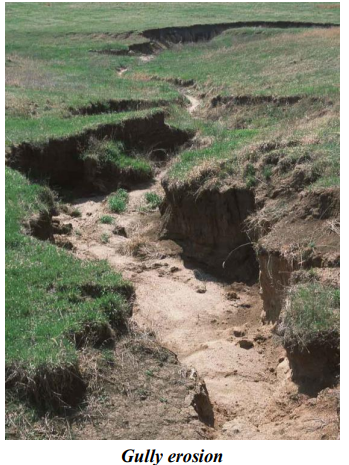
- Gully erosion: Erosion predominant along steep slopes caused by the action of rain water.
- Sheet erosion: Erosion of the top soil along gentle slopes caused by rain water.
- Badland: Land consisting of numerous gullies and ravines.
- Reserves: A part of the resource which can be profitably developed in the near future with the development of technology.
Are Resources Free Gifts of Nature?
No, resources are a function of human activities. Human beings themselves are essential components of resources. They transform material available in our environment into resources and use them.
Importance Of Resources
- Resources form the backbone of the economy of the nation.
- Resources form the base for economic strength and prosperity.
- By utilizing natural resources, humans have created their own world of living.
Characteristics Of Resources
- Resources have utility.
- Resources are normally available in limited quantity.
- Man has to make effort to get utility from the resources.
- Resources provide services and help us to create goods.
- Utility of a resource or its usability changes with improvement in science and technology.
Classification Of Resources
| Basis of Classification | Class | Example |
|---|---|---|
| Origin | Biotic | Flora and fauna |
| Abiotic | Minerals, Soil | |
| Exhaustibility | Non-renewable | Fossil Fuel, metals |
| Individual | Private land, orchard | |
| Community | Village Pond, Park | |
| National | River, Mines | |
| International | Ocean Territory (starts after 200 km of national boundary) | |
| Stage of Development | Potential resources | Wind energy source in deserts of India |
| Developed | Coal Mines, Oil wells | |
| Stock | Geothermal Power, Hydrogen Fuel |
(a) On the Basis of Origin
- Biotic Resources- These are obtained from biosphere and have life. Examples: Human beings, flora and fauna, fisheries, livestock etc.
- Abiotic Resources- All those things which are composed of non-living things are called abiotic resources. Examples: Rocks and metals.
(b) On the Basis of Exhaustibility
- Renewable Resources- The resources which can be renewed or reproduced by physical, chemical or mechanical processes are known as renewable or replenishable resources. Examples: Solar and wind energy, water, forests and wildlife etc.
- Non-renewable Resources- They occur over a very long geological time. These resources take millions of years in their formation. Examples: Metals, fossil fuels etc.
(c) On the Basis of Ownership
Individual Resources These are also owned privately by individuals. Plantation, pasture lands, ponds, water in wells etc. are some of the examples of resources owned by individuals.- Community Owned Resources- These are resources which are accessible to all the members of the community. Village commons (grazing grounds, burial grounds, village ponds, etc.) Public parks, picnic spots, playgrounds in urban areas are accessible to all the people living there.
- National Resources- Technically all the resources available in a country belong to that nation are called national resources.- Examples: All the minerals, water resources, forests, wildlife, land etc.
(d) On the Basis of the Status of Development
- Potential Resources- Resources which are found in a region, but have not been utilized properly despite availability of technology. Example: Gujarat and Rajasthan have potential for the development of wind and solar energy, but so far these have not been developed properly.
- Developed Resources- Resources which are surveyed and their quality and quantity have been determined for utilization. The development of resources depends on technology and level of their feasibility.
- Stock- Materials which have the potential to satisfy human needs but human beings do not have the appropriate technology to access these.
- Reserves- They can be put into use with the help of existing technical 'know-how' but their use has not been started. Example: River water can be used for generating hydroelectric power but presently, it is being utilized only to a limited extent.
Interdependent Relationship Between Nature, Technology & Institutions
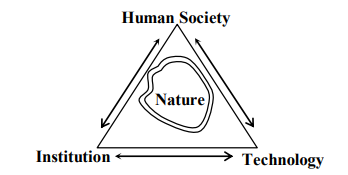
- The process of transformation of things available in an environment involves an interdependent relationship between nature, technology and institutions.
- Human beings interact in the nature through technology and create institutions to accelerate their economic development.
- Human beings themselves are essential components of resource. They transform material into resources and use them.
Development Of Resources
It is a necessary exercise for the utilization of resource, is not only exploitation but also preservation and reuse.
Examples:
- Land has to be cleared of forests or unwanted plants before agriculture.
- Minerals have to be dug out and smelt before being converted into machinery.
- Water has to be taken to fields to irrigate lands.
Points to be kept in mind while using the natural resources:
- Renewable resources should not be put to wrong use or polluted.
- Non-renewable resources should be used properly and should be preserved for the future generation also.
Problems due to Indiscriminate Use of Resources:
- Depletion of resources for satisfying the greed of few individuals.
- Accumulation of resources in few hands, which in turn divided the society into two segments i.e. haves and have not or rich and poor.
- Indiscriminate exploitation of resources has led to global ecological crises such as global warming, ozone layer depletion, environmental pollution and land degradation.
| S.No. | Class 10 Notes for All Subjects |
| 1. | Class 10 Maths Notes |
| 2. | Class 10 Chemistry notes |
| 3. | Class 10 Physics notes |
| 4. | Class 10 Biology Notes |
| 5. | Class 10 Economics Notes |
| 6. | Class 10 Geography Notes |
| 7. | Class 10 History Notes |
| 8. | Class 10 Political Science Notes |
| 9. | Class 10 Aptitude Questions |
| 10. | Class 10 English notes |
Sustainable Development
Rio De Janeiro Earth Summit, 1992
In June 1992, more than 100 heads of states met in Rio de Janeiro in Brazil, for the first International Earth Summit. The Summit was convened for addressing urgent problems of environmental protection and socio-economic development at the global level. The assembled leaders signed the Declaration on Global Climatic Change and Biological Diversity. The Rio Convention endorsed the global Forest Principles and adopted Agenda 21 for achieving Sustainable Development in the 21st century.Agenda 21
- It is the declaration signed by world leaders in 1992 at the United Nations Conference on Environment and Development (UNCED) at Rio de Janeiro, Brazil.
- It aims at achieving global sustainable development and to combat environmental damage, poverty, disease through global co-operation on common interests, mutual needs and shared responsibilities.
- Every local government should draw its own local Agenda 21.
Gandhi's Views On Conservation Of Resources
- There is enough for everybody's need and not for anybody's greed.
- He placed the greedy and selfish individuals and exploitative nature of modern technology as the root cause for resource depletion at the global level.
- He was against mass production and wanted to replace it with the production by the masses.
Resource Planning
Need Of Planning- Planning is needed for the judicious use of resources.
- It is important for India, as it has enormous diversity in the availability of resources.
- There are regions which are rich in certain types of resources.
- There are regions which are self-sufficient in the availability of resources.
- There are regions which have acute shortage of some vital resources.
- State of Jharkhand, Chhattisgarh and Madhya Pradesh are rich in minerals and coal deposits, but lack in infrastructural development.
- Arunachal Pradesh has abundance of water resources but lacks infrastructural development.
- Rajasthan is rich in solar and wind energy, but lacks in water resources.
- Ladakh is deficient in water and some vital minerals but rich in heritage.
Resource Planning In India
Resource planning is a complex process which involves:- Identification and inventory of resources across the regions of the country: This involves surveying, mapping and qualitative and quantitative estimation and measurement of the resources.
- Evolving a Planning Structure: Its appropriate technology, skill and institutional set up for implementing resource development Plan.
- Matching the resource development Plans: The resource development plan must match with the overall national development plan.
India's Efforts For Achieving The Goals Of Resource Planning
- Availability of resource is necessary for the development of any region.
- Resource can contribute to development only when there is technological development.
- Quality of human resources and historical experiences of the people are also required.
- The history of colonization reveals that rich resources in colonies were the main attractions for the foreign invaders.
- It was primarily the higher level of technological development of the colonizing countries that helped them to exploit resources of other regions and establish their supremacy over the colonies.
- Therefore, in India, development in general and resources development in particular does not only involve the availability of resources, but also the technology, quality of human resources and the historical experience of the people.
Conservation Of Resources
- Most of the resources are non-renewable, once they get exhausted, can never be reused.
- Economic development of a nation depends to a great extent on the richness, development and management of the resources.
- Inappropriate and reckless utilization of resources can deplete them.
- Over exploitation causes damage to the existing environment.
Land Resources
Land is a natural resource of utmost importance. It supports natural vegetation, wildlife, human life, economic activities, transport and communication systems. It is important to use the available land for various purposes with careful planning.
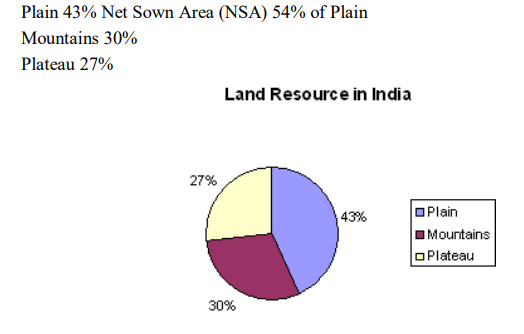
India's Vast And Diverse Size Is The Most Important Resource
- 43% of the total land is plain providing opportunities for agriculture and comfortable living.
- 30% is mountainous, provides forest, wildlife and Perennial Rivers.
- 27% is plateau, providing mineral resources, forests and arable lands.
- Mountains and plateaus contain river valleys that offer favorable locations for human habitation.
- Monsoonal climate has made our land more valuable from agriculture and vegetation point of view.
Land Utilisation
Land resources are used for the following purposes:- Forests
- Land not available for cultivation
- Barren and waste land
- Land put to non-agricultural uses, e.g. buildings, roads, factories, etc.
- Other uncultivated land (excluding fallow land)
- Permanent pastures and grazing land
- Land under miscellaneous tree crops groves (not included in net sown area)
- Culturable waste land (left uncultivated for more than 5 agricultural years)
- Fallow lands
- Current fallow (left without cultivation for one or less than one agricultural year)
- Other than current fallow (left uncultivated for the past 1 to 5 agricultural years)
- Net sown area
Land Use Pattern In India
The use of land is determined both by physical factors such as topography, climate, soil types as well as human factors such as population density, technological capability and culture and traditions etc. Total geographical area of India is 3.28 million sq km. Land use data, however, is available only for 93 per cent of the total area because the land use reporting for most of the north-east states except Assam has not been done fully.
Land Distribution in India:
- Plain: 43% (Net Sown Area is 54% of Plain)
- Mountains: 30%
- Plateau: 27%
Land Degradation And Conservation Measures
Continuous use of land over a long period of time without taking appropriate measures to conserve and manage it, has resulted in land degradation. India's Degraded Land- At present there are about 130 million hectares degraded land.
- About 28% of it belongs to the category of forest degraded area.
- 56% of it is water eroded area.
- The rest is affected by saline and alkaline deposits.
- Some human activities such as deforestation, over grazing, mining and quarrying have also contributed significantly in land degradation.
| Type of Degradation | Percentage |
|---|---|
| Water eroded area | 56% |
| Forests degraded area | 28% |
| Saline and Alkaline land | 6% |
| Wind eroded area | 6% |
Causes Of Land Degradation
- Mining sites are abandoned after excavation work is complete leaving deep scars and traces of over burdening. For example in Jharkhand, Chhattisgarh, M.P. and Orissa.
- In states like Gujarat, Rajasthan, Madhya Pradesh and Maharashtra over grazing is one of the main reasons for land degradation.
- In the states of Punjab, Haryana, western Uttar Pradesh over irrigation is responsible for land degradation due to water logging leading to increase in salinity and alkalinity in the soil.
- The mineral processing like grinding of limestone for cement industry and calcite and soap stone for ceramic industry generate huge quantity of dust in the atmosphere, which settles down on the surface.
- In recent years industrial effluents as waste have become a major source of land and water pollution in many parts of the country.
Ways To Solve The Problems Of Land Degradation
- Afforestation and proper management of grazing.
- Planting of shelter belts of plants.
- Control on overgrazing.
- Stabilization of sand dunes by growing thorny bushes.
- Proper management of waste land.
- Control of mining activities.
- Proper discharge and disposal of industrial effluents and wastes after treatment.
Soil Resources
Importance Of Soil- Soil is the most important renewable resource.
- It is the medium of plant growth.
- It supports different types of living organisms on the earth.
- Soil is a living system.
- Relief
- Parent rock or bed rock
- Climate
- Vegetation and other forms of life
- Time
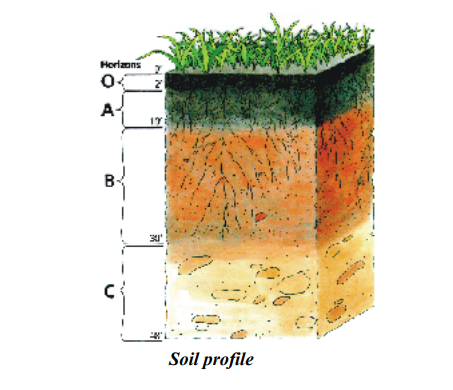
- Change in temperature
- Actions of running water
- Wind and glaciers
- Activities of decomposers
- Chemical and organic changes
Classification Of Soil
On the basis of factors responsible for soil formation, color, thickness, texture, age, chemical and physical properties, the soil of India can be classified in different types:
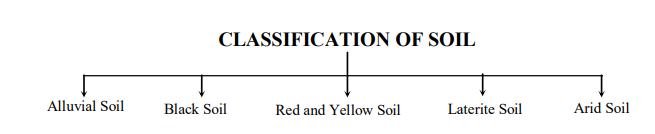
Types of Soil in India
- Alluvial Soil
- Black Soil
- Red and Yellow Soil
- Laterite Soil
- Arid Soil
- Forest Soil
1. Alluvial Soils
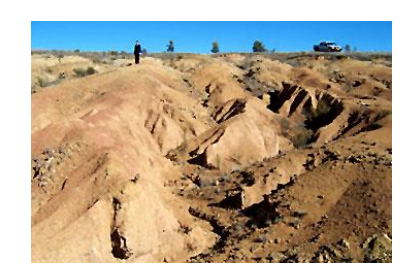
Alluvial soils are very fertile. Mostly these soils contain adequate proportion of potash, phosphoric acid and lime which are ideal for the growth of sugarcane, paddy, wheat and other cereal and pulse crops. Due to its high fertility, regions of alluvial soils are intensively cultivated and densely populated. Soils in the drier areas are more alkaline and can be productive after proper treatment and irrigation.
Spread in India: These have been deposited by three important Himalayan river systems – the Indus, the Ganga and the Brahmaputra. These soils also extend in Rajasthan and Gujarat through a narrow corridor. Alluvial soil is also found in the eastern coastal plains particularly in the deltas of the Mahanadi, the Godavari, the Krishna and the Kaveri rivers.
Types as Per Age of Soil:
- Bangar: Old Alluvial Soil
- Khadar: New Alluvial Soil
2. Black Soil (regur Soil)
The black soils are made up of extremely fine i.e. clayey material. They are wellknown for their capacity to hold moisture. In addition, they are rich in soil nutrients, such as calcium carbonate, magnesium, potash and lime. These soils are generally poor in phosphoric contents. They develop deep cracks during hot weather, which helps in the proper aeration of the soil. These soils are sticky when wet and difficult to work on unless tilled immediately after the first shower or during the pre-monsoon period.
Spread: This type of soil is typical of the Deccan trap (Basalt) region spread over northwest Deccan plateau and is made up of lava flows. They cover the plateaus of Maharashtra, Saurashtra, The alluvial soil consists of various proportions of sand, silt and clay. As we move inlands towards the river valleys, soil particles appear some what bigger in size. In the upper Malwa, Madhya Pradesh and Chhattisgarh and extend in the south east direction along the Godavari and the Krishna valleys.
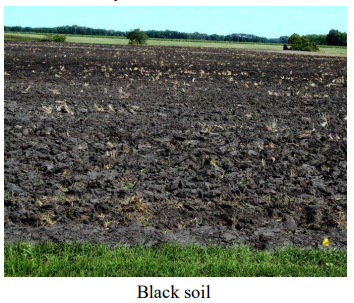
Ideal Crop: Cotton hence another name black cotton soil.
Red And Yellow Soils
Property: These soils have red colour due to diffusion of iron in crystalline and metamorphic rocks. It looks yellow when it is found in hydrated form.
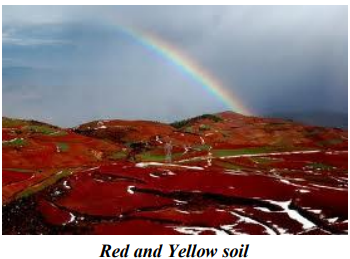
Spread: Parts of Orissa, Chhattisgarh, southern parts of the middle Ganga plain and along the piedmont zone of the Western Ghats.
Laterite Soil
Property: Laterite has been derived from the Latin word ‘later’ which means brick. The laterite soil develops in areas with high temperature and heavy rainfall. This is the result of intense leaching due to heavy rain. Humus content of the soil is low because most of the micro organisms, particularly the decomposers, like bacteria, get destroyed due to high temperature. Laterite soils are suitable for cultivation with adequate doses of manures and fertilizers.
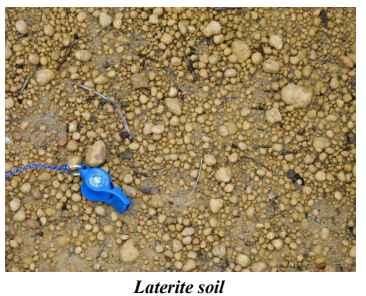
Spread: Karnataka, Kerala, Tamil Nadu, Madhya Pradesh, and the hilly areas of Orissa and Assam.
Crop: After adopting appropriate soil conservation techniques particularly in the hilly areas of Karnataka, Kerala and Tamil Nadu, this soil is very useful for growing tea and coffee. Red laterite soils in Tamil Nadu, Andhra Pradesh and Kerala are more suitable for crops like cashew nut.
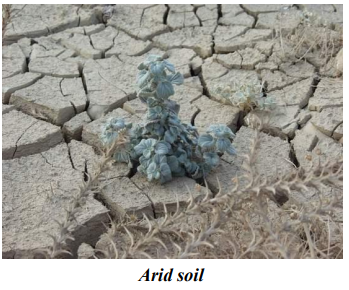
Arid Soils
Features of Arid Soils- They range from red to brown in colours.
- They are generally sandy in texture and saline in nature.
- In some area salt content is so high that common salt is obtained by evaporating the water.
- Due to dry climate, high temperature evaporation is faster and the soil lacks humus & moisture.
- In lower regions soil has Kankar in it because of the increasing calcium content.
- It restricts the infiltration of water.
- After proper irrigation these soil become cultivable, as it is done in western Rajasthan.
Forest Soil
Features of Forest Soil- These soils are found in the hilly areas with rain forests.
- Soil texture varies according to the mountain environment.
- They are loamy & silty in valley sides.
- They are coarse grained in the upper slopes.
- In the snow covered areas of Himalayas, they experience denudation and are acidic with low humus content.
- The soils are formed in the lower parts of the valley on the river terraces and alluvial fans are fertile.
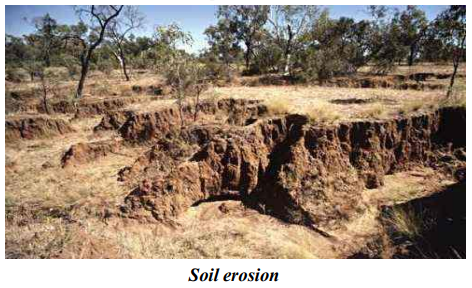
Soil Erosion
The denudation of soil cover and subsequent washing down is described as soil erosion.
Causes of Soil Erosion
- Human activities like deforestation, over-grazing, construction and mining.
- Defective methods of farming.
- Ploughing in a wrong like up and down the slope forms channels makes way for quick
- flow of water. This leads to soil erosion. way etc. disturb this balance. Natural forces like wind, glacier and water lead to soil erosion.
- Sometimes water flows as a sheet over large areas down a slope. In such cases the top soil is washed away. This is known as sheet erosion.
- Wind blows loose soil off flat or sloping land known as wind erosion.
Effects:
(i) Makes land unsuitable for cultivation. (ii) Land so developed is called bad lands, in the Chambal basin they are known as ravines.Various Types Of Soil Erosion
1. Gullies: The running water cuts through the clayey soils and makes deep channels called gullies.
2. Bad Lands: When the land becomes unfit for cultivation, it is called Bad Lands. Eg. ravires in Chambal
3. Sheet Erosion: Sometimes water flows as a sheet over large areas down a slope. In such cases the top soil is washed away. It is called sheet erosion.
4. Wind Erosion: wind blows loose soil off flat or sloping land is called wind erosion.
Soil Conservation
- Contour Ploughing: Ploughing along the contour lines can decelerate the flow of water down the slopes.
- Terrace Farming: Steps can be cut out on the slopes making terraces to restrict erosion. Western and central Himalayas have well developed terrace farming.
- Strip Cropping: Large fields can be divided into strips. Strips of grass are left to grow between the crops. This breaks up the force of the wind.
- Shelter Belts: Planting lines of trees to create shelter also works in a similar way. Rows of such These shelter belts have contributed significantly to the stabilization of sand dunes and in stabilizing the desert in western India.
Resources and Development Question and Answers
1. Why is conservation of resources necessary? Give two reasons.
Ans. Conservation of resources is necessary because
(i) it will provide sustainable benefit to the present generation.
(ii) it will also maintain the potential to meet the needs and aspirations of future generations.
2. Give two points of difference between renewable and non-renewable resources.
Ans. Renewable resources: Resources which can be used again and again and are inexhaustible. E.g., forests, wildife, water, etc.
Non-renewable resources: Resources which cannot be used again and again, cannot be replenished very soon and are exhaustible like minerals.
3. State four characteristics of natural resources.
Ans. Four characteristics of natural resources are:
- They have their own utility.
- Available in limited quantity.
- Help to produce goods or provide services.
- The utility of a resource changes with the development of science and technology.
4. India has a varied relief features viz. mountains, plateaus and plains which of these relief features cover the largest area? Write two characteristics of this relief features.
Ans. The plains cover the largest area about 43% of the country’s area.
Two characteristics are:
(i) It is a level land.
(ii) It provides opportunity for crop farming.
5. How are human made resources useful? Explain with two examples.
Ans. Human made resources are useful as they are essential for living and make life more comfortable. E.g., houses, roads, etc.
6. What is meant by the two types of natural resources? Give one examples of each.
Ans. The two types of natural resources are
(i) According to origin
(a) Biotic e.g., Plants and animals.
(b) Abiotic e.g., Land, water and minerals.
(ii) According to availability
(a) Renewable e.g., Plants, animals and water.
(b) Non-renewable e.g., Minerals.
7. What is soil erosion? Mention two main causes of it.
Ans. Soil erosion is the removal of soil from one place to another by different agents of gradation.
The causes of soil erosion are:
(i) Deforestation
(ii) Overgrazing
8. How do rocks play an important role in the formation of soil? Explain with examples.
Ans. Rocks play an important role in the formation of soil.
(i) Black soils have been derived from the lava of the Deccan trap.
(ii) The rocks on which the soils are formed, disintegrate and decompose under the, process of weathering and erosion.
9. Write two salient features of Khadar soil.
Ans. Khadar is the newer alluvium, fine and fertile and is found near the rivers.
10. Give one point of difference between Stock and Reserve.
Ans. Stock: Materials in the environment which are capable of satisfying the basic need of man but are not developed due to lack of technology.
Reserve: A part of the resource which can be profitably developed in the near future with the development of technology.
11. Why are alluvial soils very fertile?
Ans. Alluvial soils are very fertile as they are rich in nutrients. These soils are formed by transportation and depositional activity of rivers.
12. Define the term sustainable development.
Ans. Sustainable development refers to development of resources without degradation of the environment to meet the needs of present as well as future generation.
13. Why is conservation of resources essential?
Ans. Conservation of resources is essential because some resources like minerals are nonrenewable, need conservation for future generations. Conservation is a judicious and careful management of resources by man as improper and overuse can deplete them leading to many ecological problems.
Three methods of soil conservation are:
- Terrace farming: Cutting of hilly area into steps to reduce the flow of running water.
- Strip cropping: Growing of crops in long strips.
- Planting of shelter belts: Shrubs and trees are planted along field to control the force of wind.
14. List out the factors involved in the transformation of things into a resource.
Ans. The factors involved in the transformation of things into resource are:
- Physical environment
- Technology
- Human beings
- Institutions
15. Explain how resources are classified based on the state of development.
Ans. Resources are classified on the basis of state of development as
- Potential resources are those which exist in a region but are not yet completely utilized. For example, in the states of Gujarat and Rajasthan there is potential for development of wind and solar energy but they are not yet completely developed.
- Developed resources are those which are already developed by man depending on the technological knowhow and economically feasible.
- Stock refers to the treasures of the earth, which are inaccessible to man for exploitation. Reserves are part of the stock which can be utilized but are preserved for future use.
16. What is resource planning? What is the need for planning of resources? Describe the three stages involved in resource planning.
Ans. Resource planning is a technique of planned utilization of resources. As resources are limited and unevenly distributed over the country, their planning is very essential. The three stages of resource planning are:
(i) Preparation of inventory of resources.
(ii) Evaluation in terms of economy, need for available technology.
(iii) Planning for exploitation of resources which involves action oriented planning involving.