Class 10 History Notes – Nationalism in India
The chapter Nationalism in India is one of the most important topics for Class 10 History. It highlights how India transformed from being a land of diverse communities into a united nation with a common struggle for freedom. These notes provide a detailed explanation, key highlights, and important points that students should focus on while preparing for their exams.
Overview of Nationalism in India
The growth of nationalism in India was shaped by various social, political, and economic factors. During the early 20th century, Indians began realizing the need to unite against colonial exploitation. Movements led by leaders such as Mahatma Gandhi, Bal Gangadhar Tilak, Subhas Chandra Bose, Jawaharlal Nehru, and Sardar Patel brought people together under one banner of independence.
The chapter explains how the Swadeshi Movement, Non-Cooperation Movement, Civil Disobedience Movement, Quit India Movement, and Khilafat Movement played a crucial role in shaping modern India.
Gandhian Era and Mass Movements
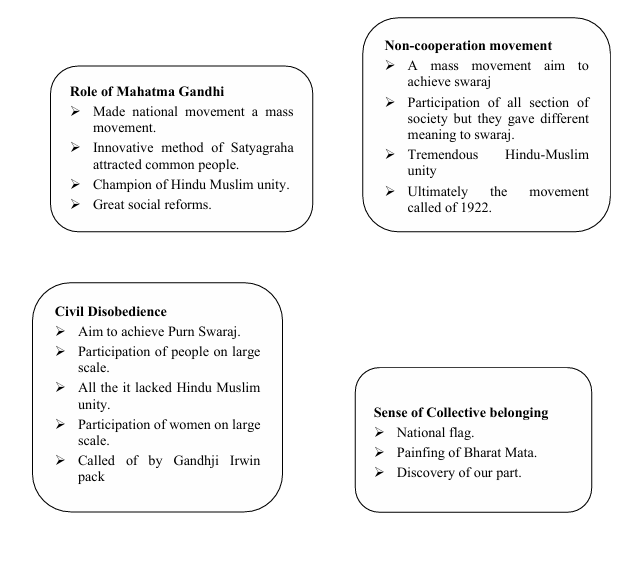
The entry of Mahatma Gandhi into Indian politics gave a new dimension to the freedom struggle. Gandhi’s principle of non-violence and satyagraha united millions of Indians. The Champaran Satyagraha (1917), Kheda Satyagraha (1918), and the Ahmedabad Mill Strike (1918) marked the beginning of his active role.
-
Non-Cooperation Movement (1920–22): Launched against the Jallianwala Bagh tragedy and the Rowlatt Act. People boycotted foreign goods, schools, law courts, and titles.
-
Civil Disobedience Movement (1930–34): Started with the Salt March to Dandi. It inspired the masses to break colonial laws and demand freedom.
-
Quit India Movement (1942): One of the most significant struggles, where Indians demanded “Do or Die” action to end British rule.
Role of Different Groups in Nationalism
-
Peasants and Farmers Participated in protests against taxes and zamindari exploitation.
-
Women: Played an active role by joining demonstrations, picketing shops, and spreading nationalist ideas.
-
Tribal Communities: Participated in rebellions to protect their land and culture.
-
Industrialists and Students: Provided financial and intellectual support to the movement.
Key Events Strengthening Nationalism
-
Rowlatt Act (1919): Created widespread anger due to the suppression of rights.
-
Jallianwala Bagh Massacre: Shocked the entire nation and strengthened the call for independence.
-
Simon Commission (1928): Boycotted with the slogan “Simon Go Back”.
-
Round Table Conferences (1930–32): Attempted discussions but failed to bring complete independence.
Importance of Nationalism in India for Class 10
This chapter helps students understand how the sacrifices of leaders and common people shaped the foundation of India’s independence. It is essential for exam preparation because many short-answer questions, long-answer questions, and map-based questions are framed from this chapter.
Students should focus on:
-
Timeline of major movements
-
Leaders and their roles
-
Causes and outcomes of each movement
-
Contribution of different social groups
Quick Revision Notes – Nationalism in India
-
Nationalism in India grew as a response to colonial exploitation.
-
Gandhiji’s non-violent movements united different sections of society.
-
Farmers, women, tribals, and industrialists actively participated in the freedom struggle.
-
Events like the Jallianwala Bagh massacre, the Rowlatt Act, and the Simon Commission boosted nationalist feelings.
-
The chapter is crucial for understanding India’s journey to independence.
Introduction
Indian Nationalism
Indian nationalism refers to the many underlying forces that molded the Indian independence movement, and strongly continue to influence the politics of India, as well as being the heart of many contrasting ideologies that have caused ethnic and religious conflict in Indian society. Indian nationalism often imbibes the consciousness of Indians that prior to 1947, India embodied the broader Indian subcontinent and influenced a part of Asia, known as Greater India.
Feeling of Nationalism in India
- Growth of nationalism in India is connected to anti colonial movement.
- People began discovering their unity in the process of their struggle against colonialism.
- The sense of being oppressed under colonialism provided a shared bond that tied many different groups together.
- Each class or group was affected by colonialism differently. So their notions of freedom were different.
- The Congress under Mahatma Gandhi tried to forge these groups together within one movement.
The First World War, Khilafat and Non-Cooperation
The First World War created a new economic and political situation. It led to a huge increase in defense expenditure which was financed by war loans and increasing taxes: customs duties were raised and income tax introduced. Through the war years prices increased – doubling between 1913 and 1918 – leading to extreme hardship for the common people. Villages were called upon to supply soldiers, and the forced recruitment in rural areas caused widespread anger.
Then in 1918-19 and 1920-21, crops failed in many parts of India, resulting in acute shortages of food. This was accompanied by an influenza epidemic. According to the census of 1921, 12 to 13 million people perished as a result of famines and the epidemic. People hoped that their hardships would end after the war was over. But that did not happen.
Satyagraha
The Idea of satyagraha:
Mahatma Gandhi returned to India in January 1915. Gandhiji had come from South Africa where he had successfully fought the racist regime with a novel method of mass agitation, which he called satyagraha. The idea of satyagraha emphasised the power of truth and the need to search for truth. It suggested that if the cause was true, if the struggle was against injustice, then physical force was not necessary to fight the oppressor. Without seeking vengeance or being aggressive, a satyagrahi could win the battle through nonviolence. This could be done by appealing to the conscience of the oppressor. People – including the oppressors – had to be persuaded to see the truth, instead of being forced to accept truth through the use of violence. By this struggle, truth was bound to ultimately triumph. Mahatma Gandhi believed that this dharma of non-violence could unite all Indians.
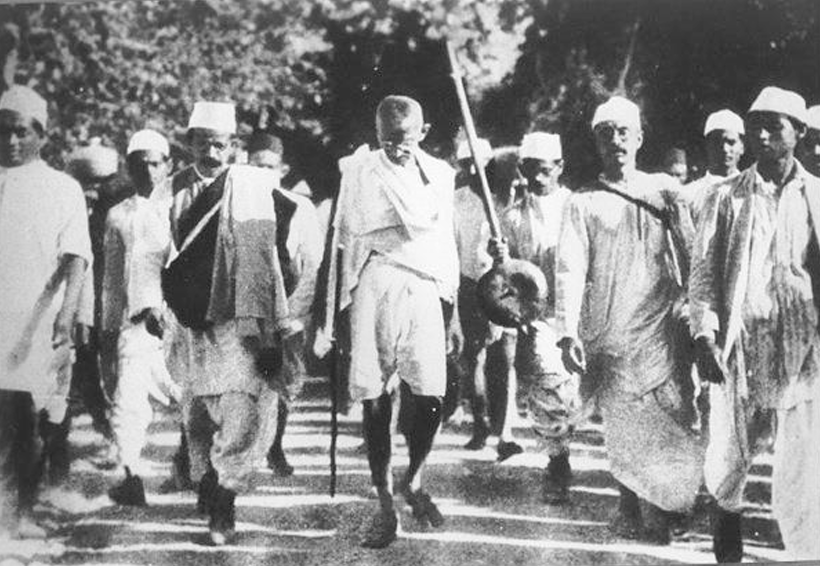
After arriving in India, Mahatma Gandhi successfully organized satyagraha movements in various places. In 1916 he travelled to Champaran in Bihar to inspire the peasants to struggle against the oppressive plantation system. Then in 1917, he organised a satyagraha to support the peasants of the Kheda district of Gujarat. Affected by crop failure and a plague epidemic, the peasants of Kheda could not pay the revenue, and were demanding that revenue collection be relaxed. In 1918, Mahatma Gandhi went to Ahmedabad to organize a satyagraha movement amongst cotton mill workers.
The Rowlatt Act (1919): This Act had been hurriedly passed through the Imperial Legislative Council despite the united opposition of the Indian members. It gave the government enormous powers to repress political activities, and allowed detention of political prisoners without trial for two years.
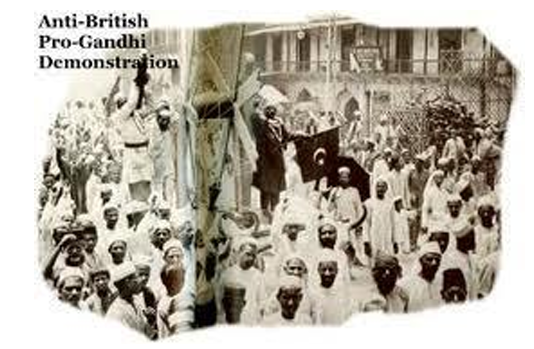
Gandhi ji in 1919 decided to launch a nationwide satyagraha against the proposed Rowlatt Act (1919). Mahatma Gandhi wanted non-violent civil disobedience against such unjust laws, which would start with a hartal on 6 April.
Consequence of Rowlatt Act:
- Rallies were organized in various cities; workers went on strike in railways workshops, shops were closed down.
- The Britisher decided to clamp down on nationalists. Local leader were picked up from Amritsar, police fired on peaceful processions in Amritsar and the provoked Indians attacked the banks, post offices, railway stations etc.
- Martial law was imposed and General Dyer took command.
Jallianwalla Bagh
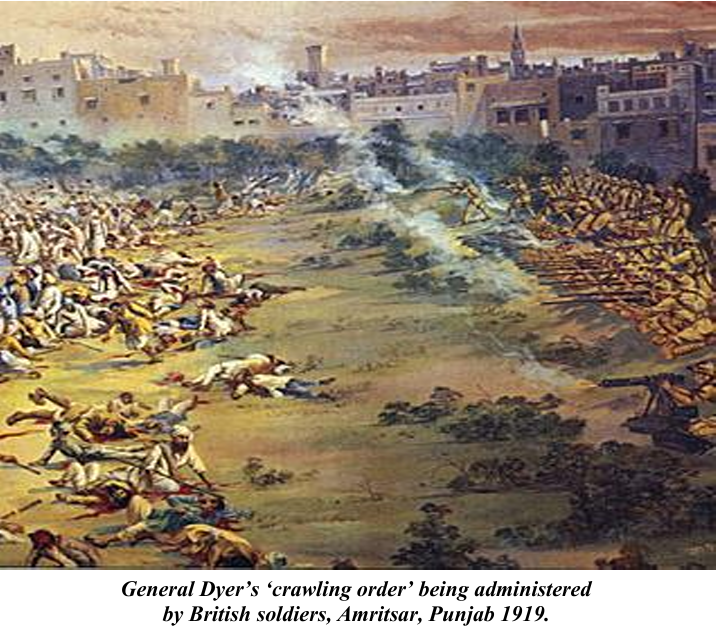
On 10 April, the police in Amritsar fired upon a peaceful procession, provoking widespread attacks on banks, post offices and railway stations. Martial law was imposed and General Dyer took command.
Consequences of Jallianwalla Bagh Incident:
- Crowds took to the streets in many north Indian towns. There were strikes, clashes with the police and attacks on the government buildings.
- The government responded with brutal repression. Satyagrahis were forced to rub their noses on the ground, crawl on the streets, do salaam to all sahibs. Villages were bombed.
- Seeing violence spread, Gandhiji called off the movement.
Khilafat Issue:
- The Ottoman Turkish Empire was defeated in the First World War.
- A harsh peace treaty was imposed on the Turkish Emperor -The Khalifa. The Khalifa was considered the spiritual head of the Muslim world and protector of their holy places.
- The Turkish Empire was totally dismembered by 1920.
The Khilafat Movement:
- Two brothers, Muhammad Ali and Shaukat Ali. Muslim leaders founded a Khilafat common in March 1919, to defend the Khilafat's rights.
- The anti Rowlatt Satyagraha was limited to cities and towns. Gandhi ji wanted to launch a broader -based movement. This could only be done by bringing Hindus and Muslims together. He took up the khilafat issue.
- At the Calcutta session of the Congress in September 1920, he convinced other leaders of the need to start a non-cooperation movement in support of Khilafat as well as for swaraj.
Non-Cooperation Moments
In his famous book Hind Swaraj (1909) Mahatma Gandhi declared that British rule was established in India with the cooperation of Indians, and had survived only because of this cooperation. If Indians refused to cooperate, British rule in India would collapse within a year, and swaraj would come.
Gandhiji proposed that the movement should unfold in stages. It should begin with the surrender of titles that the government awarded, and a boycott of civil services, army, police, courts and legislative councils, schools, and foreign goods. Then, in case the government used repression, a full civil disobedience campaign would be launched. Through the summer of 1920 Mahatma Gandhi and Shaukat Ali toured extensively, mobilising popular support for the movement. Many within the Congress were, however, concerned about the proposals. They were reluctant to boycott the council elections scheduled for November 1920, and they feared that the movement might lead to popular violence. In the months between September and December there was an intense tussle within the Congress. For a while there seemed no meeting point between the supporters and the opponents of the movement. Finally, at the Congress session at Nagpur in December 1920, a compromise was worked out and the Non-Cooperation programme was adopted.
Differing Strands Within the Moments: The Non-Cooperation-Khilafat Movement began in January 1921. Various social groups participated in this movement, each with its own specific aspiration. All of them responded to the call of Swaraj, but the term meant different things to different people.
Tthe Movem net in the Towns: The movement started with middle-class participation in the cities. Thousands of students left government-controlled schools and colleges, headmasters and teachers resigned, and lawyers gave up their legal practices. The council elections were boycotted in most provinces except Madras, where the Justice Party, the party of the non-Brahmans, felt that entering the council was one way of gaining some power – something that usually only Brahmans had access to. The effects of non-cooperation on the economic front were more dramatic. Foreign goods were boycotted, liquor shops picketed, and foreign cloth burnt in huge bonfires. The import of foreign cloth halved between 1921 and 1922, its value dropping from Rs 102 crore to Rs 57 crore. In many places merchants and traders refused to trade in foreign goods or finance foreign trade. As the boycott movement spread, and people began discarding imported clothes and wearing only Indian ones, production of Indian textile mills and handlooms went up.
Reasons for Slowing of Movemnets: But this movement in the cities gradually slowed down for a variety of reasons. Khadi cloth was often more expensive than mass produced mill cloth and poor people could not afford to buy it. How then could they boycott mill cloth for too long? Similarly the boycott of British institutions posed a problem. For the movement to be successful, alternative Indian institutions had to be set up so that they could be used in place of the British ones. These were slow to come up. So students and teachers began trickling back to government schools and lawyers joined back work in government courts.
Rebellion in the Countryside: From the cities, the Non-Cooperation Movement spread to the countryside. It drew into its fold the struggles of peasants and tribals which were developing in different parts of India in the years after the war.
Awadh: In Awadh, peasants were led by Baba Ramchandra – a sanyasi who had earlier been to Fiji as an indentured labourer. The movement here was against talukdars and landlords who demanded from peasants exorbitantly high rents and a variety of other cesses. Peasants had to do begar and work at landlords' farms without any payment. As tenants they had no security of tenure, being regularly evicted so that they could acquire no right over the leased land. The peasant movement demanded reduction of revenue, abolition of begar, and social boycott of oppressive landlords. In many places nai – dhobi bandhs were organised by panchayats to deprive landlords of the services of even barbers and washermen. In June 1920, Jawaharlal Nehru began going around the villages in Awadh, talking to the villagers, and trying to understand their grievances. By October, the Oudh Kisan Sabha was set up headed by Jawaharlal Nehru, Baba Ramchandra and a few others. Within a month, over 300 branches had been set up in the villages around the region. So when the Non- Cooperation Movement began the following year, the effort of the Congress was to integrate the Awadh peasant struggle into the wider struggle. The peasant movement, however, developed in forms that the Congress leadership was unhappy with. As the movement spread in 1921, the houses of talukdars and merchants were attacked, bazaars were looted, and grain hoards were taken over. In many places local leaders told peasants that Gandhiji had declared that no taxes were to be paid and land was to be redistributed among the poor. The name of the Mahatma was being invoked to sanction all action and aspirations.
Tribal Peasants: Tribal peasants interpreted the message of Mahatma Gandhi and the idea of swaraj in yet another way. In the Gudem Hills of Andhra Pradesh, for instance, a militant guerrilla movement spread in the early 1920s – not a form of struggle that the Congress could approve. Here, as in other forest regions, the colonial government had closed large forest areas, preventing people from entering the forests to graze their cattle, or to collect fuelwood and fruits. This enraged the hill people. Not only were their livelihoods affected but they felt that their traditional rights were being denied. When the government began forcing them to contribute beggar for road building, the hill people revolted. The person who came to lead them was an interesting figure. Alluri Sitaram Raju claimed that he had a variety of special powers: he could make correct astrological predictions and heal people, and he could survive even bullet shots. Captivated by Raju, the rebels proclaimed that he was an incarnation of God. Raju talked of the greatness of Mahatma Gandhi, said he was inspired by the Non-Cooperation Movement, and persuaded people to wear khadi and give up drinking. But at the same time he asserted that India could be liberated only by the use of force, not non-violence. The Gudem rebels attacked police stations, attempted to kill British officials and carried on guerrilla warfare for achieving swaraj. Raju was captured and executed in 1924, and over time became a folk hero.
Swaraj in the Plantations:
Workers too had their own understanding of Mahatma Gandhi and the notion of swaraj. For plantation workers in Assam, freedom meant the right to move freely in and out of the confined space in which they were enclosed, and it meant retaining a link with the village from which they had come. Under the Inland Emigration Act of 1859, plantation workers were not permitted to leave the tea gardens without permission, and in fact they were rarely given such permission. When they heard of the Non-Cooperation Movement, thousands of workers defied the authorities, left the plantations and headed home. They believed that Gandhi Raj was coming and everyone would be given land in their own villages. They, however, never reached their destination. Stranded on the way by a railway and steamer strike, they were caught by the police and brutally beaten up.
The visions of these movements were not defined by the Congress programme. They interpreted the term swaraj in their own ways, imagining it to be a time when all suffering and all troubles would be over. Yet, when the tribals chanted Gandhiji's name and raised slogans demanding 'Swatantra Bharat', they were also emotionally relating to an all-India agitation. When they acted in the name of Mahatma Gandhi, or linked their movement to that of the Congress, they were identifying with a movement which went beyond the limits of their immediate locality.
Withdrawal of No-Cooperation Movemenet
- In February 1922 Mahatma ji decided to withdraw the Non-cooperation movement. He felt the movement was turning violent in many places and the Satyagrahis are needed to be properly trained before they would be ready for mass struggle.
- At Chauri Chara in U.P. a peaceful demonstration was fired upon. The angry mob in turn attacked the police station burning alive 22 policemen.
- Gandhiji was alarmed by the violence hence he called off the movement.
Formation of Swaraj Party
- Within the congress, some leaders were by now tired of mass struggle and wanted to participate in the elections to the provincial councils that had been set up by the government of India act of 1919.
- They felt it was important to oppose the British policies within the councils.
- C.R. Das and Motilal Nehru formed the Swaraj Party within the Congress to argue for a return to council politics.
- Young leaders like Jawaharlal Nehru and Subhash Chandra Bose wanted more radical mass struggle for independence.
Two Factors that Shaped the Indian Policies:
- ➢ The first factor was the effect of the world wide economic depression. Agricultural prices began to fall from 1927 and collapsed after 1930.
- ➢ Demand for agricultural goods fell and exports declined. The peasants found it difficult to sell their harvests and pay revenue.
- ➢ The second factor the new Tory government in Britain sent the Simon commission. It was to look into the functioning of the constitutional system in India and suggest changes.
- ➢ All parties, including the Congress and the Muslim League, participated in the demonstrations.
- ➢ In an effort to win them over, the viceroy, Lord Irwin, announced in October 1929, a vague offer of 'dominion status' for India in an unspecified future, and a Round Table Conference to discuss a future constitution.
- ➢ This did not satisfy the Congress leaders. The radicals within the Congress, led by Jawaharlal Nehru and Subhas Chandra Bose, became more assertive.
- ➢ The liberals and moderates, who were proposing a constitutional system within the framework of British dominion, gradually lost their influence.
Civil Disobedience Movemenet
In February 1922, Mahatma Gandhi decided to withdraw the Non-Cooperation Movement. He felt the movement was turning violent in many places and satyagrahis needed to be properly trained before they would be ready for mass struggles. Within the Congress, some leaders were by now tired of mass struggles and wanted to participate in elections to the provincial councils that had been set up by the Government of India Act of 1919. They felt that it was important to oppose British policies within the councils, argue for reform and also demonstrate that these councils were not truly democratic. C. R. Das and Motilal Nehru formed the Swaraj Party within the Congress to argue for a return to council politics. But younger leaders like Jawaharlal Nehru and Subhas Chandra Bose pressed for more radical mass agitation and for full independence. In such a situation of internal debate and dissension two factors again shaped Indian politics towards the late 1920s. The first was the effect of the worldwide economic depression. Agricultural prices began to fall from 1926 and collapsed after 1930. As the demand for agricultural goods fell and exports declined, peasants found it difficult to sell their harvests and pay their revenue. By 1930, the countryside was in turmoil.
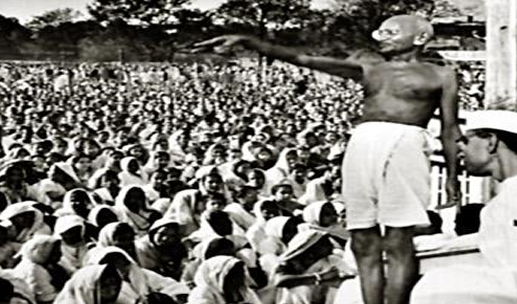
Simon Commision:
Against this background the new Tory government in Britain constituted a Statutory Commission under Sir John Simon. Set up in response to the nationalist movement, the commission was to look into the functioning of the constitutional system in India and suggest changes. The problem was that the commission did not have a single Indian member. They were all British.
When the Simon Commission arrived in India in 1928, it was greeted with the slogan 'Go back Simon'. All parties, including the Congress and the Muslim League, participated in the demonstrations. In an effort to win them over, the viceroy, Lord Irwin, announced in October 1929, a vague offer of 'dominion status' for India in an unspecified future, and a Round Table Conference to discuss a future constitution.
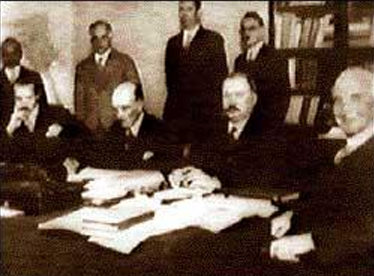
This did not satisfy the Congress leaders. The radicals within the Congress, led by Jawaharlal Nehru and Subhas Chandra Bose, became more assertive. The liberals and moderates, who were proposing a constitutional system within the framework of British dominion, gradually lost their influence. In December 1929, under the presidency of Jawaharlal Nehru, the Lahore Congress formalised the demand of 'Purna Swaraj' or full independence for India. It was declared that 26 January 1930, would be celebrated as the Independence Day when people were to take a pledge to struggle for complete independence. But the celebrations attracted very little attention. So Mahatma Gandhi had to find a way to relate this abstract idea of freedom to more concrete issues of everyday life.
Salt March:
Mahatma Gandhi found in salt a powerful symbol that could unite the nation. On 31 January 1930, he sent a letter to Viceroy Irwin stating eleven demands. Some of these were of general interest; others were specific demands of different classes, from industrialists to peasants. The idea was to make the demands wide-ranging, so that all classes within Indian society could identify with them and everyone could be brought together in a united campaign. The most stirring of all was the demand to abolish the salt tax. Salt was something consumed by the rich and the poor alike, and it was one of the most essential items of food. The tax on salt and the government monopoly over its production, Mahatma Gandhi declared, revealed the most oppressive face of British rule.
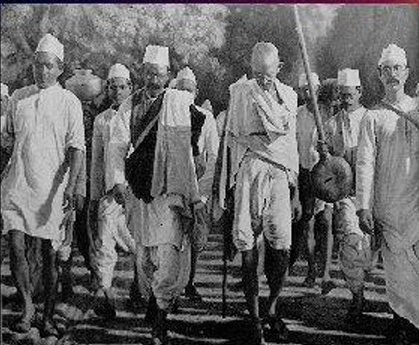
Mahatma Gandhi's letter was, in a way, an ultimatum. If the demands were not fulfilled by 11 March, the letter stated, the Congress would launch a civil disobedience campaign. Irwin was unwilling to negotiate. So Mahatma Gandhi started his famous salt march accompanied by 78 of his trusted volunteers. The march was over 240 miles, from Gandhiji's ashram in Sabarmati to the Gujarati coastal town of Dandi. The volunteers walked for 24 days, about 10 miles a day. Thousands came to hear Mahatma Gandhi wherever he stopped, and he told them what he meant by swaraj and urged them to peacefully defy the British. On 6 April he reached Dandi, and ceremonially violated the law, manufacturing salt by boiling sea water.
This marked the beginning of the Civil Disobedience Movement. This was altogether different from the Non-cooperation Movement. People were now asked not only to refuse cooperation with the British, as they had done in 1921-22, but also to break colonial laws.
Thousands in different parts of the country broke the salt law, manufactured salt and demonstrated in front of government salt factories. As the movement spread, foreign cloth was boycotted, and liquor shops were picketed. Peasants refused to pay revenue and chaukidari taxes, village officials resigned, and in many places forest people violated forest laws – going into Reserved Forests to collect wood and graze cattle.
Response of British Rulers:
Worried by the developments, the colonial government began arresting the Congress leaders one by one. This led to violent clashes in many palaces. When Abdul Ghaffar Khan, a devout disciple of Mahatma Gandhi, was arrested in April 1930, angry crowds demonstrated in the streets of Peshawar, facing armoured cars and police firing. Many were killed. A month later, when Mahatma Gandhi himself was arrested, industrial workers in Sholapur attacked police posts, municipal buildings, law courts and railway stations – all structures that symbolised British rule. A frightened government responded with a policy of brutal repression. Peaceful satyagrahis were attacked, women and children were beaten, and about 100,000 people were arrested.
How did the Diffrent Social Croups Participlate in the Civil Disobedience Movements:
- Rich peasant communities: The patidars of Gujrat and the Jats of U.P. were active in the movement. They were the producers of commercial crops and were hard hit by the trade depression.
- The refusal of the government to reduce the revenue demand led to wide spread resentment. They supported the civil disobedience movement because for them the fight for Swaraj was struggle against high revenues.
- Poor peasants: They were small tenants cultivating land they had rented from the landlords. As the depression continued cash incomes became lesser, they found it difficult to pay the rent.
- Business class: During the First World War Indian merchants had made huge profits and had become powerful. They now reacted against colonial policies which restricted their business activities.
- They formed the Indian Industrial and commercial congress and the federation of the Indian chamber of commerce and industries (FICCI). Led by Purushottamdas Thakur & G.D. Birla they joined civil Disobedience movement.
- They saw Swaraj as a time when there would be no restriction on trade and industry.
- ndustrial working lass: They fought against low wages, poor working condition. There were strikes, protest rallies and boycott campaigns. Although they kept their distance away from the INC as INC was close to Businessmen.
- Women: For Gandhiji salt march thousands of women came out of their homes to listen to
The Limits of Civil Disobedience:
Not all social groups were moved by the abstract concept of swaraj.
(i) One such group was the "Untouchables" who now called themselves "Dalits" or the oppressed, Mahatma Gandhi called the untouchables, harijans and declared that India would not achieve ‘Swaraj' for hundred years, if untouchability was not totally eliminated. He organized Satyagraha to secure them entry into temples, and access to public wells, tanks, roads and schools. The Dalits - Wanted a political solution for their problems. They demanded reservation of seats, in educational institutes, separate electorate to choose their own candidates to the legislative councils. They wanted to solve their social problems. Dr. B.R. Ambedkar, the leader of the Dalits, formed an association in 1930, called the Depressed Classes Association. He clashed with Gandhiji at the Second Round Table Conference by demanding separate electorates for dalits. The British Government accepted Dr. Ambedkar's demand. Gandhiji began a fast unto death. He believed that the Dalits would never be integrated into society, if they got separate electorates Dr. Ambedkar finally signed a pact with Gandhiji in September 1932, called the Poona Pact. It gave reserved seats in provincial and Central Legislative Councils to the Depressed Classes. They were to be voted in by the general electorate.
(ii) Muslim political organisations also kept away from Civil Disobedience Movement.
(A) Muslims felt alienated from Congress after the decline of Non-Cooperation - Khilafat Movement.
(B) From mid-1920's the Congress seemed to be more visibly associated with Hindu religions nationalist groups like the Hindu Mahasabha.
(C) There were Hindu-Muslim Clashes and riots in many cities, which further worsened the relations between the two communities. Attempt was made in 1927 by the Congress and Muslim League to form an alliance. It seemed possible as M.A. Jinnah, one of the leaders of Muslim League, agreed to give up the demand for separate electorates if:
(A) Muslims were assured reserved seats in Central Assembly.
B) Representation in proportion to population in the Muslim dominated provinces, (Bengal and Punjab). Negotiations failed in 1928 when M.R. Jayakar of the Hindu Mahasabha strongly opposed efforts at compromise. So the Civil Disobedience Movement started in an atmosphere of distrust and suspicion between the two communities. Muslims feared that their culture and identity would be submerged under the Hindu majority dominance.
Tthe Sense of Collective Belonging:
➢ A sense of collective belonging came partly through the experience of united struggles.
➢ These were also a variety of cultural processes through which nationalism captured people’s imagination.
➢ Like history, fiction folklore and son popular prints and symbols all played a part in the making of nationalism.
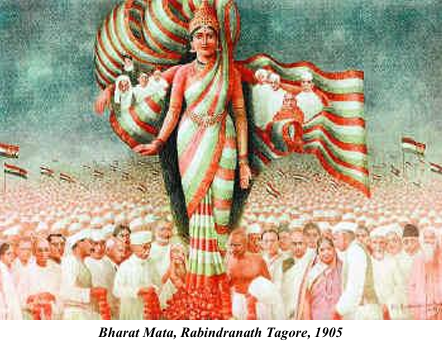
Bharat Mata
The identity of India came to visually associated with the image of Bharat Mata. The image was first created by Bankim Chandra Chatatopadhyay. In the 1870s he wrote `Vande Materam' as a hymn to the motherland. Later it was included in his novel Anandamath and widely sung during the Swadeshi movement in Bengal. Moved by the Swadeshi movement, Rabindranath Tagore painted his famous image of Bharat Mata. In this painting Bharat Mata is portrayed as an ascetic figure: she is calm, composed, divine and spiritual. Devotion to this mother figure came to be seen as evidence of one's nationalism.
National Song:
Bankim Chandra Chattopadhya in the 1870 wrote Vande Mataram as a hymn to the motherland. Later it was included in his novel “Anandmath.”
Folklores:
nineteenth-century India, nationalists began recording folk tales sung by bards and they toured villages to gather folk songs and legends. These tales, they believed, gave a true picture of traditional culture that had been corrupted and damaged by outside forces. It was essential to preserve this folk tradition in order to discover one’s national identity and restore a sense of pride in one’s past. In Bengal, Rabindranath Tagore himself began collecting ballads, nursery rhymes and myths, and led the movement for folk revival. In Madras, Natesa Sastri published a massive four-volume collection of Tamil folk tales, The Folklore of Southern India. He believed that folklore was national literature; it was ‘the most trustworthy manifestation of people’s real thoughts and characteristics’.
Nnational Flag
As the national movement developed, nationalist leaders became more and more aware of such icons and symbols in unifying people and inspiring in them a feeling of nationalism. During the Swadeshi movement in Bengal, a tricolour flag (red, green and yellow) was designed. It had eight lotuses representing eight provinces of British India, and a crescent moon, representing Hindus and Muslims. By 1921, Gandhiji had designed the Swaraj flag. It was again a tricolour (red, green and white) and had a spinning wheel in the centre, representing the Gandhian ideal of self-help. Carrying the flag, holding it aloft, during marches became a symbol of defiance.
Reinterpretaation of History
- Looking into the Glorious past by the end of the 9th century many Indians felt that to instill a sense of pride in the nation, Indian history had to be thought about differently. Indians started looking into the past to rediscover India’s achievements.
- They wrote about the development in ancient times when art, architecture, science, mathematics, religion, culture, law, crafts and trade had flourished.
- Then past being glorified was Hindu and celebrated images were drawn from Hindu iconology, the people of other communities felt left-out.
Role of Gandhi Ji in India's Struggles for Independance
Perhaps there is no other Indian who made so great a contribution as Mahatma Gandhi to the achievement of independence for India. He dominated the scene of the Indian politics from 1919 to 1947 A.D. So most of the Indian historians have given the name of "The Gandhi Era" to this period. There is no exaggeration in it. He united all the elements of the Indian National Movement under his banner. Actively participating himself in the struggle for freedom, he guided other leaders as well.
He made the powerful and strong. British Government yield by the use of his peaceful weapon of non−violence. He did not make use of any violent means to achieve freedom or independence but employed the peaceful movement of Non Cooperation Sataygrha and Boycott Swadeshi, etc. for this purpose.
He laboured hard to keep Hindus and Muslims united so that the British policy of 'Divide and Rule' should not succeed.
He did a lot for the uplift of the Harijans and laboured hard to get them a respectable position in the society.
In fact Gandhiji was always ready to sacrifice his all for the sake of his countrymen and his motherland. For this he had to pass through many risks. He had to bear the lathi blow and had also to go to the jail many a time. Even then he did not give up his struggle and continued his efforts as a brave soldier. His able leadership and sacrifices ultimately compelled the British to leave India on 15th August, 1947 A.D. It was he who had made the Congress movement a mass movement. Take any of the movements the Non-cooperation Movement, the Satyagraha Movement, the Civil Disobedience Movement, the Quit India Movement, it were the common masses that played the major role and took an active part in the freedom movement of the country. It was he who inspired the people with new confidence in their fight for freedom. The common masses realized the strength of their unity and cooperation and learnt the lessons in self sacrifice and self reliance.
NATIONALISM IN INDIA
SOLVED QUESTIONS
1. Why was the Rowlatt Act passed?
Ans. It was hurriedly passed by the imperial Legislative council in 1919 to empower the government to suppress political activities against British rule.
2. Why did Gandhiji organize the Champaran Satyagraha?
Ans. In 1916 he organized the Champaran Satyagraha in Bihar to inspire the peasants to struggle against the oppressive plantation system organized by the British.
3. Why did Gandhiji take up the Khilafat issue as a part of the national struggle for freedom?
Ans. Mahatma Gandhi decided to take up the Khilafat issue as he felt the need to launch a more broad-based movement in India by bringing the Hindus and Muslims closer together.
4. What were the demands made by the peasants of Awadh?
Ans. They demanded reduction of rent, abolition of beggar, and boycott of oppressive landlords.
5. Why did Indians protest against the Simon Commission?
Ans. The Simon commission did not have a single Indian member. They were all British. When the Commission arrived in India in 1928, it was greeted with the slogan ‘Go back Simon’.
6. Why did Gandhiji call off the Rowlatt Act Satyagraha?
Ans. Mahatma Gandhi wanted the Rowlatt satyagraha to be a non-violent civil disobedience against such unjust laws. When he saw that violence was spreading, Mahatma Gandhi called off the movement.
7. What was the attitude of the INC to the Awadh peasant movement and the methods used by them?
Ans. When the Non-cooperation Movement began, the effort of the Congress was to integrate the Awadh peasant struggle into the wider struggle. The peasant movement developed into a violent struggle that the Congress leadership was unhappy with. This was not approved by the INC.
8. Why did Gandhiji return disappointed from the Round Table conference?
Ans. In December 1931, Gandhiji went to London for the Round Table Conference, but the negotiations broke down and he had to return disappointed.
9. Who designed the Swaraj flag with what colour and when?
Ans. In 1921, Gandhiji had designed the Swaraj flag. It was a tricolour (red, green and white) and had a spinning wheel in the centre, representing the Gandhian ideal of self-help.
10. Described the new method of mass agitation started by Gandhiji.
Ans. (i) In South Africa, Gandhiji had successfully fought the racist regime with a unique method of mass agitation called satyagraha.
(ii) Satyagraha emphasized the power of truth and the need to search for truth. It suggested that if the cause was true, if the struggle was against injustice, then physical force was not necessary to fight the oppressor.
(iii) A satyagrahi could win the battle through non-violence. This could be done by appealing to the conscience of the oppressor. By this struggle, truth was bound to ultimately triumph. Mahatma Gandhi believed that this new dharma of non-violence could unite all Indians.
11. Why is Satyagraha not to be classified as passive resistance according to Gandhiji?
Ans. (i) The idea of satyagraha is based on the power of truth and non-violence.
(ii) According to Mahatma Gandhi, it is not a passive resistance but it calls for intense activity. Satyagraha is pure soul force.
(iii) Truth is the very substance of the soul. That is why this force is called satyagraha. Non violence is the supreme dharma of satyagraha.
12. Describe the reaction of the people to Jallianwala Bagh massacre. How did the British respond?
Ans. (i) As the news of Jallianwala Bagh spread, crowds took to the streets in many north Indian towns. There were strikes. People clashed with the police and attacked government buildings.
(ii) The Government responded with ruthless repression. They humiliated and terrorized people. Satyagrahis were forced to rub their noses on the ground, crawl on the streets, and do salaam (salute) to all sahibs.
(iii) People were flogged and villages (around Gujranwala in Punjab, now in Pakistan) were bombed.
13. How did the non-cooperation movement unfold? Ans. (i) Gandhiji proposed that the movement should unfold in stages.
(ii) It should begin with the surrender of titles that the government awarded, and a boycott of civil services, army, police, courts and legislative councils, schools, and foreign goods.
(iii) Then, in case the government used repression, a full civil disobedience campaign would be launched.
14. What were the decisions made in the Lahore session of the Congress in 1929?
Ans. (i) In December 1929, under the presidency of Jawaharlal Nehru, the Lahore Congress formalized the demand of ‘Purna Swaraj’ or complete independence for India.
(ii) It was declared that 26 January 1930, would be celebrated as the Independence Day when people were to take a pledge to struggle for complete independence.
A civil disobedience movement would be launched to achieve it.