Class 10 History Notes – Print Culture and the Modern World
This Class 10 chapter explains how the invention of printing changed the world by spreading knowledge, ideas, and literacy. It covers the development of print technology in Europe and India.
Invention of Printing in Europe
The printing press, invented by Johannes Gutenberg in the 15th century, revolutionized communication. Books became cheaper and more accessible, leading to the spread of education and new ideas.
Growth of Reading Public
-
Literacy increased across Europe.
-
Religious texts like the Bible reached common people.
-
Newspapers, magazines, and pamphlets spread information quickly.
Print and Reformation
The print revolution played a key role in the Protestant Reformation. Reformers like Martin Luther used printed pamphlets to criticize the Catholic Church and spread new ideas.
Print Culture in India
Printing came to India with the Portuguese in the 16th century. By the 19th century, newspapers, journals, and novels became popular. Print encouraged debates on social reforms such as widow remarriage, caste discrimination, and women’s education.
Impact of Print
-
Promoted education and literacy
-
Spread political awareness and nationalism
-
Encouraged social reforms
-
Strengthened cultural identity
Quick Revision Notes – Print Culture and the Modern World
-
Gutenberg’s press started the print revolution.
-
Books and newspapers spread new ideas.
-
Printing encouraged the Reformation in Europe.
-
In India, print promoted reforms and nationalism.
Important Terms
- Almanac: An annual publication giving astronomical data, information about the movements of the sun and moon, timing of full tides and eclipses, and much else that was of importance in the everyday life of the people.
- Ballad: A historical account of folk tale in verse usually sung or recited.
- Chapbook: A term used to describe pocket-size books that are sold by travelling peddlers called chapman.
- Despotism: A system of government in which absolute power is exercised by an individual, unregulated by legal and constitutional checks.
- Platen: In letterpress printing, platen is a board which is pressed on to the back of the paper to get the impression from the type. At one time, it used to be a wooden board. Later, it was made of steel.
- Protestant Reformation: A 16th century movement to reform the Catholic Church dominated by Rome.
- Vellum: A parchment made from the skin of animals.
- Calligraphy: The art of beautiful and stylized writing.
- Compositor: The person who composes the text for printing.
- Galley: Metal frame in which types are laid and the text composed.
- Taverns: Places where people gathered to drink alcohol, to be served food, and to meet friends and exchange news.
- Inquisition: A former Roman Catholic court for identifying and punishing heretics.
- Heretical: Beliefs which do not follow the accepted teachings of the Church. Heretical beliefs were severely punished.
- Satiety: The state of being fulfilled much beyond the point of satisfaction.
- Seditious: Action, speech or writing that is seen as opposing the government.
- Denominations: Subgroups within a religion.
- Ulama: Legal scholars of Islam and the sharia (a body of Islamic law).
- Fatwa: A legal pronouncement on Islamic law usually given by a mufti (legal scholar) to clarify issues on which the law is uncertain.
The First Printed Books
- China had a lead in the paper making and printing from the ancient time. Japan and Korea were not far behind. The earliest kind of print technology was developed in China, Japan and Korea.
- From AD 594 onwards, books in China were printed by rubbing paper – also invented there – against the inked surface of woodblocks.
- As both sides of the thin, porous sheet could not be printed, the traditional Chinese 'accordion book' was folded and stitched at the side.
- Production of printed material was under the imperial state in China, for long. China possessed a huge bureaucratic system which recruited its personnel through civil service examination.
- Development of urban culture in China by 17th century helped printed style to diversify. Print was no longer used just by scholar-officials. Merchants used print in their everyday life, as they collected trade information.
- The advent of new technology in printing helped in new reading culture in Europe. Western printing techniques and mechanical presses were imported in the late nineteenth century as Western powers established their outposts in China.
Print Culture of Japan:
- Buddhist missionaries from China introduced hand printing technology into Japan around AD 768 - 770.
- The oldest Japanese book, printed in AD 868, is the Buddhist Diamond Sutra, containing six sheets of text and woodcut illustrations.
- Pictures were printed on Playing cards, paper money and textile products.
- In medieval Japan, the works of poets and prose writers were regularly published and books were cheap and abundant.
- In the late 18th century, in the flourishing urban circles at Edo (later to be known as Tokyo), illustrated collections of paintings depicted an elegant urban culture, involving artists, courtesans and teahouse gatherings.
Prints Comes to Europe
For centuries, silk and spices from China flowed into Europe through the silk route. In the eleventh century, Chinese paper reached Europe via the same route. Paper made possible the production of manuscripts, carefully written by scribes. Then, in 1295, Marco Polo, a great explorer, returned to Italy after many years of exploration in China. Marco Polo brought the knowledge of printing technology back with him. Now Italians began producing books with woodblocks, and soon the technology spread to other parts of Europe.
Luxury editions were still handwritten on very expensive vellum, meant for aristocratic circles and rich monastic libraries which scoffed at printed books as cheap vulgarities. Merchants and students in the university towns bought the cheaper printed copies.
As the demand for books increased, booksellers all over Europe began exporting books to many different countries. Book fairs were held at different places. Production of handwritten manuscripts was also organised in new ways to meet the expanded demand. Scribes or skilled handwriters were no longer solely employed by wealthy or influential patrons but increasingly by booksellers as well. More than 50 scribes often worked for one bookseller.
Limitations of Handwritten Manuscripts:
It could not satisfy the ever-increasing demand for books. Copying was an expensive, laborious and time-consuming business. Manuscripts were fragile, awkward to handle, and could not be carried around or read easily. Their circulation therefore remained limited. Hence woodblock printing gradually became more and more popular.
Gutenberg and the printing Press:
- Gutenberg was the son of a merchant and grew up on a large agricultural estate.
- He learnt the art of polishing stones, became a master goldsmith, and also acquired the expertise to create lead moulds used for making trinkets.
- Gutenberg adapted existing technology to design his innovation.
- By 1448, Gutenberg perfected the system. The first book he printed was the Bible. About 180 copies were printed and it took three years to produce them. By the standards of the time this was fast production.
- Printed books at first closely resembled the written manuscripts in appearance and layout.
- Borders were illuminated by hand with foliage and other patterns, and illustrations were painted.
- In the books printed for the rich, space for decoration was kept blank on the printed page.
- In the hundred years between 1450 and 1550, printing presses were set up in most countries of Europe. Printers from Germany traveled to other countries, seeking work and helping start new presses.
- The shift from hand printing to mechanical printing led to the print revolution.
- The second half of the fifteenth century saw 20 million copies of printed books flooding the markets in Europe. The number went up in the sixteenth century to about 200 million copies.
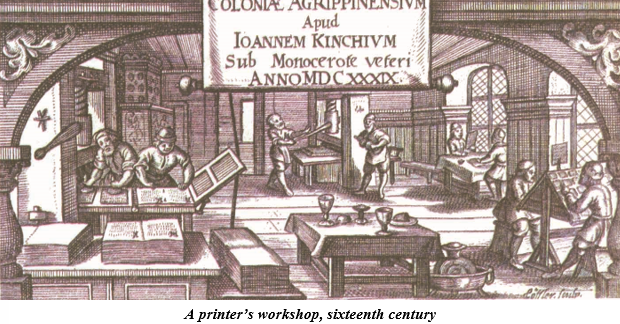
Print Revolutions and It's Impact
The shift from hand printing to mechanical printing was not just a development, but led to the print revolution.
- It transformed the lives of the people.
- It changed their relationship to information and knowledge.
- It affected relationship with institutions and authorities.
- It opened up new ways of looking at things, influenced popular perceptions.
A New Reading Public:
With the printing press, a new reading public emerged. Printing reduced the cost of books. The time and labour required to produce each book came down, and multiple copies could be produced with greater ease. Books flooded the market, reaching out to an ever-growing readership.
Access to books created a new culture of reading. Earlier, reading was restricted to the elites. Common people lived in a world of oral culture. They heard sacred texts read out, ballads recited, and folk tales narrated. Knowledge was transferred orally. People collectively heard a story, or saw a performance. Before the age of print, books were not only expensive but they could not be produced in sufficient numbers. Now books could reach out to wider sections of people. If earlier there was a hearing public, now a reading public came into being.
But the transition was not so simple. Books could be read only by the literate, and the rates of literacy in most European countries were very low till the twentieth century. To encourage reading, printers began publishing popular ballads and folk tales, and such books would be profusely illustrated with pictures. These were then sung and recited at gatherings in villages and in taverns in towns.
Oral culture thus entered print and printed material was orally transmitted. The line that separated the oral and reading cultures became blurred. And the hearing public and reading public became intermingled.
Religious Debates and the Fear of Print:
- Print created the possibility of wide circulation of ideas, and introduced a new world of debate and discussion.
- Through the printed message, they could persuade people to think differently, and move them to action.
- Many were apprehensive of the effects that the easier access to the printed word and the wider circulation of books, could have on people's mind.
- It was feared that if there was no control over what was printed and read then rebellious and irreligious thoughts might spread.
- If that happened the authority of 'valuable' literature would be destroyed.
- Expressed by religious authorities and monarchs, as well as many writers and artists, this anxiety was the basis of widespread criticism of the new printed literature that had begun to circulate.
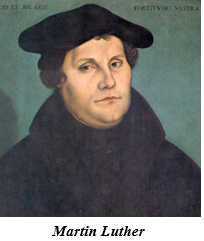
- In 1517, the religious reformer Martin Luther wrote Ninety Five Theses criticizing many of the practices and rituals of the Roman Catholic Church.
- A printed copy of this was posted on a church door in Wittenberg. It challenged the Church to debate his ideas. Luther's writings were immediately reproduced in vast numbers and read widely.
- This led to a division within the Church and to the beginning of the Protestant Reformation. Luther's translation of the New Testament sold 5,000 copies within a few weeks and a second edition appeared within three months.
- Luther said "printing is the ultimate gift of god and the greatest one.
- Several scholars, in fact, think that print brought about a new intellectual atmosphere and helped spread the new ideas that led to the Reformation.
Effects on Religion
In 1517, the religious reformer Martin Luther wrote Ninety Five Theses criticising many of the practices and rituals of the Roman Catholic Church. A printed copy of this was posted on a church door in Wittenberg. It challenged the Church to debate his ideas. Luther’s writings were immediately reproduced in vast numbers and read widely. This led to a division within the Church and to the beginning of the Protestant Reformation. Luther’s translation of the New Testament sold 5,000 copies within a few weeks and a second edition appeared within three months. Deeply grateful to print, Luther said, ‘Printing is the ultimate gift of God and the greatest one.’ Several scholars, in fact, think that print brought about a new intellectual atmosphere and helped spread the new ideas that led to the Reformation.
Print and Dissent:
In the sixteenth century, Manocchio, a miller in Italy, began to read books that were available in his locality. He reinterpreted the message of the Bible and formulated a view of God and Creation that enraged the Roman Catholic Church. When the Roman Church began its inquisition to repress heretical ideas, Manocchio was hauled up twice and ultimately executed. The Roman Church, troubled by such effects of popular readings and questioning of faith, imposed severe controls over publishers and booksellers and began to maintain an Index of Prohibited Books from 1558.
The reading Mania:
Through the seventeenth and eighteenth centuries literacy rates went up in most parts of Europe. Churches of different denominations set up schools in villages, carrying literacy to peasants and artisans. By the end of the eighteenth century, in some parts of Europe literacy rates were as high as 60 to 80 per cent. As literacy and schools spread in European countries, there was a virtual reading mania.
People wanted books to read and printers produced books in ever-increasing numbers. New forms of popular literature appeared in print, targeting new audiences. Booksellers employed pedlars who roamed around villages, carrying little books for sale. There were almanacs or ritual calendars, along with ballads and folktales. But other forms of reading matter, largely for entertainment, began to reach ordinary readers as well.
In England, penny chapbooks were carried by petty pedlars known as chapmen, and sold for a penny, so that even the poor could buy them. In France, were the 'Bibliothèque Bleue', which were low-priced small books printed on poor quality paper, and bound in cheap blue covers. Then there were the romances, printed on four to six pages, and the more substantial 'histories' which were stories about the past. Books were of various sizes, serving many different purposes and interests.
The periodical press developed from the early eighteenth century, combining information about current affairs with entertainment. Newspapers and journals carried information about wars and trade, as well as news of developments in other places.
Similarly, the ideas of scientists and philosophers now became more accessible to the common people. Ancient and medieval scientific texts were compiled and published, and maps and scientific diagrams were widely printed. When scientists like Isaac Newton began to publish their discoveries, they could influence a much wider circle of scientifically minded readers. The writings of thinkers such as Thomas Paine, Voltaire and Jean Jacques Rousseau were also widely printed and read. Thus their ideas about science, reason and rationality found their way into popular literature.
Trembles, Therefore, Tyrants of the World'
- Many believed that books could change the world, liberate society from despotism and tyranny, and herald a time when reason and intellect would rule. Louis-Sebastien Mercier, a novelist in eighteenth-century France, declared: 'The printing press is the most powerful engine of progress and public opinion is the force that will sweep despotism away'.
- In many of Mercier's novels, the heroes are transformed by acts of reading. They devour books, are lost in the world books create, and become enlightened in the process.
- Convinced of the power of print in bringing enlightenment and destroying the basis of despotism, Mercier proclaimed "Tremble, therefore, tyrants of the world. Tremble before these writers".
Print Culture and The French Revolutions
Print popularised the ideas of the Enlightenment thinkers. Collectively, their writings provided a critical commentary on tradition, superstition and despotism. They argued for the rule of reason rather than custom, and demanded that everything be judged through the application of reason and rationality. They attacked the sacred authority of the Church and the despotic power of the state, thus eroding the legitimacy of a social order based on tradition. The writings of Voltaire and Rousseau were read widely; and those who read these books saw the world through new eyes, eyes that were questioning, critical and rational.
Print created a new culture of dialogue and debate. All values, norms and institutions were re-evaluated and discussed by a public that had become aware of the power of reason, and recognised the need to question existing ideas and beliefs. Within this public culture, new ideas of social revolution came into being.
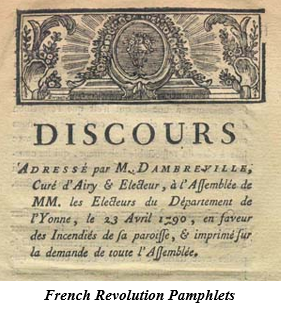
By the 1780s there was an outpouring of literature that mocked the royalty and criticised their morality. In the process, it raised questions about the existing social order. Cartoons and caricatures typically suggested that the monarchy remained absorbed only in sensual pleasures while the common people suffered immense hardships. This literature circulated underground and led to the growth of hostile sentiments against the monarchy.
The Nineteenth Century
The nineteenth century saw vast leaps in mass literacy in Europe, bringing in large numbers of new readers among children, women and workers.
Children, Women and Workers:
(i) Children: From the late nineteenth century, children became an important category of readers. Production of school textbooks became critical for the publishing industry. A children's press, devoted to literature for children alone, was set up in France in 1857. This press published new works as well as old fairy tales and folk tales. Anything that was considered unsuitable for children or would appear vulgar to the elites, was not included in the published version.
(ii) Women: Women became important as readers as well as writers. Penny magazines were especially meant for women, as were manuals teaching proper behaviour and housekeeping. Some of the best-known novelists were women: Jane Austen, the Bronte sisters, George Eliot. Their writings became important in defining a new type of woman: a person with will, strength of personality, determination and the power to think.
(iii) Workers: In the nineteenth century, lending libraries in England became instruments for educating white-collar workers, artisans and lower-middle-class people. After the working day was gradually shortened from the mid-nineteenth century, workers had some time for self-improvement and self-expression. They wrote political tracts and autobiographies in large numbers.
Further Innovations
- By the late eighteenth century, the press came to be made out of metal. Through the nineteenth century, there were a series of further innovations in printing technology.
- By the mid-nineteenth century, Richard M. Hoe of New York had perfected the power-driven cylindrical press.
- This was capable of printing 8,000 sheets per hour. This press was particularly useful for printing newspapers.
- In the late nineteenth century, the offset press was developed which could print up to six colours at a time.
- From the turn of the twentieth century, electrically operated presses accelerated printing operations.
- Methods of feeding paper improved, the quality of plates became better, automatic paper reels and photoelectric controls of the colour register were introduced.
- The accumulation of several individual mechanical improvements transformed the appearance of printed texts.
- Serialized writing was the new product introduced by the printers and publishers as new strategies to sell their products.
- Nineteenth-century periodicals serialized important novels, which gave birth to a particular way of writing novels.
- In the 1920s in England, popular works were sold in cheap series, called the Highlight Series.
- With the onset of the Great Depression in the 1930s, publishers feared a decline in book purchases. To sustain buying they brought out cheap paperback editions.
India and The World pf Print
Manuscripts Before the Age of Print:
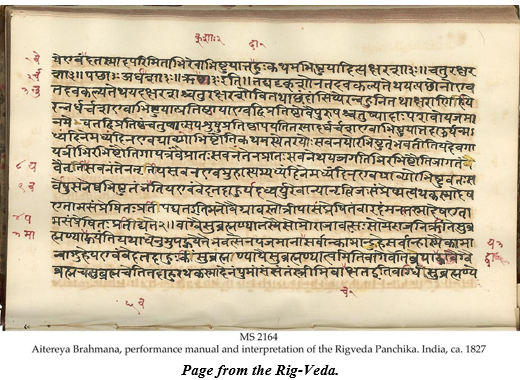
India had a very rich and old tradition of hand written manuscripts in Sanskrit, Arabic, Persian, as well as in various vernacular languages. Manuscripts continued to be produced till well after the introduction of print, down to the late nineteenth century.
Manuscripts were however very expensive and fragile and had to be handled carefully, and they could not be read easily as the scripts were written in different styles. So the manuscripts were not widely used in everyday life.
Prints Comes to India:
The printing press first came to Goa with Portuguese missionaries in the mid-sixteenth century. Jesuit priests learnt Konkani and printed several tracts. By 1674, about 50 books had been printed in the Konkani and in Kanara languages. Catholic priests printed the first Tamil book in 1579 at Cochin, and in 1713 the first Malayalam book was printed by them. By 1710, Dutch Protestant missionaries had printed 32 Tamil texts, many of them translations of older works.
The English language press did not grow in India till quite late even though the English East India Company began to import presses from the late seventeenth century.
From 1780, James Augustus Hickey began to edit the Bengal Gazette, a weekly magazine that described itself as 'a commercial paper open to all, but influenced by none'. So it was private English enterprise; proud of its independence from colonial influence; that began English printing in India. Hickey published a lot of advertisements, including those that related to the import and sale of slaves. But he also published a lot of gossip about the Company's senior officials in India. Enraged by this, Governor-General Warren Hastings persecuted Hickey, and encouraged the publication of officially sanctioned newspapers that could counter the flow of information that damaged the image of the colonial government.
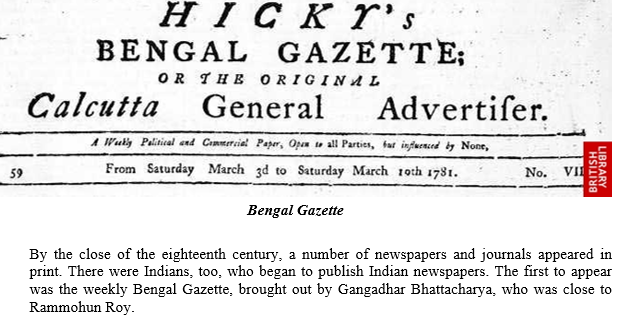
By the close of the eighteenth century, a number of newspapers and journals appeared in print. There were Indians, too, who began to publish Indian newspapers. The first to appear was the weekly Bengal Gazette, brought out by Gangadhar Bhattacharya, who was close to Rammohun Roy.
Religious Refirm and Public Debates
- Different groups confronted the changes happening within colonial society in different ways, and offered a variety of new interpretation of the beliefs of different religions.
- Some criticized existing practices and campaigned for reform, while others countered the arguments of reforms.
- These debates were carried out in public and in print. Printed tracts and newspapers not only spread the new ideas, but they shaped the nature of the debate.
Prints and Social Reform:
In north India, the ulama were deeply anxious about the collapse of Muslim dynasties. They feared that colonial rulers would encourage conversion, change the Muslim personal laws. To counter this, they used cheap lithographic presses, published Persian and Urdu translations of holy scriptures, and printed religious newspapers and tracts. The Deoband Seminary, founded in 1867, published thousands upon thousands of fatwas telling Muslim readers how to conduct themselves in their everyday lives, and explaining the meanings of Islamic doctrines. All through the nineteenth century, a number of Muslim sects and seminaries appeared, each with a different interpretation of faith, each keen on enlarging its following and countering the influence of its opponents. Urdu print helped them conduct these battles in public.
Prints and the Hindus:
- The first printed edition of the Ramcharitmanas of Tulsidas came out from Calcutta in 1810.
- The mid-nineteenth century, cheap lithographic editions flooded the north Indian markets.
- From the 1880s, the Naval Kishore Press at Lucknow and the Shri Venkateshwar Press in Bombay published many religious texts in vernaculars.
Religious texts and books started reaching a very wide circle of people, encouraging debates and controversies within and among different religions. Print did not only stimulate the publication of conflicting opinions amongst communities, but it also connected communities and people in different parts of India, creating pan-Indian identities.
New Forms of Publication
- Many new expectations of the readers, their experiences, emotions were being printed now in book shape because of an extended readership.
- An appetite for new kinds of writing was created by printing. As more and more people could now read, they wanted to see their own lives, experiences, emotions and relationships reflected in what they read.
- The novel, a literary form which had developed in Europe, ideally catered to this need. It soon acquired distinctively Indian forms and styles.
- All the new themes, topics and social, political ideas of the people became new form of literary text and readily available to larger section of people due to modern printing press.
- Other new literary forms also entered the world of reading – lyrics, short stories, essays about social and political matters.
- In different ways, they reinforced the new emphasis on human lives and intimate feelings, about the political and social rules that shaped such things.
- By the end of the nineteenth century, a new visual culture was taking shape.
- With the setting up of an increasing number of printing presses, visual images could be easily reproduced in multiple copies.
- Painters like Raja Ravi Verma produced images for mass circulation.
- Cheap prints and calendars, easily available in the bazaar, could be bought even by the poor to decorate the walls of their homes or places of work.
- By the 1870s, caricatures and cartoons were being published in journals and newspapers, commenting on social and political issues.
- Some caricatures ridiculed the educated Indians' fascination with Western tastes and clothes, while others expressed the fear of social change.
- There were imperial caricatures lampooning nationalists, as well as nationalist cartoons criticizing imperial rule.
Womenand Prints
(i) Women Education: Writers started writing about the lives and feelings of women and this increased the number of women readers. Women got interested in education and many women schools and colleges were set up. Many journals started emphasizing the importance of women education.
(ii) Women Writers: In East Bengal, in the early nineteenth century, Rashsundari Debi, a young married girl in a very orthodox household, learnt to read in the secrecy of her kitchen. Later, she wrote her autobiography "Amar Jiban" which was published in 1876, was the first full-length autobiography published in the Bengali language.
From the 1860s, many Bengali women writers like Kailashbashini Debi wrote books highlighting the experiences of women. In the 1880s, in present-day Maharashtra, Tarabai Shinde and Pandita Ramabai wrote with passionate anger about the miserable lives of upper-caste Hindu women, especially widows. The poor status of women was also expressed by Tamil writers.
(iii) Hindu Writing and Women: Hindu printing began seriously only from the 1870s. Soon, a large section of it was devoted to the education of women.
(iv) New Journals: In the early 20th century, the journals written by women became very popular in which women's education, widowhood, widow remarriage etc. were discussed. Some of them offered household and fashion lessons for women.
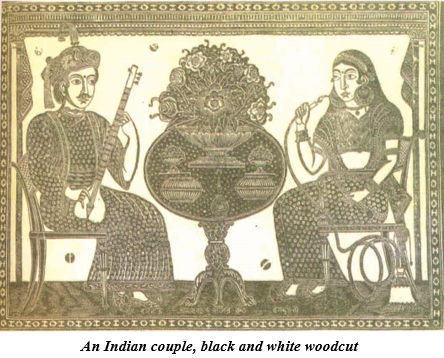
(v) Teachings for Women: In Punjab, Ram Chaddha published Istri Dharm Vichar to teach women how to be obedient wives. The Khalsa Tract Society published cheap booklets with a similar message. In Bengal, an entire area in central Calcutta - the Battala - was devoted to the printing of popular books. Peddlers took the Battala publications to homes, enabling women to read them in their leisure time.
Prints and the Poor People
Very cheap small books were brought to markets in nineteenth-century Madras towns and sold at crossroads, allowing poor people traveling to markets to buy them.
(i) Public Libraries: Public libraries were set up from the early twentieth century, expanding the access to books. For rich local patrons, setting up a library was a way of acquiring prestige.
(ii) Highlighting the Issue of Class Discrimination: From the late nineteenth century, issues of caste discrimination began to be written about in many printed tracts and essays. Jyotiba Phule, the Maratha pioneer of 'low caste' protest movements, wrote about the injustices of the caste system in his Gulamgiri (1871). In the twentieth century, B.R. Ambedkar in Maharashtra and E.V. Ramaswamy Naicker in Madras, better known as Periyar, wrote powerfully on caste and their writings were read by people all over India. Local protest movements and sects also created a lot of popular journals and tracts criticising ancient scriptures and envisioning a new and just future.
(iii) Poor Workers and Print: Workers in factories were too overworked and lacked the education to write much about their experiences. But Kashibaba, a Kanpur millworker, wrote and published Chhote Aur Bade Ka Sawal in 1938 to show the links between caste and class exploitation. The poems of another Kanpur millworker, who wrote under the name of Sudarshan Chakr between 1935 and 1955, were brought together and published in a collection called Sacchi Kavitayan. By the 1930s, Bangalore cotton millworkers set up libraries to educate themselves, following the example of Bombay workers. These were sponsored by social reformers who tried to restrict excessive drinking among them, to bring literacy and, sometimes, to propagate the message of nationalism.
Print and Censorship
- Before 1798, the colonial state under the East India Company was not too concerned with censorship.
- Early measures to control printed matter were directed against Englishmen in India who were critical of Company misrule and hated the actions of particular Company officers.
- The Company was worried that such criticisms might be used by its critics in England to attack its trade monopoly in India.
- By the 1820s, the Calcutta Supreme Court passed certain regulations to control press freedom and the Company began encouraging publication of newspapers that would celebrate British rule.
- In 1835, faced with urgent petitions by editors of English and vernacular newspapers, Governor-General Bentinck agreed to revise press laws. Thomas Macaulay, a liberal colonial official, formulated new rules that restored the earlier freedoms.
- After the revolt of 1857, the attitude to freedom of the press changed. Enraged Englishmen demanded a clamp down on the 'native' press.
- As vernacular newspapers became assertively nationalist, the colonial government began debating measures of stringent control. Local newspapers started criticizing British rule.
- In 1878, the Vernacular Press Act was passed, modelled on the Irish Press Laws. It provided the government with extensive rights to censor reports and editorials in the vernacular press.
- From now on the government kept regular track of the vernacular newspapers published in different provinces.
- When a report was judged as seditious, the newspaper was warned, and if the warning was ignored, the press was liable to be seized and the printing machinery confiscated.
- Number of Nationalist Newspapers were increasing despite repressive measures taken by the British government all over India.
- Attempts to block nationalist criticism provoked militant protest.
- When Punjab revolutionaries were deported in 1907, Balgangadhar Tilak wrote with great sympathy about them in his Kesari. This led to his imprisonment in 1908, provoking in turn widespread protests all over India.
Summary
The Print Revolution and its Impact:
- Printing press, a new reading public emerged. Reduced the cost of books, now a reading public came into being.
- Knowledge was transferred orally. Before the age of print books were not only expensive but they could not be produced in sufficient numbers.
- But the transition was not so simple. Books could be read only by the literate and the rates of literacy in most European countries were very low. Oral culture thus entered print and printed material was orally transmitted. And the hearing public and reading public became intermingled.
Religious Debates and the Fear of Print:
- Print created the possibility of wide circulation of ideas.
- Through the printed message, they could persuade people to think differently and introduced a new world of debate and discussion. This had significance in different spheres of life.
- Many were apprehensive of the effects that the easier access to the printed world and the wider circulation of books, could have on people's minds.
- If that happened the authority of 'valuable' literature would be destroyed, expressed by religious authorities and monarchs, as well as many writers and artists, achievement of religious areas of Martin Luther.
- A new intellectual atmosphere and helped spread the new ideas that led to the reformation.
Print Culture and the French Revolution:
- Print popularized the ideas of the enlightenment thinkers. Collectively, their writings provided a critical commentary on tradition, superstition and despotism.
- Print created a new culture of dialogue and debate. All values, forms and institutions were re-evaluated and discussed by a public that had become aware of the power of reason.
- 1780's there was an outpouring of literature that mocked the royalty and criticised their morality. In the process, it raised questions about the existing social order.
- The print helps the spread of ideas. People did not read just one kind of literature. If they read the ideas of Voltaire and Rousseau, they were also exposed to monarchic and church propaganda.
- Print did not directly shape their minds, but it did open up the possibility of thinking differently.
The Nineteenth Century (Women):
- As primary education became compulsory from the late nineteenth century, a large number of new readers were especially women.
- Women became important as readers as well as writers. Penny magazines were especially meant for women, as were manuals teaching proper behaviour and housekeeping.
- In the nineteenth century, lending libraries in England, lower middle class people. Sometimes self-educated working class people wrote for themselves. Women were seen as important readers. Some of the best known novelists were women: Jane Austen, the Bronte sisters, George Eliot. Their writings became important in defining a new type of woman.
India and the World of Print:
- India had a very rich and old tradition of handwritten manuscripts – in Sanskrit, Arabic, Persian, as well as various vernacular languages.
- Manuscripts were copied on palm leaves or on handmade paper.
- The printing press first came to Goa with Portuguese missionaries.
- Jesuit priests learnt Konkani and printed several tracts.
The Nineteenth Century:
- A children's press, devoted to literature for children alone, was set up in France in 1857.
- The Grimm Brothers in Germany spent years compiling traditional folk tales gathered from peasants.
- Women were seen as important readers.
The Reading Mania:
- By the end of the eighteenth century, in some parts of Europe literacy rates were as high as 60 to 80 per cent.
- As literacy and schools spread in European countries, there was a virtual reading mania.
- In France, were the 'Bibliothèque Bleue', which were low priced small books printed on poor quality paper and bound in cheap blue covers.
The Printing Revolution and Its Impact:
- Access to books created a new culture of reading.
- Common people lived in a world of oral culture.
- They heard sacred texts read out, ballads recited, and folk tales narrated.
- Print created the possibility of wide circulation of ideas introduced a new world of debate and discussion.
Print Comes to Europe:
- The production of handwritten manuscripts could not satisfy the ever-increasing demand for books.
- By the early fifteenth century, wood blocks were being widely used in Europe to print textiles, cards, and religious pictures.
- Printers from Germany traveled to other countries, seeking work and helping start new presses.
Printing in China and Japan:
- Printing first developed in China.
- This was a system of hand printing.
- Printing of visual china and material led to interesting publishing practices.
- Libraries and bookstores were packed with hand-printed material of various types – books on women, musical instruments, calculations, tea ceremony etc.
Print and Censorship:
- The Calcutta Supreme Court passed certain regulations to control press freedom and the Company began encouraging publications of newspapers that would celebrate British rule.
- Governor-General Bentinck agreed to revise press laws.
- Thomas Macaulay a liberal colonial official formulated new rules that restored the earlier freedoms.
- Vernacular press act passed in 1878.
Religious Reforms and Public Debates:
- In Bengal, tracts and newspapers proliferated, circulating a variety of arguments.
- To reach a wider audience, the ideas were printed in the everyday, spoken language of ordinary people.
- Ram Mohan Roy published the Sambad Kaumudi.
EXERCISE - 1 (Multiple Choice Questions)
- What was the ancient name of Tokyo? Answer: (b) Edo
- Name the paper started by Bal Gangadhar Tilak Answer: (a) Kesari
- When did the French Revolution take place? Answer: (d) In 1789 AD
- Who invented printing press? Answer: (c) Johann Gutenberg
- When did the British Government pass an act to control the vernacular newspaper? Answer: (b) In 1878 AD
- Name two countries where print technology was developed first Answer: (b) China & Japan
- What was the first kind of printing system called? Answer: (c) Hand Printing System
- Name the Italian explorer who went to China in 1295. Answer: (b) Marco Polo
- Name the first printed publication in English which appeared in India. Answer: (c) Bengal Gazette
- Which country remained a pioneer in printing from a long time? Answer: (d) China
- Name one nationalist paper of India. Answer: (a) Amrit Bazar Patrika
- Who was James Augustus Hickey? Answer: (d) He was an English man
- Which and when was the first newspaper started in India? Answer: (b) The Bengal Gazette in 1780
- Who invented Printing Press? Answer: (a) Johann Guttenberg
- Earliest kind of print technology was developed in Answer: (a) China
- Oldest Japanese book printed was Answer: (b) Diamond sutra
- The Printing press was brought in India by Answer: (a) The Portuguese
- Who developed cylindrical press? Answer: (c) Richard Hoe
- Who wrote Gulamgiri? Answer: (c) Jyotiba Phule
- Who wrote Istri Dharma Vichar? Answer: (d) Ram Chaddha
EXERCISE - 2 (Short Answer Questions)
- Name the countries where the earliest kind of print technology was developed.
- What is calligraphy?
- Which material was used to print pictures in Japan?
- Why did the woodblock method become popular in Europe?
- What were the advantages of printing press?
- Name any four languages in which Indian manuscript was prepared before the age of print.
- Which was first Indian newspaper? By whom was it brought?
- Name any four Indian women writers of the 19th century.
- Describe the system of hand printing in China.
- How did printing press become a part of urban culture in the 17th century?
- Describe the contribution made by Gutenberg to printing technology.
- Did printing technology completely displace handmade books? Explain.
- With what kind of printed books did publishers persuade the common people to welcome the printed books?
- In what ways did print create the possibility of circulation of idea, debates and discussions? Explain.
- How did print revolution help speed up protestant reformation?
- What were the new forms of popular literature that targeted new audience?
- Why were the books considered a means of spreading progress and enlightenment?
- How had the idea of science and reason become popular among masses?
- Mention some of the important characteristics of print culture of Japan.
- Trace the history of print in Europe.
- Who was Johann Gutenberg? Explain his role in the history of printing.
- What were the features of new books which were produced in Europe after the invention of Gutenberg's press?
- Mention some of the innovations which have improved the printing technology after 17th century.
- Mention the major features of Indian manuscripts before the age of print.
- Explain the factors which were responsible for creating a virtual reading mania in Europe.
- What did the spread of print culture in the 19th century Europe mean to?
- (a) Children
- (b) Women
- (c) Workers
- Explain how print culture assisted the growth of nationalism in India.