Class 10 History Notes – The Making of the Global World
This Class 10 History chapter explains how the world economy developed over centuries, leading to globalization. It covers trade routes, the impact of colonization, the Industrial Revolution, and how wars reshaped global connections.
Early Trade and Exchange
Global interactions began with ancient trade routes such as the Silk Route, which connected Asia, Europe, and Africa. These routes carried not only goods but also cultures, ideas, and technologies.
Food and Cultural Exchange
Globalization also influenced diets and agriculture. For example, potatoes, maize, and tomatoes were introduced to Europe from the Americas. Similarly, Asian spices and textiles became popular in Europe.
Colonization and the Global Economy
Colonialism shaped the global world. European powers established colonies in Asia, Africa, and the Americas. This led to:
-
Exploitation of colonies for raw materials
-
Plantation farming with slave labor
-
Expansion of trade and markets
Industrial Revolution and Global Links
The Industrial Revolution boosted production and increased demand for raw materials. Britain emerged as a global leader, exporting manufactured goods and importing raw materials from its colonies.
World Wars and the Global Economy
-
First World War (1914–1918): It damaged the global economy, leading to economic depression.
-
Great Depression (1929): Affected trade, employment, and production worldwide.
-
Second World War (1939–1945): Restructured global power, with the USA and USSR emerging as superpowers.
Modern Globalization
Post-1945, international institutions like the IMF and World Bank promoted economic cooperation. Today, globalization includes not just trade but also cultural and technological exchange.
Quick Revision Notes – The Making of the Global World
-
Ancient trade routes like the Silk Route connected regions.
-
Food and agricultural exchange reshaped cultures.
-
Colonialism expanded global trade.
-
Industrial Revolution accelerated globalization.
-
World Wars and the depression changed world economies.
Important Terms
- Assembly Line: A system of production in which a worker performs a specific job in a sequence of activities.
- Caribbean Islands: Present-day West Indies.
- Colonised Societies: Those societies which had been brought under colonial domination.
- Dissenter: One who refuses to accept established beliefs and practices.
- Economic Stability: An economic situation in which there are no violent ups and downs.
- Floating Exchange Rate: A system of exchange rate management in which the exchange rate of a currency is fixed by its demand and supply in the foreign exchange markets.
- Global Agricultural Economy: Trade in agricultural goods among different nations of the world.
- Indebtedness: Refers to a situation in which a person owes some money to others.
- Tariff Barriers: Imposition of import duties to restrict imports of goods.
- Trade Surplus: A situation in which the total value of exports of a nation during a year exceeds the total value of imports.
Meaning of Global World
In today's world every aspect of our lives is having influence of many parts of this world. Start thinking about anything and you will find a bit of many nations in it. In our day to day life we may be eating burger from US, pizza from Italy or noodles from China. Most of the household items we are using are being manufactured by some multinational companies.
- Coke and Pepsi are from the US
- Hyundai is from Korea
- Suzuki is from Japan selling cars under Maruti's banner
- The calculator you are using may have been manufactured in Taiwan
- The English you are using is mix of US, British and Indianised version of the original language
The whole economy, society and culture has been shaped by influences from the outer nations. These influences have developed over hundreds of years. They have developed because of flow of goods, flow of people. Along with them the flow of ideas also took place, which gave us new words and new terminologies to communicate with.
The Pre-Modern World
Key Features:
- Travel and Trade: Travelers, traders, priests and pilgrims travelled vast distances in search of knowledge, opportunity, and spiritual fulfillment or to escape persecution. They carried articles, values and skills, even including diseases.
- Ancient Trade: The Harappa people used coastal regions for sea trade as early as 3000 B.C. They traded with Mesopotamia and for centuries, cowries or seashells from the Maldives were used as form of currency between China and East Africa.
- India's Global Links: India's global link was firmly established by the thirteenth century.
Silk Routes Link the World
About Silk Routes:
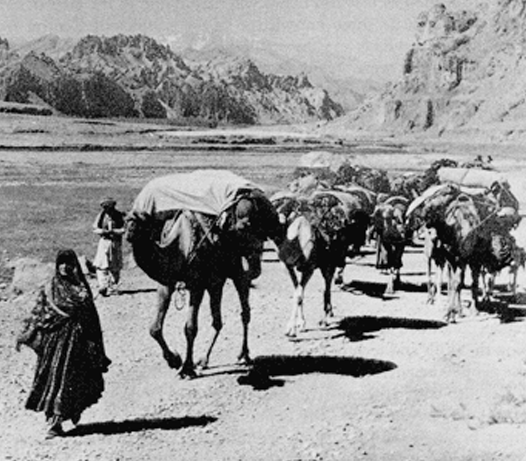
- Silk routes represent the path along which the movement of goods and people took place from one country of the continent to another.
- Historians have identified several silk routes, over land and sea, knitting together vast regions of Asia and linking Asia with Europe and Northern Africa.
- They are known to have existed since before the Christian Era. They existed till the fifteenth century.
Cargo through Silk Route:
Exports from India and Southeast Asia:
- Pottery
- Textiles
- Spices
Imports to India and Asia:
- Precious metals like gold and silver flowed from Europe to Asia
Cultural Exchange:
The silk routes are a good example of flourishing pre-modern trade and cultural links between distant regions of the world.
- The name 'silk routes' points to the importance of west-bound Chinese silk cargoes along this route.
- Trade and cultural exchanges always go hand in hand.
- Buddhism emerged from eastern India and spread in several directions through intersecting points on the silk routes.
- Christian missionaries traveled on this route to Asia.
- Muslim preachers also traveled on this route.
Travel of Food
Traders and travelers introduced new crops to the lands they traveled. Even 'ready' foodstuff in distant parts of the world might share common origins.
It is believed that noodles traveled west from China to become spaghetti. Or, perhaps Arab traders took pasta to fifth-century Sicily, an island now in Italy. Similar foods were also known in India and Japan, so the truth about their origins may never be known.
Foods Introduced After Christopher Columbus:
Many of our common foods such as potatoes, soya, groundnuts, maize, tomatoes, chillies, sweet potatoes, and so on were not known to our ancestors until about five centuries ago. These foods were only introduced in Europe and Asia after Christopher Columbus accidentally discovered the vast continent that would later become known as the Americas (Includes Modern day North and South America and Caribbean Islands).
Conquest, Diesease and Trade
- European Expansion: The pre-modern world shrank greatly in the sixteenth century after European sailors found a sea route to Asia and also successfully crossed the western ocean to America. For centuries before, the Indian Ocean had known a bustling trade. The entry of the Europeans helped expand or redirect some of these flows towards Europe.
- American Resources: From the sixteenth century America's vast lands and abundant crops and minerals began to transform trade and lives everywhere.
- Precious Metals: Mining of precious metals from present day Peru and Mexico enhanced Europe's wealth and financed its trade with Asia. Legends spread in seventeenth-century Europe about South America's fabled wealth. Many expeditions set off in search of El Dorado, the fabled city of gold.
- Disease as Weapon: European conquest was not just a result of superior firepower. Most powerful weapon of the Spanish conquerors was the germs such as those of smallpox that they carried on their person. Because of their long isolation, America's original inhabitants had no immunity against these diseases. Smallpox, once introduced spread deep into the continent, ahead even of any Europeans reaching there, it killed and decimated whole communities, paving the way for conquest.
- European Migration: Poverty, Hunger, Crowded cities, deadly diseases, Religious conflicts and prosecution of religious dissenters forced thousands of Europeans to flee Europe for America.
- China's Isolation: From the fifteenth century, China restricted overseas contacts and retreated into isolation. China's reduced role and the rising importance of the Americas gradually moved the centre of world trade westwards. Europe now emerged as the centre of world trade.
The Nineteenth Century (1815-1914)
There took place three types of movements or flows within international economic exchange:
1. Flow of Trade: It refers largely to trade in goods; goods were exported from one nation and imported by another.
2. Flow of Labour: It refers to the migration of labour from one country to another. Industrial revolution in Europe and resultant economic activities led to a tremendous increase in demand for labour. This could not be met domestically. Therefore, people from labour-surplus countries were encouraged to migrate to labour-deficit countries.
3. Movement of Capital: Capital moves from one country or region to another for short-term or long-term investments over long distances.
Important: All these flows represented that a world economy was gradually emerging. In a world economy, different economies get integrated and come to depend upon each other for varied needs.
A World Economy Takes Shape
- Food Production Changes: Pattern of food production and consumption in industrial Europe changed. Traditionally, countries liked to be self-sufficient in food. But in nineteenth-century Britain, self-sufficiency in food meant lower living standards and social conflict.
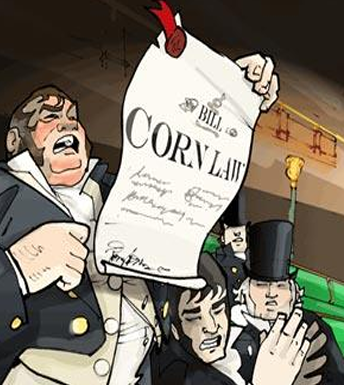
- Corn Laws: Population growth from the late eighteenth century had increased the demand for food grains in Britain, pushing up food grain prices. Under pressure from landed groups, the government restricted the import of corn, the laws allowing the government to do this were commonly known as "Corn Laws". Unhappy with high food prices, industrialists and urban dwellers forced the abolition of the Corn Laws. After the Corn Laws were scrapped, import of food was cheaper than producing it in the country itself. It resulted in farmers leaving there land uncultivated, thousands of men and women thrown out of work flocked to the cities or migrated overseas.
- Industrial Growth and Food Imports: From the mid nineteenth century, faster industrial growth in Britain also led to higher incomes, and therefore more food imports. Around the world-in Eastern Europe, Russia, America and Australia lands were cleared and food production expanded to meet the British demand.
- Capital and Labour Requirements: Transportation has to be improved, people had to settle on the lands to bring them under cultivation. This meant building homes and settlements. All these activities in turn required capital and labour. Capital flowed from financial centers such as London.
- Mass Migration: In mid-nineteenth century nearly 50 million people emigrated from Europe to America and Australia. All over the world some 150 million are estimated to have left their homes, crossed oceans and vast distances over land in search of a better future.
Global Agricultural Economy by 1890:
By 1890, a global agricultural economy had taken shape. Food no longer came from a nearby village or town, but from thousands of miles away. Was grown by a peasant working on a large farm, was transported by railway and ships from southern Europe, Asia Africa and the Caribbean.
Canal Colonies: The British Indian government in Punjab built a network of irrigation canals to transform semi-desert wastes into fertile agricultural lands that could grow wheat and cotton for export. The Canal Colonies, as the areas irrigated by the new canals were called, were settled by peasants from other parts of Punjab.
World Trade Growth: So rapidly did regional specialization in the production of commodities (cotton and rubber) develop that between 1820 and 1914 world trade is estimated to have multiplied 25 to 40 times. Nearly 60 percent of this trade comprised 'primary products' such as wheat and cotton, and minerals such as coal.
The Role of Technology
The railways, steamships, the telegraph were important inventions without which we cannot imagine the transformed nineteenth-century world.
Refrigeration provided an effective and cheaper way to ensure availability of meat products to Europe.
Late Nineteenth- Century Colonialism
Trade flourished and markets expanded in the late nineteenth century. But this was not only a period of expanding trade and increased prosperity. It is important to realise that there was a darker side to this process.
In many parts of the world, the expansion of trade and a closer relationship with the world economy also meant a loss of freedoms and livelihoods. Late nineteenth-century European conquests produced many painful economic, social and ecological changes through which the colonised societies were brought into the world economy.
Rinderpest or The Cattle Plague
Background:
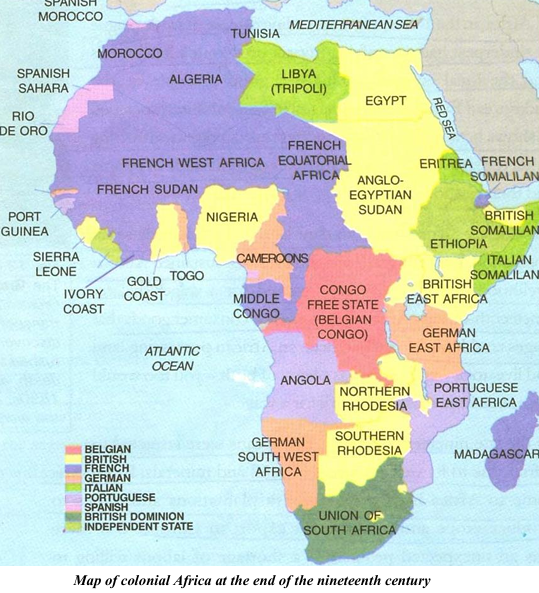
Africa had abundant land and a relatively small population. For centuries, land and livestock sustained African livelihoods and people rarely worked for a wage. In the late nineteenth century, Europeans were attracted to Africa due to these vast resources of land and minerals, hoping to establish plantations and mines to produce crops and minerals for export to Europe.
Labour Problem:
But there was unexpected problems - a shortage of labour willing to work for wages. To recruit and retain labour:
- Heavy taxes were imposed which could be paid only by working for wages on plantations and mines.
- Inheritance laws were changed so that peasants were displaced from land: only one member of a family was allowed to inherit land, as a result of which the others were pushed into the labour market.
Impact of Rinderpest:
Rinderpest arrived in Africa in the late 1880s. It was carried by infected cattle imported from British Asia to feed the Italian soldiers invading Eritrea in East Africa. Entering Africa in the east, rinderpest moved west 'like forest fire', reaching Africa's Atlantic coast in 1892. It reached the Cape (Africa's southernmost tip) five years later.
Consequences:
- Along the way rinderpest killed 90 percent of the cattle.
- The loss of cattle destroyed African livelihoods.
- Control over scarce resource of cattle enabled European colonizers to conquer and subdue Africa.
Indetured Labour Migration From India
Overview:
In the nineteenth century, hundreds of thousands of Indian and Chinese labourers went to work on plantations, in mines, and in road and railway construction projects around the world.
Contract System:
In India, indentured labourers were hired under contracts which promised return travel to India after they had worked five years on their employer's plantation.
Origins of Migrants:
Most Indian indentured workers came from the present-day regions of:
- Eastern Uttar Pradesh
- Bihar
- Central India
- Dry districts of Tamil Nadu
Reasons for Migration: In the mid-nineteenth century these regions experienced many changes – cottage industries declined, land rents rose, lands were cleared for mines and plantations. All this affected the lives of the poor: they failed to pay their rents, became deeply indebted and were forced to migrate in search of work.
Main Destinations:
- Caribbean islands (mainly Trinidad, Guyana and Surinam)
- Mauritius
- Fiji
- Ceylon (Tamil migrants)
- Malaya (Tamil migrants)
- Assam (tea plantations)
Recruitment Methods:
Recruitment was done by agents engaged by employers and paid a small commission. Many migrants agreed to take up work hoping to escape poverty or oppression in their home villages. Agents also tempted the prospective migrants by providing false information about final destinations, modes of travel, the nature of the work, and living and working conditions. Often migrants were not even told that they were to embark on a long sea voyage. Sometimes agents even forcibly abducted less willing migrants.
Working Conditions:
A New System of Slavery: Nineteenth-century indenture has been described as a 'new system of slavery'. On arrival at the plantations, labourers found conditions to be different from what they had imagined. Living and working conditions were harsh, and there were few legal rights.
Cultural Adaptation:
But workers discovered their own ways of surviving:
- Many escaped into the wilds, though if caught they faced severe punishment.
- Others developed new forms of individual and collective self-expression, blending different cultural forms, old and new.
- In Trinidad the annual Muharram procession was transformed into a riotous carnival called 'Hosay' (for Imam Hussain) in which workers of all races and religions joined.
- The protest religion of Rastafarianism (made famous by the Jamaican reggae star Bob Marley) is also said to reflect social and cultural links with Indian migrants to the Caribbean.
- 'Chutney music', popular in Trinidad and Guyana, is another creative contemporary expression of the post-indenture experience.
Legacy:
These forms of cultural fusion are part of the making of the global world, where things from different places get mixed, lose their original characteristics and become something entirely new.
Most indentured workers stayed on after their contracts ended, or returned to their new homes after a short spell in India. Consequently, there are large communities of people of Indian descent in these countries.
Abolition: From the 1900s India's nationalist leaders began opposing the system of indentured labour migration as abusive and cruel. It was abolished in 1921. Yet for a number of decades afterwards, descendants of Indian indentured workers, often thought of as 'coolies', remained an uneasy minority in the Caribbean islands.
Indian Entrepreneurs Abroad
Sources of Finance:
The two major sources of finance for export agriculture were:
- Shikarpuri shroffs
- Nattukottai Chettiars
In addition, there were many other groups of bankers and traders who financed export agriculture in Central and Southeast Asia.
Hyderabadi Sindhi Traders:
- Indulged both in trading and money-lending.
- They operated in India and also in other European colonies.
- From the 1860s, they began to operate in many parts of the world.
- They established flourishing centres at busy ports worldwide.
- They used to sell local and imported curios to tourists.
With the growth of comfortable passenger vessels, tourism increased manifold. This brought in its wake a boom for trade and industry.
India Trade, Colonialism thee Global System
Decline of Cotton Exports:
Historically, fine cottons produced in India were exported to Europe. With industrialisation, British cotton manufacture began to expand, and industrialists pressurised the government to restrict cotton imports and protect local industries. Tariffs were imposed on cloth imports into Britain. Consequently, the inflow of fine Indian cotton began to decline.
From the early nineteenth century, British manufacturers also began to seek overseas markets for their cloth. Excluded from the British market by tariff barriers, Indian textiles now faced stiff competition in other international markets.
Export Statistics:
- Exports from India declined from some 30 per cent around 1800 to 15 per cent by 1815.
- By the 1870s this proportion had dropped to below 3 per cent.
- On the other hand export of raw materials increased equally fast.
- Between 1812 and 1871, the share of raw cotton exports rose from 5 per cent to 35 per cent.
Other Important Exports:
- Indigo: Used for dyeing cloth was another important export for many decades.
- Opium: Opium shipments to China grew rapidly from the 1820s to become for a while India's single largest export. Britain grew opium in India and exported it to China and, with the money earned through this sale, it financed its tea and other imports from China.
Trade Surplus with India:
Over the nineteenth century, British manufactures flooded the Indian market. Food grain and raw material exports from India to Britain and the rest of the world increased. But the value of British exports to India was much higher than the value of British imports from India. Thus Britain had a 'trade surplus' with India.
Multilateral Settlement System:
Britain used this surplus to balance its trade deficits with other countries – that is, with countries from which Britain was importing more than it was selling to.
This is how a multilateral settlement system works – it allows one country's deficit with another country to be settled by its surplus with a third country.
By helping Britain balance its deficits, India played a crucial role in the late-nineteenth-century world economy. Britain's trade surplus in India also helped pay the so-called 'home charges' that included private remittances home by British officials and traders, interest payments on India's external debt, and pensions of British officials in India.
The Inter-war Economy
The First World War (1914-18) was mainly fought in Europe. But its impact was felt around the world. During this period the world experienced widespread economic and political instability, and another catastrophic war.
Wartime Transformations
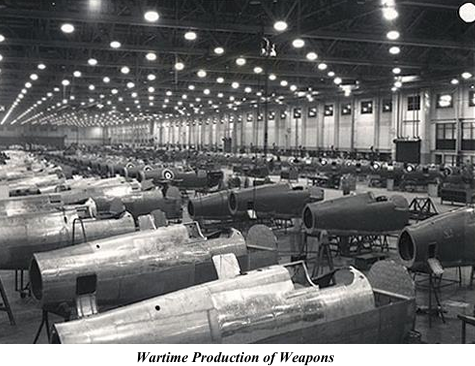
The First World War was a war like no other before. The fighting involved the world's leading industrial nations which now harnessed the vast powers of modern industry to inflict the greatest possible destruction on their enemies.
First Modern Industrial War:
- It saw the use of machine guns, tanks, aircraft, chemical weapons, etc. on a massive scale.
- These were all increasingly products of modern large-scale industry.
- To fight the war, millions of soldiers had to be recruited from around the world and moved to the frontlines on large ships and trains.
Impact on Human Life:
Death and Destruction:
- The scale of death and destruction – 9 million dead and 20 million injured – was unthinkable before the industrial age.
- Most of the killed and maimed were men of working age.
- These deaths and injuries reduced the able-bodied workforce in Europe.
- With fewer numbers within the family, household incomes declined after the war.
Industrial Restructuring:
- During the war, industries were restructured to produce war-related goods.
- Entire societies were also reorganised for war – as men went to battle, women stepped in to undertake jobs that earlier only men were expected to do.
Economic Links Disrupted:
The war led to the snapping of economic links between some of the world's largest economic powers which were now fighting each other to pay for them. So, Britain borrowed large sums of money from US banks as well as the US public.
US Transformation: Thus the war transformed the US from being an international debtor to an international creditor. In other words, at the war's end, the US and its citizens owned more overseas assets than foreign governments and citizens owned in the US.
Post-war Recovery
- Post-war economic recovery proved difficult. Britain, which was the world's leading economy in the pre-war period, in particular faced a prolonged crisis.
- While Britain was preoccupied with war, industries had developed in India and Japan.
- After the war Britain found it difficult to recapture the Indian market.
- To finance war expenditures Britain had borrowed liberally from the US. This meant that at the end of the war Britain was burdened with huge external debts.
- The war had led to an economic boom, that is, to a large increase in demand, production and employment. When the war boom ended, production contracted and unemployment increased.
- At the same time the government reduced bloated war expenditures to bring them into line with peacetime revenues.
- This led to huge job losses. Anxiety
Rise of Mass Productions and Consumptions
One important feature of the US economy of the 1920s was mass production. The move towards mass production had begun in the late nineteenth century, but in the 1920s it became a characteristic feature of industrial production in the US. A well-known pioneer of mass production was the car manufacturer Henry Ford. He adapted the assembly line of a Chicago slaughterhouse (in which slaughtered animals were picked apart by butchers as they came down a conveyor belt) to his new car plant in Detroit. He realised that the ‘assembly line’ method would allow a faster and cheaper way of producing vehicles. The assembly line forced workers to repeat a single task mechanically and continuously – such as fitting a particular part to the car – at a pace dictated by the conveyor belt. This was a way of increasing the output per worker by speeding up the pace of work. Standing in front of a conveyor belt no worker could afford to delay the motions, take a break, or even have a friendly word with a workmate. As a result, Henry Ford’s cars came off the assembly line at three-minute intervals, a speed much faster than that achieved by previous methods. The T Model Ford was the world’s first mass-produced car.
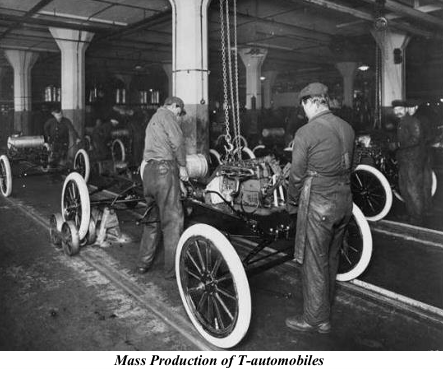
Even today Business Schools teach reams of pages on Fordism, the management philosophy of Henry Ford.
Mass production lowered costs and prices of engineered goods. Thanks to higher wages, more workers could now afford to purchase durable consumer goods such as cars. Car production in the US rose from 2 million in 1919 to more than 5 million in 1929. Similarly, there was a spurt in the purchase of refrigerators, washing machines, radios, gramophone players, all through a system of ‘hire purchase’ (i.e., on credit repaid in weekly or monthly instalments). The demand for refrigerators, washing machines, etc. was also fuelled by a boom in house construction and home ownership, financed once again by loans.
The housing and consumer boom of the 1920s created the basis of prosperity in the US. Large investments in housing and household goods seemed to create a cycle of higher employment and incomes, rising consumption demand, more investment, and yet more employment and incomes.
In 1923, the US resumed exporting capital to the rest of the world and became the largest overseas lender. US imports and capital exports also boosted European recovery and world trade and income growth over the next six years.
THE GREAT DEPRESSION
- The Great Depression began around 1929 and lasted till the mid 1930s. During this period most parts of the world experienced catastrophic declines in production, employment, incomes and trade. The exact timing and impact of the depression varied across countries. But in general agricultural regions and communities were the worst affected.
- This was because the fall in agricultural prices was greater and more prolonged than that in the prices of industrial goods.
- The depression was caused by a combination of several factors. We have already seen how fragile the post-war world economy was.
- First: agricultural overproduction remained a problem. This was made worse by falling agricultural prices. As prices slumped and agricultural incomes declined, farmers tried to expand production and bring a larger volume of produce to the market to maintain their overall income. This further lowered the prices.
- Second in the mid- 1920s may countries financed their investments through loans from the US. While it was often extremely easy to raise loans in the US when the going was goods, US overseas lenders panicked at the first sign of trouble.
- The withdrawal of US loans affected much of the rest of the world, though in different ways. In Europe it led to the failure of some major banks and the collapse of currencies such as the British pound sterling. In Latin America and elsewhere it intensified the slump in agricultural and raw material prices.
- Overproduction also led to the closure of factories. Unemployment soared high.
- The US was also the industrial country most severely affected by the depression. With the fall in prices and the prospect of a depression, US banks had also slashed domestic lending and called back loans.
- Faced with falling incomes, many households in the US could not repay what they had borrowed, and were forced to give up their homes, cars and other consumer durables.
- As unemployment soared, people moved long distances looking for any work they could find. Ultimately, the US banking system itself collapsed. Unable to recover investments, collect loans and repay depositors.
- Ultimately, the US banking system itself collapsed. Unable to recover investments, collect loans and repay depositors, thousands of banks went bankrupt and were forced to close.
- The numbers are phenomenal: by 1933 over 4,000 banks had closed and between 1929 and 1932 about 110,000 companies had collapsed.
- By 1935, a modest economic recovery was under way in most industrial countries.
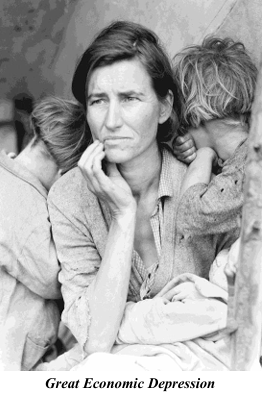
Causes of the Great Depression
AGRICULTURAL OVERPRODUCTION: This was made worse by falling agricultural prices. As prices slumped and agricultural incomes declined, farmers tried to expand production and bring a larger volume of produce to the market to maintain their overall income. This worsened the glut in the market, pushing down prices even further. Farm produce rotted for a lack of buyers. Second: in the mid-1920s, many countries financed their investments through loans from the US. While it was often extremely easy to raise loans in the US when the going was good, US overseas lenders panicked at the first sign of trouble.
OVERSEAS LOANS: In the first half of 1928, US overseas loans amounted to over $ 1 billion. A year later it was one quarter of that amount. Countries that depended crucially on US loans now faced an acute crisis. The withdrawal of US loans affected much of the rest of the world, though in different ways. In Europe it led to the failure of some major banks and the collapse of currencies such as the British pound sterling. In Latin America and elsewhere it intensified the slump in agricultural and raw material prices.
Hike in US Import Duty:
The US attempt to protect its economy in the depression by doubling import duties also dealt another severe blow to world trade. The US was also the industrial country most severely affected by the depression. With the fall in prices and the prospect of a depression, US banks had also slashed domestic lending and called back loans. Farms could not sell their harvests, households were ruined, and businesses collapsed. Faced with falling incomes, many households in the US could not repay what they had borrowed, and were forced to give up their homes, cars and other consumer durables. The consumerist prosperity of the 1920s now disappeared in a puff of dust. As unemployment soared, people trudged long distances looking for any work they could find. Ultimately, the US banking system itself collapsed. Unable to recover investments, collect loans and repay depositors, thousands of banks went bankrupt and were forced to close. The numbers are phenomenal: by 1933 over 4,000 banks had closed and between 1929 and 1932 about 110, 000 companies had collapsed. By 1935, a modest economic recovery was under way in most industrial countries. But the Great Depression’s wider effects on society, politics and international relations, and on peoples’ minds, proved more enduring.
Iindia and the Great Depression
(i) The depression immediately affected Indian trade. India's exports and imports nearly halved between 1928 and 1934. As international prices crashed, prices in India also plunged.
(ii) Peasants and farmers suffered more than urban dwellers. Peasants producing for the world market were the worst hit. Peasants who borrowed in the hope of better times or to increase output in the hope of higher income face ever lower prices, and fell deeper and deeper into debt.
(iii) In these depression years, India became an exporter of precious metals, notably gold. This certainly helped speed up Britain's recovery, but did little for the Indian peasant.
(iv) The depression proved less grim for urban India. Because of falling prices, those with fixed incomes-say town-dwelling landowners who received rents and middle-class salaried employees -now found themselves better off.
Rebuilding a Worls Economy: The post- war Era
The Second World War started in 1939 and continued upto 1945. The two warring camps were:
(i) The Allies consisting of Britain, France, Russia and the U.S.A.
(ii) The Axis Power consisting of Germany, Italy and Japan. Once again death and destruction was enormous. At least 60 million people are believed to have been killed, directly or indirectly, as a result of the war. Millions more were injured. Many more civilians than soldiers died from war-related causes. Vast parts of Europe and Asia were devastated, and several cities were destroyed by aerial bombardment or relentless artillery attacks. The war caused an immense amount of economic devastation and social disruption. Two crucial influences shaped post-war reconstruction. The first was the US's emergence as the dominant economic, political and military power in the Western World. The second was the dominance of the Soviet Union.
Post -war Settlement and the Bretton Woods Institutions:
Economists and politicians drew two key lessons from inter-war economic experiences. First, an industrial society based on mass production cannot be sustained without mass consumption. But to ensure mass consumption, there was a need for high and stable incomes. Incomes could not be stable if employment was unstable. Thus stable incomes also required steady, full employment. But markets alone could not guarantee full employment. Therefore governments would have to step in to minimize fluctuations of price, output and employment. Economic stability could be ensured only through the intervention of the government. The second lesson related to a country’s economic links with the outside world. The goal of full employment could only be achieved if governments had power to control flows of goods, capital and labour.
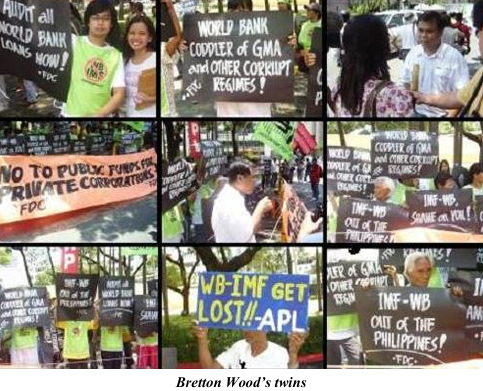
Thus the main aim of the post-war international economic system was to preserve economic stability and full employment in the industrial world. Its framework was agreed upon at the United Nations Monetary and Financial Conference held in July 1944 at Bretton Woods in New Hampshire, USA.
The Bretton Woods conference established the International Monetary Fund (IMF) to deal with external surpluses and deficits of its member nations. The International Bank for Reconstruction and Development (popularly known as the World Bank) was set up to finance postwar reconstruction. The IMF and the World Bank are referred to as the Bretton Woods institutions or sometimes the Bretton Woods twins. The post-war international economic system is also often described as the Bretton Woods system. The IMF and the World Bank commenced financial operations in 1947. Decision-making in these institutions is controlled by the Western industrial powers. The US has an effective right of veto over key IMF and World Bank decisions. The international monetary system is the system linking national currencies and monetary system. The Bretton Woods system was based on fixed exchange rates. In this system, national currencies, for example the Indian rupee, were pegged to the dollar at a fixed exchange rate. The dollar itself was anchored to gold at a fixed price of $35 per ounce of gold.
The Early Post-War Years
- The Bretton Wood system inaugurated an era of unprecedented growth of trade and incomes for the Western industrial nations and Japan.
- World trade grew annually at over 8 per cent between 1950 and 1970 and incomes at nearly 5 per cent.
- The growth was also mostly stable, without large fluctuations.
- Developing countries were in a hurry to catch up with the advanced industrial countries. Therefore, they invested vast amounts of capital, importing industrial plant and equipment featuring modern technology.
Decolonisation and Independence
- Emergence of New Nations: Over the next two decades of the Second World War, most colonies in Asia and Africa emerged as free, independent nations, overburdened by poverty and a lack of resources, and their economies and societies were handicapped by long periods of colonial rule.
- Bretton Woods Focus Shift: From the late 1950s the Bretton Woods institutions began to shift their attention more towards developing countries. As newly independent countries came under the guidance of international agencies dominated by the former colonial powers, the former colonial powers controlled vital resources such as minerals and land in many of their former colonies. Large corporations of other powerful countries often managed to secure rights to exploit developing countries' natural resource very cheaply.
- Unequal Benefits: Most developing countries did not benefit from the fast growth the Western economies experienced in the 1950s and 1960s.
Group of 77 (G-77) and NIEO:
Therefore they organized themselves as a group - the Group of 77 (or G-77) to demand a new international economic order (NIEO).
NIEO meant a system that would give them:
- Real control over their natural resources
- More development assistance
- Fairer prices for raw materials
- Better access for their manufactured goods in developed countries' markets
Eend Of Bretton Woods and the Beginning of 'Globalisation'
Collapse of Fixed Exchange Rates:
Despite years of stable and rapid growth, not all was well in this post-war world. From the 1960s the rising costs of its overseas involvements weakened the US's finances and competitive strength. The US dollar now no longer commanded confidence as the world's principal currency. It could not maintain its value in relation to gold. This eventually led to the collapse of the system of fixed exchange rates and the introduction of a system of floating exchange rates.
Changes in International Finance:
From the mid-1970s the international financial system also changed in important ways. Earlier, developing countries could turn to international institutions for loans and development assistance. But now they were forced to borrow from Western commercial banks and private lending institutions. This led to periodic debt crises in the developing world, and lower incomes and increased poverty, especially in Africa and Latin America.
Unemployment in Industrial World:
The industrial world was also hit by unemployment that began rising from the mid-1970s and remained high until the early 1990s.
Shift to Asia:
From the late 1970s MNCs also began to shift production operations to low-wage Asian countries. China had been cut off from the post-war world economy since its revolution in 1949. But new economic policies in China and the collapse of the Soviet Union and Soviet-style communism in Eastern Europe brought many countries back into the fold of the world economy.
Wages were relatively low in countries like China. Thus they became attractive destinations for investment by foreign MNCs competing to capture world markets.
Economic Geography Transformed:
The relocation of industry to low-wage countries stimulated world trade and capital flows. In the last two decades the world's economic geography has been transformed as countries such as India, China and Brazil have undergone rapid economic transformation.
Summary Flowchart
| Period/Topic | Key Points |
|---|---|
| Pre-modern World and Globalization | • By 3000 BCE active trade developed between West Asia and Indus valley civilization • Silk routes connected East with the West • Food items travelled from Asia to Europe • Food items travelled from America to rest of the world |
| 19th Century Globalization | • Flow of trade (goods) • Flow of capital from Europe to colonies • Flow of workers from colonies to plantation • Modern technology like refrigerates ships and Railways helped globalization • This led to the growth of colonialism |
| The Inter War Economy | • The world experienced widespread economic and political instability • The 1st world war was the first modern industrial war • Industries were restructured to produce war-related goods • Many agricultural economics were in Crisis • US became an international creditor from debtor |
| The Great Depression | • Started in USA in 1929 • It affected the economy of the whole world • It started with overproduction • Factories, Banks and stock market collapsed • Large scale unemployment and prices of agricultural products fell down |
| Rebuilding a World Economy | • The war caused an immense amount of economic devastation and social disruption • The main aim of the post war international economic system was to preserve economic stability and full employment in the industrial world • As Europe and Japan rapidly rebuilt their economics, they grew less dependent on the IMF and the World Bank • China had been cut off from the post war world economy since its revolution in 1949 |
| Bretton Woods and its Twins | • To achieve economy stability and full employment the Bretton woods conference was held • IMF and World Bank were created to regulate the flow of money • Newly independent countries of Asia and Africa demanded NIEO • With the growth of MNCs power of IMF and World Bank declined |
EXERCISE - 1 (Multiple Choice Questions)
- Until the 18th century which two countries were among the world's richest countries?
- Pakistan and India
- China and Sri Lanka
- USA and Britain
- China and India
- Who worked in the plantations setup in America by the Europeans?
- The Slaves Captured from America
- The Slaves Captured from Africa
- The indentured labourers
- The slaves from North America
- When did the Great Depression begin?
- In 1927
- In 1926
- In 1925
- In 1929
- As early as 3000 B.C. Indus valley Civilization had trade active coastal links with which countries?
- Central Asian Countries
- West Asian Countries
- East Asian Countries
- South Asia
- Twins of Bretton woods are
- IMF and UNO
- UNO and ILO
- IMF and World Bank
- ILO and WHO
- Silk routes showed the significance of
- Dominance of Europe in ancient times
- Dominance of USA in ancient times
- Development modern global trade since ancient times
- Dominance of East in ancient times
- Potato famine occurred in
- Britain
- USA
- Ireland
- France
- El Dorado was
- Fabled city of gold
- Fabled city of diamond
- Fabled city of money
- Fabled city of Tourism
- The main cause of Great Economic depression was
- Unemployment
- Under production
- Over production
- All of the above
- When did the First World War started?
- Aug, 1914
- Mar, 1914
- Feb, 1914
- Jan, 1914
Answer Key - Exercise 1
1.(d) 2.(b) 3.(d) 4.(b) 5.(c) 6.(d) 7.(c) 8.(a) 9.(c) 10.(a) 11.(c) 12.(c) 13.(a) 14.(c) 15.(c) 16.(d) 17.(b) 18.(a) 19.(c) 20.(b)
EXERCISE - 2 (Short Answer Questions)
- Name at least two items of exports from India to Britain during the 13th century.
- What do you mean by multilateral settlement system?
- What do you mean by Trade Surplus?
- What is the significance of chutney music?
- Name two Indian bankers and trader of early 18th century.
- Give an example to prove that colonialism had a destructive impact on the colonised people.
- Describe the impact of 'Rinderpest' on African Lives.
- What methods were used to recruit indentured labour?
- Using what restrictions did the British manage to lower Indian cotton exports to England?
- List the benefits that the British got by having a trade surplus with India.
Key Takeaways
- Globalization has ancient roots through trade routes like the Silk Routes
- The 19th century saw massive flows of trade, labour, and capital
- World Wars transformed the global economy dramatically
- The Great Depression (1929) caused worldwide economic collapse
- Bretton Woods institutions (IMF and World Bank) shaped the post-war economy
- India played a crucial role in the global economy through colonialism
- Modern globalization emerged from the decline of Bretton Woods system