About Class 10 Science (Biology) Notes on Chapter 02 – Control and Coordination
Control and Coordination is a key Class 10 Science chapter that explains how living organisms respond to internal and external stimuli. In humans, the nervous system and endocrine system work together to maintain coordination. The nervous system consists of the brain, spinal cord, and nerves. The human brain, divided into forebrain, midbrain, and hindbrain, controls activities like thinking, reflexes, and balance. Reflex action, an important concept, explains how the body responds instantly to stimuli without brain involvement. The endocrine system works through hormones like insulin, adrenaline, and thyroxine, which regulate vital processes such as metabolism, growth, and stress responses. In plants, coordination is carried out by plant hormones such as auxins, gibberellins, cytokinins, ethylene, and abscisic acid. Tropic movements in plants like phototropism and geotropism demonstrate responses to light and gravity. This chapter is significant for exams as it involves both theoretical explanations and diagram-based questions, particularly the structure of the brain and the reflex arc. By practicing with the NCERT textbook and NCERT solutions for Class 10 Science, students can achieve conceptual clarity and improve accuracy in answering questions. Control and Coordination not only enhance scientific knowledge but also explain real-life biological processes, making it a crucial part of Class 10 Science learning.
All the living organisms show the irritability or sensitiveness. It is the property to give response to the stimulus. The stimulus can be external or internal. The living organisms adapt themselves to the external and internal factors with proper adjustment. This adjustment of the vital activities of life is called co-ordination. The working of one system is co-ordinated with that of other systems, e.g., During eating our body performs several kinds of co-ordinated activities. The nose differentiates the smell of food and hands serve as the organs of ingestion. The alimentary canal and glands help in the digestion of food. Thus various organs perform co-ordinated activities.
CONTROL AND COORDINATION
Plants are devoid of any nervous system or muscular system to coordinate and control their responses. Growth in plants is generally of two types it can either be growth dependent or growth independent. Germination of seeds is a growth dependent movement whereas sensitivity of a touch me not plant is growth independent movement.
Plants lack nervous system and sense organs as animals have them e.g. eye, ear, etc. Plants react to the environmental changes by using hormones called Phytohormones.
According to K.V. Thimann, phytohormone can be defined as “an organic substance produced naturally in plants controlling growth and other functions at a site remote from its place of production and active in minute amounts”.
MOVEMENT DUE TO GROWTH:
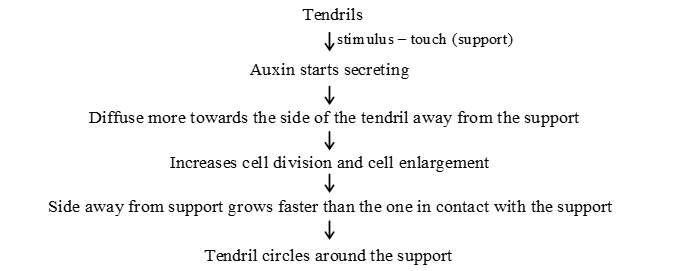
Response of a plant to any external stimuli is done by occurrence of directional movements. As can be seen in case of tendrils of pea plants in which the tendrils coil around any support in their way to climb up. Mechanism involved in this includes more rapid growth in area not in contact with the support as compare to area of tendrils in contact thus helping tendrils to coil around the support.
Plant movement can also be divided into two heads on the basis of direction :
- Tropism or Tropic movement
- Nasties or Nastic movement
Tropism:
Tropism is defined as directional movements. Plant shows various kinds of tropic movements like phototropism, chemotropism, hydrotropism etc. Movement can be either towards the stimuli or away from the stimuli e.g. movement of shoots towards light and roots away from light in case of plants
Types of Tropism: Depending upon the type of stimuli, different types of tropism are classified. There are five types of well recognized stimuli studied and tropisms are also studied in response to them. They are
- Light
- Chemicals
- Water
- Gravity
Touch
Similarly, the types of tropisms are
|
Phototropism |
In response to light |
|
Chemotropism |
In response to chemical |
|
Hydrotropism |
In response to water |
|
Geotropism |
In response to gravity |
|
Thigmotropism |
In response to touch |
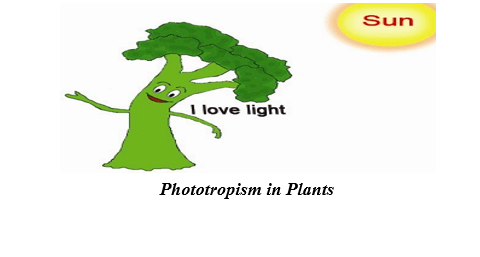
Phototropism: It is directional growth in which the direction of growth is determined by the direction of the light source. In other words, it is the growth and response to a light stimulus. Phototropism is most often observed in plants, but can also occur in other organisms such as fungi. The cells on the plant that are farthest from the light have a chemical called auxin that reacts when phototropism occurs. This causes the plant to have elongated cells on the farthest side from the light. Phototropism is one of the many plant tropisms or movements which respond to external stimuli. Growth towards a light source is a positive phototropism, while growth away from light is called negative phototropism (or Skototropism).
For example, stem / shoot shows movement towards the light, which means shoot shows positive phototropism. Root shows movement away from the light i.e. negative phototropism.
Experiment and explanation: Let us discuss one experiment before discussing the role of hormones.
When a plant is grown in a dark room, with its window open (the only source of light) the plant tends to move towards light coming through window. This is because of the positive phototropism shown by plant.
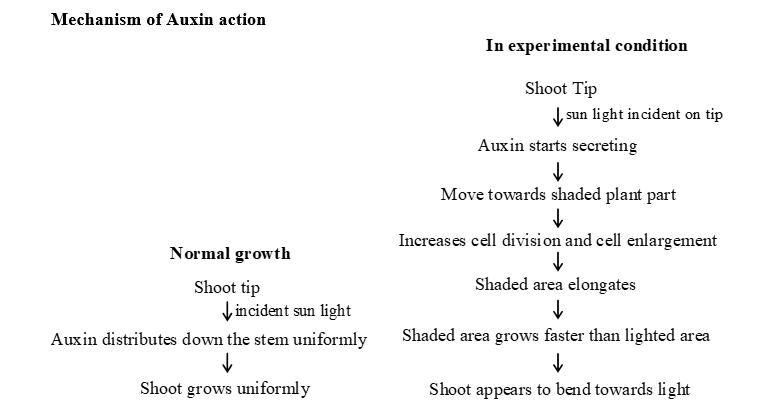
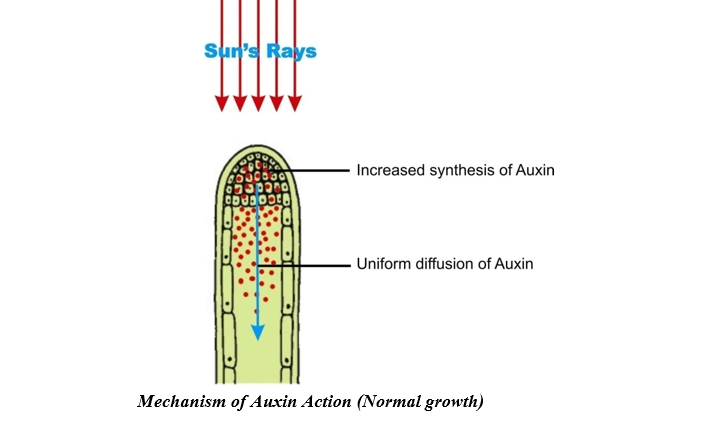
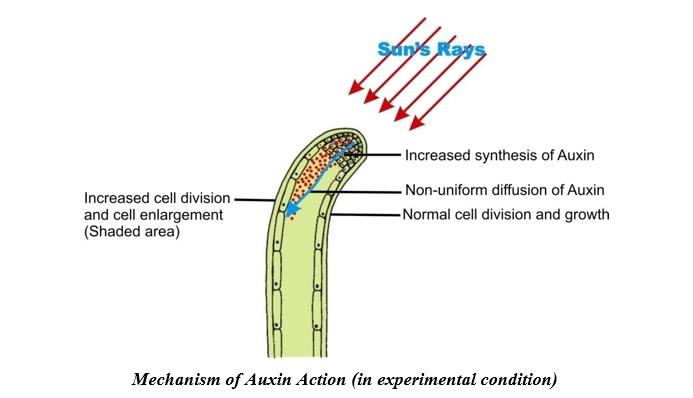
The principle hormone taking part in phototropism is “Auxin”. The flowchart explaining the mechanism of auxin action is as follows:
In case of root: The effect of auxin on root is just opposite to that of shoot.
Chemotropism: It can be defined as“Movement by part of a plant in response to a chemical stimulus”. The response by the plant is termed ‘positive’ if the growth is towards the stimulus or ‘negative’ if the growth is away from the stimulus.
For example, during the process of fertilization, the pollen tube grows towards the ovule, because stigma produces a chemical in response to which pollen tube grows towards ovule.
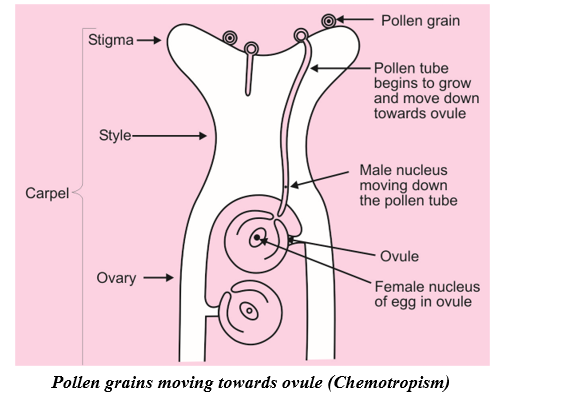
The growth of pollen tube towards ovule is one of the finest examples of chemotropism in plant kingdom. The process is as follows:
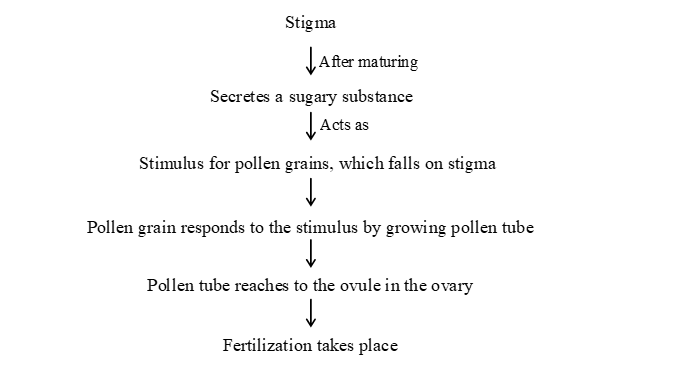
In the above discussed flowchart, the sugary secretion by stigma acts as chemical to which plants show tropic movement.
Hydrotropism: Hydrotropism (hydro = water; tropism = involuntary orientation by an organism, that involves turning or curving as a positive or negative response to a stimulus)[1] is a plant's growth response in which the direction of growth is determined by a stimulus or gradient in water concentration. A common example is plant roots growing in humid air bending toward a higher relative humidity level. This is of biological significance as it helps to increase efficiency of the plant in its ecosystem. The process of hydrotropism is started by the root cap sensing water and sending a signal to the elongating part of the root.
Have you ever pulled off a plant? You will notice that roots grow in all directions, this is because in response to water they grow towards it, i.e. “hydrotropism”.
Let us try to understand the process of hydrotropism by a simple experiment.
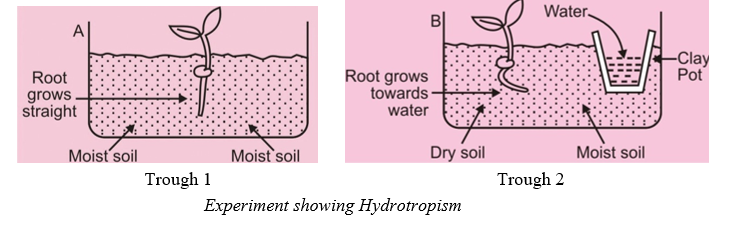
Experiment and explanation: Take two glass troughs and label them 1 and 2. Plant a tiny seedling in both of them. In trough 2 make a small “well” and fill it with water. Water trough ‘1’ uniformly but in case of trough ‘2’, put water in the well.
After a few days, dig the soil without disturbing the root. We will notice that in case of trough 2 the root bends towards water where as in trough 1 root grows straight uniformly.
Geotropism: It can be defined as “the movement of plant parts in response to gravity”. When the plant parts move towards the direction of gravity then it is termed as “positive geotropism” and when it moves away from the gravity, then it is termed as “negative geotropism”.
Shoot shows negative geotropism and root shows positive geotropism.
Have you ever thought of why stem grows upward against the gravity and root grows against the gravity?
Experiment and explanation: Let us understand the phenomenon with the help of an experiment. Take two potted plant namely 1 and 2. Keep one of them say 1 in normal condition and put 2 in horizontal condition.
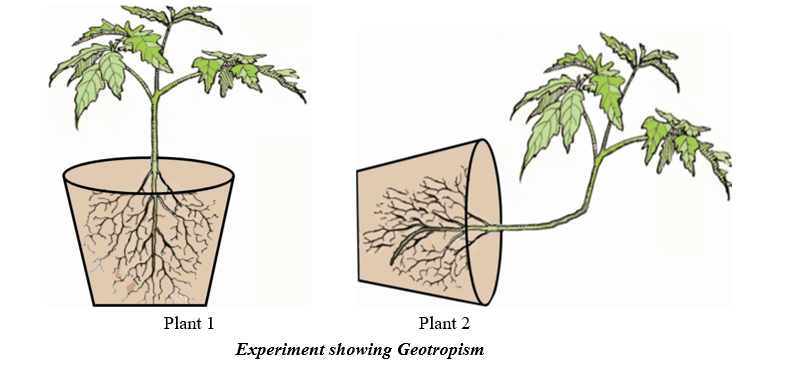
You will notice that after some days the plant in pot ‘2’ bends i.e. stem away from earth and root towards the earth.
Thigmotropism: Thigmotropism is the directional response of a plant organ to touch or physical contact with a solid object. This directional response is generally caused by the induction of some pattern of differential growth. This phenomenon is clearly illustrated by the climbing tendrils of some plants, such as the sweet pea. The tendrils actually "feel" the solid object, which results in the coiling response.
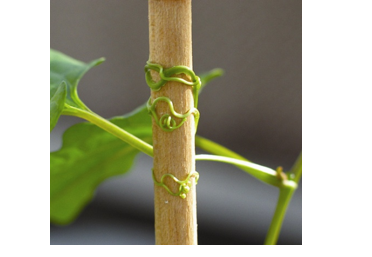
Have you ever seen a vine yard? The grape vine climbs on the provided support. Do you know why?
Experiment and explanation: The grape vine has a weak stem, so it cannot stand erect. To stand erect it needs support to which tendril (an outgrowth on the stem) binds. The tendril grows as it touches the support. The side of the tendril which touches the support grows slowly as compared to the other side which is not in contact. This phenomenon in response to touch is called as “thigmotropism”. The flow chart explaining the mechanism is as follows :
Usefulness of Tropic Movement: Considering the entire tropic phenomenon, we can conclude that these phenomenons are necessary for the plant to survive. If tendril would not have responded to the support, vine yard would not have been possible. If roots would not have responded to water, plant would have died.
NASTIES OR NASTIC MOVEMENT:
Nastic movements are non-directional responses to stimuli (e.g. temperature, humidity, light irradiance), and are usually associated with plants. The movement can be due to changes in turgor or changes in growth. Nastic movements differ from tropic movements in that the direction of tropic responses depends on the direction of the stimulus, whereas the direction of nastic movements is independent of the stimulus' position.
One of the best studied example of nastic movement is “response of Mimosa pudicaon touch”.
Nastic movement may or may not be growth movement. The opening of flower by the action of sun light is a growth phenomenon where as folding of leaf on touch as in case of Mimosa pudicais not a growth phenomenon.
Typesof nastic movement:
Thigmonasty: Thigmonasty is the nastic movement of a plant part in response to touch. For example – Mimosa pudica responds to touch by folding its leaves. The stimulus here is touch.
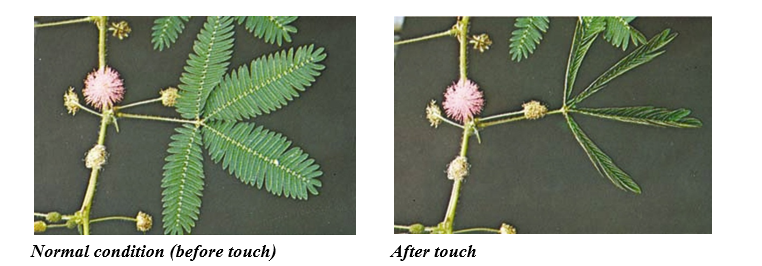
Thigmonasty shown by Sensitive Plant (Mimosa pudica)
(ii) Photonasty: Photonasty is the movement of plant part in response to light. The stimulus here is light. In case of dandelion flower it opens in the morning with the rising sun and as the sun sets flower also closes. But in case of moon flower it opens with the setting of sun and closes with the rising of sun.
Effect of Light :
Flowering and seed germination are regulated by the duration of light, This phenomenon called photoperiodism. Plants respond to this stimulus (light duration) with the help of phytochrome pigment. Phytochrome is a proteinaceous pigment and controls several light dependent developmental processes like germination, growth and flowering. Phytochrome exists in two forms Pr and Pfr. Pfr is active form, and both are inter-convertible.
Photoperiodism and Flowering:
It is a physiological change occurring in plants in response to relative length of the day and light. The term photoperiodism was used by Graner and Allard for the response of plants to photoperiods expressed in the form of flowering. On the basis of photoperiod there are three classes of plants.
(i) Short day plants (ii) Long day plants (iii) Day neutral plants
(d) Vernalization and Flowering:
The term vernalization was coined by Lysenko for promotion of flowering by a previous cold treatment. For flowering in winter varieties, winter cold treatment is necessary. In nature, plant requiring cold treatment usually behaves as biennial. They germinate and grow vegetatively in first season and produce flowers during second season after getting the cold treatment. The suitable temperature for vernalization is 4°C and time period varies from 4 days to 3 months.
Difference between phototropism and photoperiodism:
|
Phototropism |
Photoperiodism |
|
|
(i) |
it is a tropic movement |
It is physiological response to relative lengths of day and night |
|
(ii) |
The stimulus is perceived by apical meristem |
The stimulus is perceived by the leaves |
|
(iii) |
It is due to differential growth in elongation zone |
It is due to the replacement of vegetative buds by reproductive buds. |
GROWTH REGULATORS
The growth regulators are the important chemicals affecting growth. Growth hormones (phytohormones) are the natural growth substances which are produced in any part of the plant and ara transferred to another part and there they influence the growth of plant. The growth regulators consist of auxins, gibberellins, cytokinins, ethylene and abscisic acid. Except abscisic acid, ethylene the three are called Growth hormones and ethylene, abscisic acid are growth inhibitor.
AUXINS:
Auxins are the growth hormones which were first discovered by Charls Darwin. It is a type of hormone, or growth substance, found in plants. Plant hormones are molecules produced by plants to accelerate, inhibit or modify its growth. In plants, growth occurs during cell division, cell elongation and cell differentiation. The hormones can affect any or all of these different processes in plants. The first discovered plant hormone was identified as indole acetic acid (I.A.A.).
Functions of auxins:
Auxins control several plant growth processes.
Cell elongation
Auxins promote elongation and growth of stems and roots and enlargement of many fruits by stimulating elongation of cells in all directions.
Reactivation of cambium
Auxins promote cell division in vascular cambium. The reactivation of cambium in the growing season is due to the moving of IAA from the developing shoot buds.
Apical Dominance
Auxins induce apical dominance, where the apical bud suppressed the growth of lateral buds.
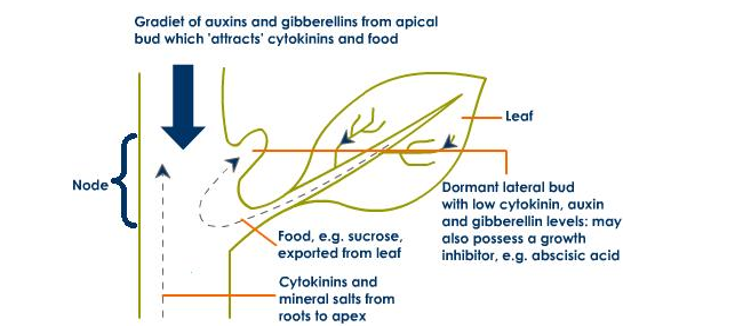
Possible Involvement of Plant Growth Substances in Apical Dominance after Removal of Apical Bud.
Inhibition of Abscission:
Formation of an abscission layer at the base of petiole or pedicel results in shedding of leaves, flowers or fruits. But auxins inhibit abscission, as they prevent the formation of abscission layer.
Auxin Spray Prevents Premature Fruit Abscission and Increase in Yield.
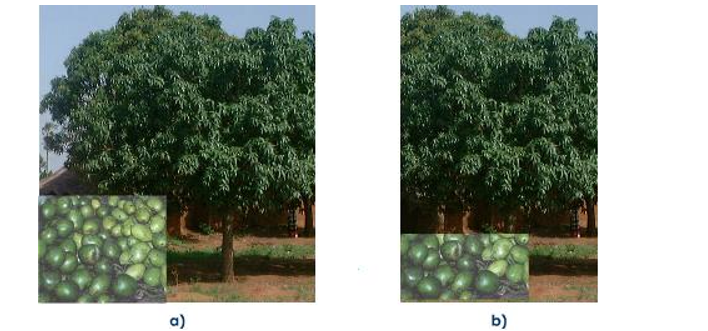
a) Auxin Sprayed; b) Auxin not Sprayed.
Parthenocarpy:
Auxin induces parthenocarpy, i.e., the formation of seedless fruits without the act of fertilisation.
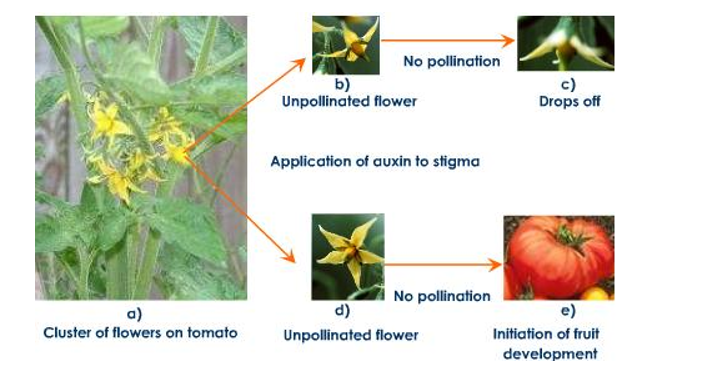
Root Formation:
IAA stimulates cell division in the pericylce leading to the formation of lateral and adventitious roots. Auxin stimulates formation of new roots, but inhibits the root growth.
Weedicides:
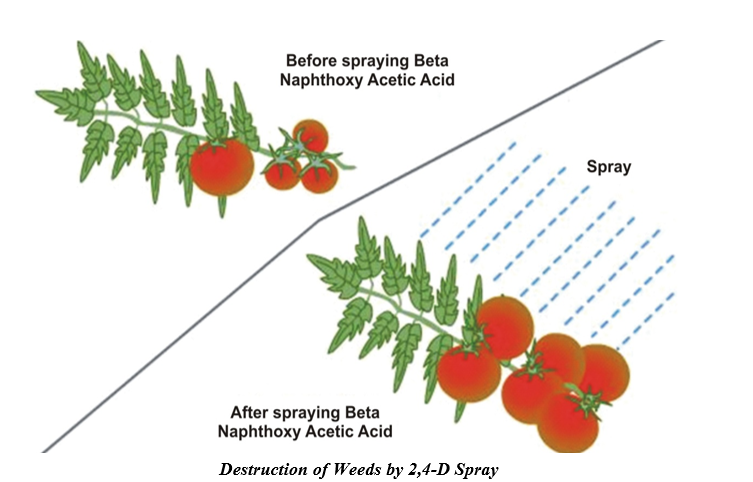
Many synthetic auxins are used as selective weed killers and herbicides. 2, 4 - D (2, 4 - dichloro phenoxy acetic acid) is used to destroy broad leaved weeds. It does not affect mature monocotyledonous plants.

Destruction of Weeds by 2,4-D Spray
Rooting:
Naphthalene acetic acid (NAA), indole butyric acid (IBA) and indole acetic acid (IAA) are used to induce rooting of cuttings of woody plants like guava.
Flowering:
Foliar spray of NAA and 2, 4 - D induces flowering in litchi and pineapple. Percentage of ball setting in cotton plants increases when NAA or IBA are applied.
Pre-mature fruit drop:
Auxins such as 2, 4 - D, IAA, IBA have been used successfully to prevent premature fruit drop in apples, pears and oranges.
Parthenocarpy:
NAA and IBA treatment induces parthenocarpy of fruits in tomatoes, ladies finger and brinjal.
Dormancy:
Dormancy of seeds can be broken by auxin application.
Storage:
The methyl ester of NAA is used to prevent the sprouting of potato tubers.
Vegetable crops:
Auxins improve the quality of vegetable crops by inhibiting flower formation in some plants.
GIBBERELLINS:
Gibberellins (GAs) are plant hormones that regulate growth and influence various developmental processes, including stem elongation,germination, dormancy, flowering, sex expression, enzyme induction, and leaf and fruit senescence.
Functions of gibberellins: The physiological effects of gibberellins on plant growth are as follows.
Stem elongation:
Gibberellins cause stem elongation and leaf expansion. It is believed that certain types of dwarfness are due to gibberellin deficiency. But it has no effect on roots.
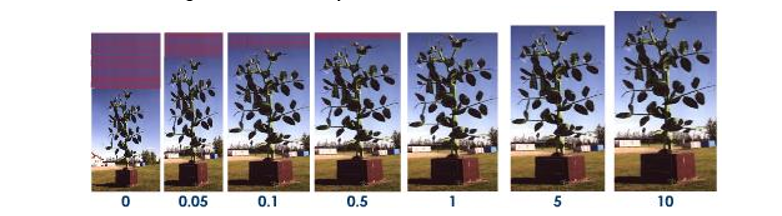
The influence of gibberellic acid (GA) on the growth of variety Meteor drart pea.
The plant on the left received on GA and shows the typical dwarf habit.
The remaining plants were treated with GA; the dose per plant in micrograms is shown.
With doses upto 5 micrograms there is increased growth of the stems with increase in GA dosage. This is the principle of the dwarf pea assay of gibberellins.
Bolting:
Gibberellin induces stem elongation in rosette plants. Cabbage is a rosette plant with profuse leaf growth and retarded internodal length. Just prior to flowering, internodes elongate enormously. This is called bolting. Bolting needs either long days or cold nights. When a cabbage head is kept under warm nights, it retains its rosette habit. Bolting can be induced artificially by the application of gibberellins under normal conditions.
Seed Germination:
Gibberellins promote seed germination in lettuce, cereals.
Breaking of seed dormancy:
Gibberellins break dormancy of buds and tubers. But in root tubers it inhibits the development of the root tuber.
Parthenocarpy:
Gibberellins cause parthenocarpy in apple and pear.
Increasing Fruit Size:
Gibberellins along with auxin, control the growth and development of fruits.
Flowering and sex expression:
Gibberellins control flowering in long day plants. Gibberellins promote the production of male flowers, either in place of female flowers in monoecious plants or in genetically female plants such as cucurbits.
CYTOKININS:
The cytokinins are chemically basic growth hormones which promote cell division in plants. This group of phytohormones was discovered when Carlos Miller isolated the crystalline substance from degraded DNA material. This substance was named as kinetin.
Functions of cytokinins: The important physiological effects of these cytokinins on plant growth, are as follows:
(A) Cell division: One of the main functions of cytokinins is in cell division and more particular cytokinesis.
(B) Secondary growth: Cytokinins in conjunction with auxin can promote cell division in permanent tissues which results in the formation of secondary xylem during secondary growth (increase in thickness).
(C) Apical dominancy: Cytokinins overcome apical dominance and promote the growth of lateral buds.
(D) Senescence: Cytokinins can inhibit or delay senescence (ageing). Leaves treated with cytokinins, retain chlorophyll for longer period i.e., they remain green for a longer period.
(E) Morphogenesis: A natural balance between auxins and cytokinins is responsible for differentiation of stems and roots (morphogenesis). When cytokinins are in excess, lateral buds develop while roots are formed if relatively more auxins are present.
(F) Induction of flowering
(G) Callus growth
ETHYLENE:
This is a gaseous plant hormone which is produced by almost all the fleshy fruits during ripening. Ethylene is autocatalytic in nature. Higher concentrations of auxins induce ethylene formation.
(i) Functions of ethylene: The important functions of ethylene are as follows:
(A) Fruit ripening: It is used for artificial ripening of fleshy fruits in the shops.
(B) Abscission layer: Ethylene accelerates the abscission of leaves, flowers and fruits.
(C) Senescence: Ethylene induces yellowing of leaves and downward bending. This results in the senescence in the plants.
(D) Growth: It promotes transverse expansion but it inhibits longitudinal growth.
(E) Flowering: It induces flowering in pineapple.
(F) Dormancy: It breaks the dormancy of several organs of plants except lateral buds.
(G) Induction of femaleness: It has feminizing effect. This increases the number of female flowers in Cucurbits.
ABSCISIC ACID (A.B.A.):
Stress hormone of plants is called as abscisic acid. It is also known as dormin. Addicott and his co-workers isolated a substance from young cotton balls and named it as Abscisic acid. This acid is now isolated from dormant seeds, buds and other parts of the plants. Abscisic acid is a growth inhibitor. Abscisic acid has no stimulating effect on any aspect of growth.
Functions of abscisic acid:
(A) Growth: A.B.A. has antagonistic property to growth promoting hormones (auxins, gibberellins and cytokinins). Thus it keeps the growth under check.
(B) Dormancy: A.B.A. induces dormancy in buds towards the approach of unfavorable conditions. It causes natural dormancy in seeds and tubers.
(C) Abscission: It promotes abscission in leaves, flowers and fruits and causes ageing in plants.
(D) Wilting: During drought it closes the stomata and checks loss of water by transpiration. This ensures the survival of plant undergoes wilting.
(E) Resistance: It promotes cold hardiness.
(F) Flowering and seed development: It is known to inhibit the process of flowering, fruit formation and seed development.
HORMONES:
The term ‘hormone’ was introduced by Bayliss and Starling.
Hormones are the chemical messengers which coordinate the activities of living organisms.
|
The term hormone was proposed by Starling for those substances which are secreted by ductless gland in vertebrate bodies, which are capable of evoking response in the body. |
Characteristics of Hormones:
(i) They are the secretions of endocrine glands.
(ii) They are produced at a place and act on target organs which are mainly away from their source
(iii) They are poured directly into the blood stream.
(iv) They are required in very small quantities.
(v) They are specific in function.
(vi) Chemically they are mainly proteins. Some of them may be amino acids, steroids etc.
(vii) They are harmful if present in less or excess amounts.
(viii) Hormones are immediately destroyed after their action is over.
Feedback Mechanism:
Endocrine elands interact with each other, so that secretion of one gland may stimulate or depress the activity of another. The amount of hormone released by an endocrine gland is determined by the body's need at any given time e.g. The hypophysis produces a hormone that stimulates the thyroid to produce its hormone in turn the thyroid secretion induces the hypophysis to produce less thyroid stimulating hormone. This is known as the negative feedback'. This feed-back helps bring about a steady state in the body which is called as homeostasis.
Various Endocrine Glands Present In The Human Body Are:
(i) Pituitary gland (or Hypophysis) (ii) Pineal gland (iii) Thyroid gland
(iv) Parathyroid (v) Thymus gland (vi) Adrenal gland
(vii) Pancreas (viii)Ovaries (xi) Tests
Pituitary Gland (or Hypophysis):
The pituitary gland is a small, reddish grey, pea-shaped gland attached to the hypothalamus of the brain by a stalk or infundibulum in front of the pons. It is called the master gland and consists of three lobes namely- anterior lobe, intermediate lobe and posterior lobe. The anterior and posterior lobes are connected by hypothalamo hypophysial portal system and by axons of hypothalamic neurons respectively.
Hormones of anterior pituitary:
Somatotrophin or Growth hormone (GH):
It stimulates growth and development of all tissues by accelerating protein synthesis and cell division, and by retaining calcium in the body. It also enables the cells to take up more amino acid and mobilise fat and makes the liver to release glucose for energy supply.
Adrenocorticotrophic hormone (ACTH):
This regulates the activity of adrenal cortex. It mainly stimulates the adrenal cortex to secrete corticosteroid hormone which defends the human body under stress.
Thyroid stimulating hormone (TSH):
This is also called Thyrotrophic hormone or thyrotropin. This stimulates growth of the thyroid gland and production of thyroid hormones.
Follicle stimulating hormone (FSH):
It stimulates sperm formation in the male and growth of ovarian follicles in the female. In older persons, it helps to maintain sexual activity.
Luteinising hormone (LTH):
In the male it induces the interstitial cells of the testes to produce male sex hormones namely androgens such as testosterone. This hormone makes the male genital system to become fully grown and functional. In the female, the luteininsing hormone causes ovulation, secretion of female sex hormones -Oestrogen from the maturing ovarian follicle, and progesterone by the corpus luteum transformed from the empty ovarian follicle. Follicle stimulating hormone and luetinising hormone are together referred to as gonadotrophic hormones or Gonadotropins.
Luteotrophic hormone (LTH):
This is also known as prolactin. This hormone stimulates growth of mammary glands during pregnancy and promotes lactation after delivery. Prolactin level rises during pregnancy and is very high during lactation.
Hormones of middle pituitary:
(i) Melanocyte stimulating hormone (MSH): This is the only hormone secreted by middle pituitary which controls the growth and development of melanocytes responsible for skin colour.
(ii) Hormones of posterior pituitary:
(A) Vasopressin or Antidiuretic hormone (ADH): This causes the re-absorption of water into the blood from the collecting tubules of the kidneys, thereby concentrating the urine and reducing its volume.
(B) Oxytocin: This hormone stimulates uterus contractions at the time of child birth and causes release of milk from mammary glands. It is also known as birth hormone or milk ejecting hormone.
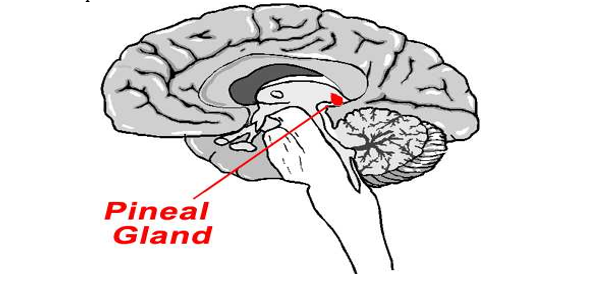
Pineal Gland: It is a small gland reddish-grey in colour, about the size of a pea, attached to the roof of the third ventricle of the brain. It contributes in regulating gonadal development. It controls development & concentration of melanin.
Thyroid Gland:
A gland that makes and stores hormones that help regulate the heart rate, blood pressure, body temperature, and the rate at which food is converted into energy. Thyroid hormones are essential for the function of every cell in the body. They help regulate growth and the rate of chemical reactions (metabolism) in the body. Thyroid hormones also help children grow and develop.
The thyroid gland is located in the lower part of the neck, below the Adam's apple, wrapped around the trachea (windpipe). It has the shape of a butterfly: two wings (lobes) attached to one another by a middle part.
Two hormones secreted by the thyroid gland are:
(i) Thyroxine: It is the principal hormone secreted by the thyroid gland and its main role is to increase the metabolic rate of the organs and tissues of the whole body. 60% of thyroxine consists of iodine, an element which is essential for the gland to enable it to synthesize its hormone. The basal metabolic rate (B.M.R.) is increased in hyperthyroidism and reduced in hypothyroidism.
(ii) Calcitonin: This hormone lowers the calcium level in two ways:
(A) By inhibiting renal tubular calcium re-absorption.
(B) By inhibiting bone calcium re-absorption.
Hypothyroidism: This results from lack or deficiency of thyroid hormone secretion. It is manifested differently in children as compared with adults. Cretinism affects children and is due to congenital defect of either absence or defect of the gland. In this disease growth is stunted, the features are coarse, frequently the child has a protruding tongue and an enlarged abdomen; the mentality of the child is low and retarded. Myxoedema is the condition caused by thyroid deficiency in adults. It affects women more frequently than men. It is characterized by puffy face, thick skin, dry cough, cold and loss of hair. There is a deposition of mucin and fluid retention in extracellular spaces. BMR is lowered Iodine deficiency causes simple goitre.
Hyperthyroidism : This results from excessive secretion and over action of thyroid hormones. An excessive amount of thyroxine is poured into the blood and the metabolism of the body is speeded up. The person starts losing weight, has an increased pulse rate, suffers from nervous excitement and there is protrusion of eye balls. These toxic signs and symptoms are responsible for the condition being known as toxic goitre. Other names are thyrotoxicosis, exophthalamic goitre and grave's disease.
Parathyroid Glands:
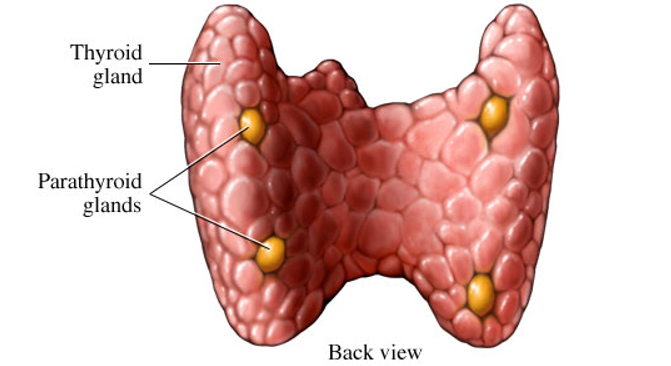
The parathyroid glands are small endocrine glands in the neck that produce parathyroid hormone. Humans usually have four parathyroid glands, which are usually located on the rear surface of the thyroid gland, or, in rare cases, within the thyroid gland itself or in the chest. Parathyroid glands control the amount of calcium in the blood and within the bones.
The parathyroid secretion, parathormone has two main functions:
(i) It regulates the balance between the calcium in bones and in extracellular tissue fluid, thus affecting the amount of calcium in the blood.
(ii) It also controls the excretion of phosphates in the urine, probably by reducing tubular re-absorption of phosphorus by the kidney tubule.
Thymus Gland:
The thymus gland is an organ in the upper chest cavity that processes lymphocytes, a type of white blood cell that fights infections in the body. This organ is part of both the lymphatic system, which makes up a major part of the immune system, and the endocrine system, which includes all glands that produce hormones. The thymus is most important in children and young adults, when it programs lymphocytes to attack antigens, like viruses. People who do not have this gland, or in whom it does not function correctly, usually have compromised immune systems and difficulty fighting disease.
Adrenal Glands:
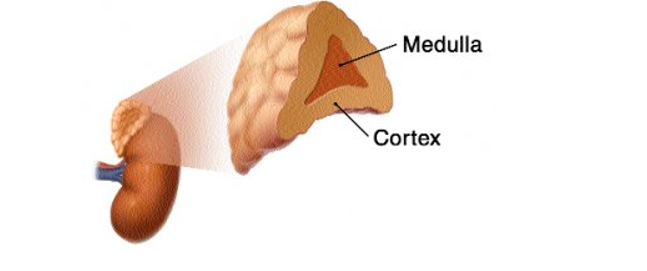
These are two small semi-lunar structures lying one each on upper pole of the kidneys. That is why they are also known as supra renal glands. Each gland consists of two structurally and physiologically separate parts known as cortex and medulla. The cortex occupies outer peripheral portion which is yellowish in colour and medulla is inner brownish part. Cortex secretes three different kinds of hormones known as corticosteroids. They are:
(i) Mineralocorticoids : These regulate sodium and potassium balance in the body.
(ii) Glucocorticoids : These derive their name from their influence on carbohydrate metabolism. e.g. Glycogenesis is promoted in liver.
(iii) Sex hormones: Small quantities of sex hormones as androgens and oestrogen are produced by adrenal glands which influence sexual development and growth.
Adrenal medulla is important in raising defense mechanisms and supplementing sympathetic actions in the body. It secretes two hormones.
(i) Adrenaline: It is a stress hormone causes increase in systolic blood pressure, dilation of coronary blood vessels, increased sweating and increase in metabolic rate. It brings restlessness, muscle fatigue and anxiety.
(ii) Noradrenaline: It is a general vasoconstrictor, increases both systolic and diastolic pressures. Both of these hormones are helpful in emergency conditions. Thus are called as "fight or flight response".
Pancreas:
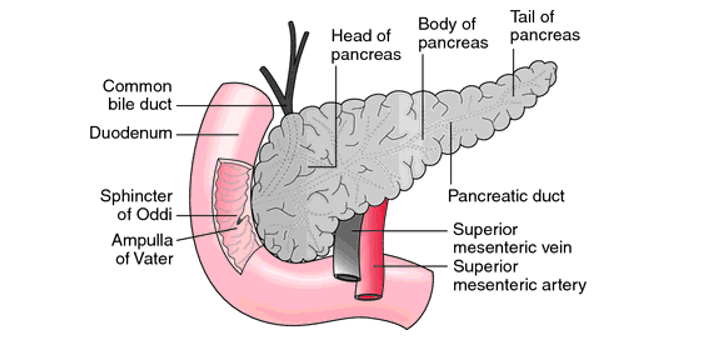
The pancreas is a gland organ in the digestive and endocrine system of vertebrates. It is both an endocrine gland producing several important hormones, including insulin, glucagon, and somatostatin, as well as an exocrine gland, secreting pancreatic juice containing digestive enzymes that pass to the small intestine. These enzymes help in the further breakdown of the carbohydrates, protein, and fat in the chyme.
(i) Insulin is secreted by the beta cells and like other hormones, passes directly into the blood. Insulin is required to convert glucose into glycogen (glycogenesis) and store it in liver. Deficiency of insulin due to defect in islets of Langerhans results in diabetes mellitus, a condition in which blood glucose is high and is passed in the urine.
(ii) The alpha cells of pancreas secrete glucagon, the metabolic effects of which are opposite to those of insulin. It causes the breakdown of liver glycogen, thereby releasing glucose into the blood stream.
(iii) The third hormone somatostatin is secreted by the delta cells of the islets of Langerhans. It is able to inhibit the secretion of many hormones. As it inhibits the release of growth hormone of pituitary gland, it is also known as growth hormone release inhibiting hormone (GHRIH).
Ovaries:
Ovaries secrete three hormone:
(i) Oestrogen: FSH from the anterior pituitary controls the secretion of oestrogen by acting on the Graffian follicles. This hormone effects the development of female secondary sex characters. The oestrogen secretion influences the follicular phase. Its secretion is maximum during ovulation period. Moreover during pregnancy the oestrogen secretion by placenta keeps on increasing till full term.
(ii) Progesterone: It is secreted by corpus Iuteum. This hormone in contrast to estrogen which is produced continuously during the reproductive years is secreted only after ovulation. Progesterone prepares the uterus for receiving the embryo. It prepares inner lining of the uterus .i.e. endometrium to receive the implanting embryo for about a week. If ovum gets fertilized, the corpus luteum continues to play a role in maintaining the pregnancy for the first three months, after which the placenta takes over the role of corpus luteum by secreting progesterone itself. This hormone is essential for the maintenance of pregnancy and is therefore called pregnancy hormone. If pregnancy does not follow ovulation, corpus luteum degenerates and breaks down due to the lack of progesterone.
(iii) Relaxin : This hormone is secreted during later stages of pregnancy and leads to relaxation of muscles of the pelvic area to enable easy child birth and reduce the pressure on the foetus.
(iv) Testes: Testosterone is the main testicular hormone secreted by interstitial cells of the testis. It is mainly concerned with the development and maintenance of male sex characters and enhancing the process of spermatogenesis.
|
S.No. |
Name of Gland |
Hormones |
Functions |
|
1. |
Hypothalamus |
Releasing Hormones |
Regulates the secretion of hormones from the pituitary. |
|
2. |
Pituitary |
Growth Hormone |
Regulates the development of bones and muscles. |
|
Oxytocin |
Regulates the secretion of milk during lactation and regulates uterine contractions. |
||
|
Vasopressin |
Regulates the water and electrolyte balance in the body. |
||
|
Prolactin |
Regulates the function of mammary gland. |
||
|
Trophic Hormones |
Regulates the secretion of hormones from other endocrine glands like thyroid, adrenal, ovary and testis. |
||
|
3. |
Thyroid |
Thyroxin |
Regulates the metabolism of carbohydrates, fat and proteins in the body. |
|
Calcitonin |
Controls calcium and phosphorus balance. |
||
|
4. |
Parathyroid |
Parathormone (PTH) |
Regulates calcium and phosphorus balance in the blood. |
|
5. |
Adrenal |
Corticoids |
Regulates carbohydrate, fat and protein metabolism and maintains electrolyte balance. |
|
Adrenaline |
Regulates heart rate, breathing rate, blood pressure and carbohydrate metabolism. |
||
|
6. |
Pancreas |
Insulin |
Lowers the blood sugar level |
|
Glucagon |
Increases the blood sugar level |
||
|
7. |
Testes |
Testosterone |
Regulates the development of male reproductive organs and accessory sexual characters like beard, moustache, etc. |
|
8. |
Ovaries |
Estrogen |
Regulates the development of female reproductive organs and accessory sexual characters like development of mammary gland. |
|
Progesterone |
Maintenance of Pregnancy. |
CONTROL AND COORDINATION IN ANIMALS
|
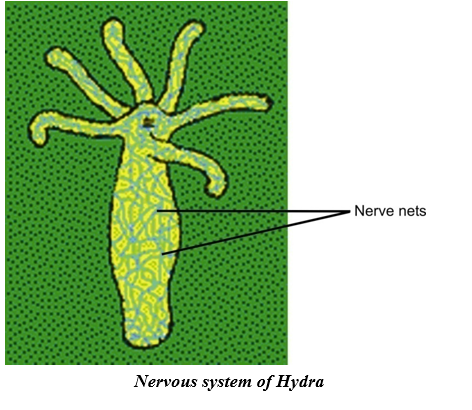
Multicellular organisms have specialized organ system to coordinate their activities. Simple multicellular organism like Hydra consists of a network of nerve cells. Thus, Hydra has only nervous system to coordinate its activities. The control and coordination in higher animals (Human) takes place through combination of nervous system and hormonal system, i.e. neuro-endocrine system. |
 |
NERVOUS CO-ORDINATION IN ANIMALS:
In animals two kinds of co-ordination-nervous & chemical are present. The nervous co-ordination is brought about by the nervous system and the chemical co-ordination by hormones. Both the systems work an integrated system. Infect such a control and coordination requires
(i) Gathering information about changes in the external environment.
(ii) Transmitting this information to the internal cells located away from the body surface and.
(iii) Exchange of information between the cells situated away from each other.
Structure of Neuron
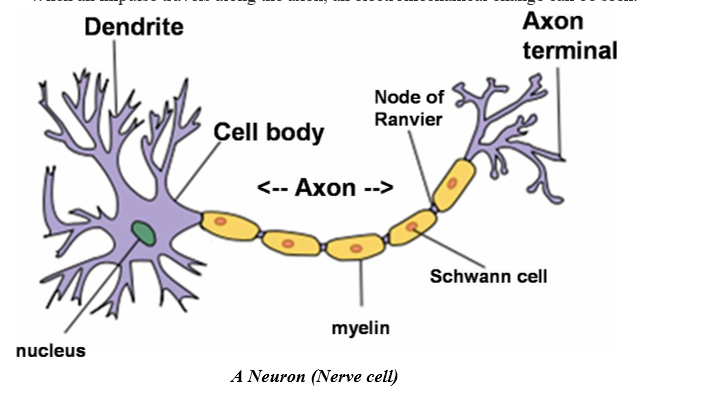
A nerve cell is an elongated cell which can be divided into 3 parts:
(i) Dendrite
It is a hair-like process which is hollow. It is connected to the cyton. The number of dendrites may be more than one. Dendrites may also be branched. Dendrites receive sensation or stimulus which may be physical, chemical, mechanical or electrical. It passes on the stimulus to the cyton.
(ii) Cyton
This part of the neuron has a central nucleus and surrounding cytoplasm. Around the nucleus there are granules called Nissl granules. Stimulus is changed in cyton to another form called impulse. From one side of cyton arises a cylindrical process filled with cytoplasm. This process is called axon.
(iii) Axon
It is the longest part of the neuron. It transmits the impulse from cyton to the tip of the axon called axon bulb. The axon is generally covered by a sheath of lipoprotein called myelin sheath. This sheath is formed by a type of cell called Schwann cell. At one point the axon is slightly depressed (a notch, an indentation). This is called the node of ranvier. When an impulse travels along the axon, an electromechanical change can be seen.
Receptor and Effector:
There are five sense organs in our body: eyes, ears, nose, tongue and skin. In a sense organ a receptor is present, which is a cell or group of cells sensitive to a particular type of stimulus (change in environment) such as light, heat, sound etc.
Types of receptors
|
S.No. |
Receptor |
Types of Stimulus |
Sense organ |
|
1. |
Photo receptors |
Detects light |
Eye |
|
2. |
Phono receptors |
Detects sound |
Ear |
|
3. |
Olfactory receptors |
Detects smell |
Nose |
|
4. |
Gustatory receptors |
Detects taste |
Tongue |
|
5. |
Thermo receptors |
Detects heat or cold |
Skin |
The part of a body which can respond to stimulus according to the instruction sent from the nervous system is called effector. Effectors are mainly muscles and glands.
Central Nervous System
In vertebrates, the central nervous system consists of brain, and the spinal cord.
Brain:
It is the most important organ which is lodged in the brain box, calledcranium. Brain is covered by membranes called meninges. Between the membranes and the brain and also inside the brain, there is a characteristics fluid, called cerebrospinal fluid. The brain can be divided into three main parts:
(i) Fore-brain:
This is the anterior part which includes (a) olfactory lobes, the centers of smell; (b) cerebral hemispheres, the seat of intelligence & voluntary action; (c) diencephalons, the centre of hunger, thirst, etc.
(ii) Midbrain:
This part includes optic lobeswhich are centre of vision.
(iii) Hind-brain:
This is the posterior part which includes the (a) cerebellum, the co-ordination centre of involuntary actions. Medulla oblongata is continued behind into the spinal cord. The brain is hollow. It has four longitudinal cavities called ventricles. In land vertebrates, 12 different cranial nerves are connected with the brain. Spinal cordIt is a long cord which arises from medulla oblongata and runs all along the vertebral column. It pass through the neural canal which is a canal of vertebra.
In the transverse section of a spinal cord, a central canal can be seen. This canal remains filled with cerebrospinal fluid. Immediately surrounding the canal, there are clusters of cytons which form the grey matter. In the peripheral part, axons are concentrated and, therefore, this area is called white matter. From each side of spinal cord, there are two horns, the dorsal horn and the ventral horn. To the dorsal horn joins a nerve which picks up sensation from the organ. It is called sensory organs. From the ventral horn or root arises the motor nerve which takes the message from the spinal cord to organ concerned. These two nerves constitute the reflex action. This action is very quick, for example, movements of eyelids, sneezing, coughing, yawning, hiccupping, shivering etc. In man 31 pairs of spinal nerves can be seen; eight in the neck region, 12 in chest region, five in abdominal region, five in hip region, and one in coccyx region. Coccyx is the last bone of the vertebral column.
Autonomic nervous system:
Nerves from the brain and the spinal cord connect the skeletal muscles and control their activities according to the direction and demand of the body. These nervous are, therefore related to the voluntary acts, i.e., acts according to the desire. But the internal organs are not under the control of our will. We cannot rotate the stomach or accelerate the heart beat by our conscious effort. For the control of the activities of the internal organs there is another type of nervous system called autonomous nervous system. You have seen the case of reflex action that motor neuron arises from the spinal cord and pass along the ventral root uninterruptedly all the way to the skeletal muscle. The cyton of this neuron is located in the spinal cord. But in case of an autonomous nervous system, i.e., spinal cord. This neuron runs for some distance only. It terminates in the sympathetic ganglion where it passes through the massage to the second nerve or neuron through asynapse which carries the impulse to the muscle or gland.
The autonomous nervous system has two subdivisions: sympatheticand parasympathetic. The sympathetic nervous system originates from the thoracic (chest) and lumber (abdominal) areas of spinal cord. Parasympathetic nerve which arises from spinal cord runs for a considerable distance and it forms a synapse (the point of exchange of impulse from one nerve to another) near the target organ where it has to send the message. The sympathetic nerves which arise from the spinal cord form a synapse in regular chain of ganglia running parallel to the spinal cord.
Sympathetic and parasympathetic nervous systems function in just the opposite manner. For example, if a person become angry, it may be due to the discharge of a chemical to different organs by the sympathetic nerves leading to increased heartbeat, etc. the parasympathetic nerve may discharge a different chemical, and thereby slow down the heartbeat and bring the person to normal state.
Nervous system in grasshopper (an Insect):
In insects, the nervous system consists of a brain, ganglia (singular ganglion) & nerve cord. A mass of nerve cells is called ganglion. The nerve cord runs along the entire length of the body. At intervals, it has ganglia. Small nerves are given out from each ganglion. Near the anterior end of the insect body, a large bi-lobed ganglion, called the brain, is present. Thus the nervous system of grass hopper consists of a brain, a long nerve cord, the ganglia and nerves spreading from the nerve cord.
NERVOUS SYSTEM IN HUMAN:
Human nervous system is one of the most highly developed nervous systems among living organisms on this planet.
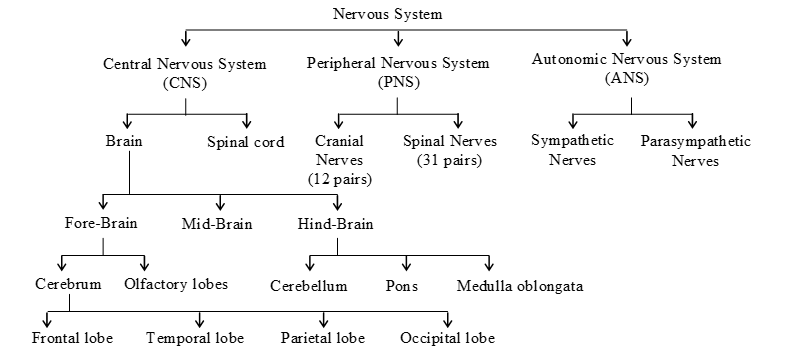
The human nervous system can be further divided.
Central Nervous System:
The central nervous system (CNS) is the processing center for the nervous system. It receives information from and sends information to the peripheral nervous system. The two main organs of the CNS are the brain and spinal cord. The brain processes and interprets sensory information sent from the spinal cord. Both the brain and spinal cord are protected by three layers of connective tissue called the meninges.
Within the central nervous system is a system of hollow cavities called ventricles. The network of linked cavities in the brain (cerebral ventricles) is continuous with the central canal of the spinal cord. The ventricles are filled with cerebrospinal fluid which is produced by specialized epithelium located within the ventricles called the choroid plexus. Cerebrospinal fluid surrounds, cushions, and protects the brain and spinal cord from trauma. It also assists in the circulation of nutrients to the brain.
BRAIN:
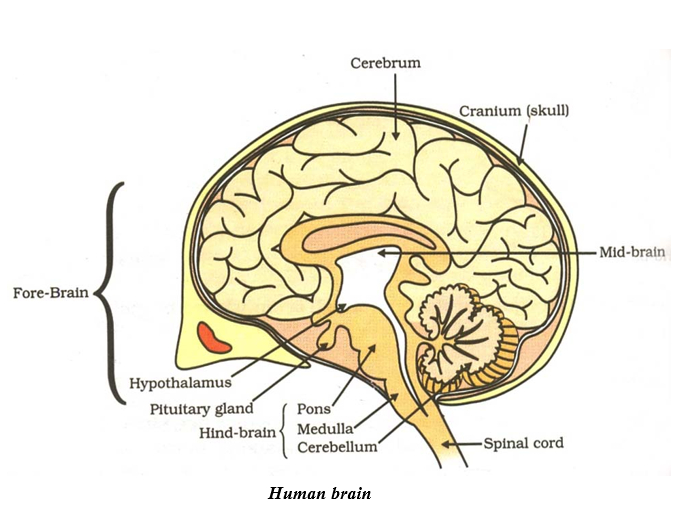
The brain is the control center of the body. It consists of three main components: the forebrain, the brainstem, and the hindbrain.
The forebrain is responsible for a variety of functions including receiving and processing sensory information, thinking, perceiving, producing and understanding language, and controlling motor function. The forebrain contains structures such as the thalamus and hypothalamus which are responsible for such functions as motor control, relaying sensory information, and controlling autonomic functions. It also contains the largest part of the brain, the cerebrum. Most of the actual information processing in the brain takes place in the cerebral cortex.
Olfactory lobes: A pair of bodies covered by cerebrum. It is not so developed in humans. It is concerned with olfaction (smell).
Cerebrum: It forms about two-third of the brain. Different areas of cerebrum perform different functions. Association areas control learning, reasoning, intelligence, personality, thinking, memory, etc. Sensory areas give us sensation by receiving information from eyes, ears, nose, tongue, skin. Motor areas give instructions to muscles for various voluntary actions. However, certain sensations are distinct from seeing or hearing, for example, how do we know that we have eaten enough? The sensation of feeling full is because of a centre associated with hunger, which is in a separate part of the fore brain.
Cerebrum is further divided into two equal halves – the two cerebral hemispheres. Each hemisphere has fissures which further divides it into lobes – frontal (region for speech, facial muscular activities and higher mental activities), temporal (region of hearing or auditory reception), parietal (region for taste, smell, touch, temperature and conscious association) and occipital (region for sight or visual reception).
The midbrain and the hindbrain together make up the brainstem. The midbrain is the portion of the brainstem that connects the hindbrain and the forebrain. This region of the brain is involved in auditory and visual responses as well as motor function.
The hindbrain extends from the spinal cord and contains structures such as the pons and cerebellum. These regions assist in maintaining balance and equilibrium, movement coordination, and the conduction of sensory information. The hindbrain also contains themedulla oblongata which is responsible for controlling such autonomic functions as breathing, heart rate, and digestion.
Pons: It takes part in regulating respiration.
Cerebellum: It helps in maintaining posture and balance. It also coordinates smooth body movements like walking in a straight line, riding a bicycle, picking up a pencil etc.
Medulla Oblongata: It controls various involuntary actions such as heart beat, blood pressure, salivation, breathing, peristaltic movements, etc. Medulla also controls reflex actions like, swallowing, sneezing, vomiting, etc.
Spinal Cord:
The spinal cord is a cylindrical shaped bundle of nerve fibers that is connected to the brain. The spinal cord runs down the center of the protective spinal column extending from the neck to the lower back. Spinal cord nerves transmit information from body organs and external stimuli to the brain and send information from the brain to other areas of the body. The nerves of the spinal cord are grouped into bundles of nerve fibers that travel in two pathways. Ascending nerve tracts carry sensory information from the body to the brain. Descending nerve tracts send information pertaining to motor function from the brain to the rest of the body.
Neurons:
Neurons are the basic unit of the nervous system. All cells of the nervous system are comprised of neurons. Neurons contain nerve processes which are "finger-like" projections that extend from the nerve cell body. The nerve processes consist of axons and dendrites which are able to conduct and transmit signals. Axons typically carry signals away from the cell body. They are long nerve processes that may branch out to convey signals to various areas. Dendrites typically carry signals toward the cell body. They are usually more numerous, shorter and more branched than axons. Axons and dendrites are bundled together into what are called nerves. These nerves send signals between the brain, spinal cord, and other body organs via nerve impulses. Neurons are classified as either motor, sensory, or interneurons. Motor neurons carry information from the central nervous system to organs, glands, and muscles. Sensory neurons send information to the central nervous system from internal organs or from external stimuli. Interneurons relay signals between motor and sensory neurons.
Reflex Action and Reflex Arc
Reflex action: A reflex action may be defined as a spontaneous, involuntary and unconscious (without will) response of the effectors to a stimulus.
Blinking of eyes, moving our foot away when we step on something sharp, etc. are examples of reflex action. In reflex action, we are not aware of the things which are going to happen to us. In reflex action, spinal cord is involved for quick response to specific stimulus. However for thinking process, the information also goes to the brain.
The involvement of brain in reflex action is to think about the dangerous situation and the possibility of reaction. Such reflex action which involves brain is called cerebral reflexes. For example, the contraction of pupil of our eye automatically in the presence of bright light.
Reflex arc isthe path taken by nerve impulses in a reflex action is called reflex arc.
When we accidentally touch something hot, the heat is sensed by the receptors present in the skin. A nerve impulse is triggered for the same in the sensory neuron which transmits message to the spinal cord. In the spinal cord, impulse is passed to the connector neuron which in turn passes it to the motor neuron. The motor neuron transmits the instruction to a muscle of our arm. The arm muscles contracts and pulls other hand away from the hot object.
Peripheral Nervous System:
The communication between central nervous system and other parts of the body is facilitated by the Peripheral Nervous System consisting of nerves arising from brain and spinal cord. Nerves arising from the brain are called cranial nerves which are twelve pairs. There are 31 pairs of nerves arising from the spinal cord (spinal nerve). Cranial nerves are either sensory, motor, or mixed in nature. All the spinal nerves are mixed.
Autonomic Nervous System
It controls involuntary activities of internal organs such as heart, blood vessels, glands & smooth muscles of alimentary canal & uterus. It is subdivided into
Sympathetic
Parasympathetic system.
Organs receive nerves from both sympathetic and parasympathetic nerve fibres. They have opposite effects on the organs if one is stimulatory, the other is inhibitory.
(d) Effects of Sympathetic and Parasympathetic System :
|
Organ |
Sympathetic System |
Para-sympathetic system |
|
Heart |
Increases heart beat |
Decreases heart beat |
|
Blood vessels |
Constricts arteries & raises blood pressure. |
Dilates arteries & lowers blood pressure |
|
Bronchi |
Dilates bronchi making breathing easier |
Constricts bronchi |
|
Eye |
Dilates pupil |
Constricts Pupil |
|
Gastric secretion |
Inhibits secretion |
Stimulates secretion |
|
Salivary glands |
Inhibits secretion of saliva |
Stimulates secretion |
|
Urinary bladder |
Relaxes urinary bladder |
Contracts urinary bladder. |
|
Liver |
Reduces bilei secretion |
Promotes bile secretion. |
SOLVED EXAMPLES
Q1. Name any four stimuli which act on plants.
Sol. Light, Gravity, Water and Touch
Q2. Name a plant hormone whose effects include wilting of leaves.
Sol. Abscisic acid
Q3. Give one example of a plant part:
(a) Which is positively hydrotropic as well as positively geotropic?
(b) Which is positively phototropic but negatively geotropic?
Sol. (a) Roots(b) Stem (or Shoot)
Q4. Name the stimulus in (a) phototropism, and (b) geotropism.
Sol. (a) The stimulus in phototropism is light.(b) The stimulus in geotropism is gravity.
Q5. Where is the auxin hormone synthesized in a plant ?
Sol. Auxin hormone is synthesized in the tip of stem (or shoot).
Q6. Name the specialized cells which respond to stimuli.
Sol. Receptor cells
Q7. Give an example of a neurotransmitter.
Sol. Acetylcholine
Q8. What is a nerve impulse?
Sol. The messages that are transmitted in the nervous system are in the form of electrical and chemical signals called nerve impulses.
Q9. What are cranial and spinal nerves?
Sol. The nerves arising from brain are cranial nerves. The nerves arising from spinal cord are called spinal nerves.
Q10. What is the structural and functional unit of Nervous system?
Sol. Neuron
Q11. What is the difference between sensory and motor nerve?
Sol.
| S.No. | Sensory Neuron | Motor Neuron |
| 1. | The neuron arising from the sense organs. | The neuron arising from brain or spinal cord. |
| 2. | They transmit impulse from sensory organs to central nervous system. | They transmit impulse from central nervous system to effector organ (muscles or glands). |
Q12. Write the function of medulla.
Sol. It controls various involuntary actions such as heart beat, blood pressure, salivation, breathing, peristaltic movements, etc. Medulla also controls reflex actions like, swallowing, sneezing, vomiting, etc.
Q13. What is the role of brain in reflex action?
Sol. The involvement of brain in reflex action is to think about the dangerous situation and the possibility of reaction. Such reflex action which involves brain are called cerebral reflexes. For example, the contraction of pupil of our eye automatically in the presence of bright light.
Q14. Write a note on autonomic nervous system.
Sol. It comprises of a set of two (sympathetic and parasympathetic) networks of nerves antagonistic to each other. These nerves are attached to the smooth muscles of internal organs like heart, blood vessels, uterus etc. and controls involuntary actions. For example, sympathetic nerves increase the rate of heart beat and parasympathetic decrease the rate of heart beat.
Q15. Explain in detail the function of different parts of cerebrum.
Sol. Different areas of cerebrum perform different functions. Association areas control learning reasoning, intelligence, personality, thinking, memory, etc. Sensory areas give us sensation by receiving information from eyes, ears, nose, tongue, skin. Motor areas give instructions to muscles for various voluntary actions.
Q16. Name the hormone secreted by
(a) Testes (b) Ovaries
Sol. (a) Testosterone(b) Estrogen and Progesterone
Q17. The gland X secretes a hormone Y. The deficiency of hormone Y in the body makes a person dwarf whereas the excess of hormone Y makes a person giant.
Sol. X is pituitary gland and Y is growth hormone.
Q18. The neck of a person appears to be swollen.
(a) Name the disease he is suffering from.
(b) Name the mineral whose deficiency in the diet causes this disease.Sol.
(a)Goitre
(b) Iodine
Q19. A person has been advised by the doctor to take less sugar in his diet. Name the disease he’s suffering from.
Sol. Diabetes
Q20. Name one target organ in our body on which adrenaline hormone acts.
Sol. Heart
Q21. Which hormone:
(a) prepares the body for action?
(b) controls the amount of sugar (glucose) in blood?
(c) brings about changes in boys at puberty?
(d) brings about changes in girls at puberty?
Sol.
(a) Adrenaline
(b) Insulin
(c) Testosterone
(d) Estrogen
Q22. Explain why, sometimes we come across people who are either very short (dwarfs) or extremely tall (giants)?
Sol. There is a pituitary gland just below the brain in the human body. One of the hormones secreted by pituitary gland is growth hormone (or human growth hormone). The growth hormone controls the development of bones and muscles. A person having a deficiency of growth hormone in childhood remains very short and becomes dwarf. On the other hand, a person having excess of growth hormone becomes very tall (or a giant).
Q23. Why is the use of iodised salt advisable?
Sol. Iodine is necessary for the thyroid gland to make Thyroxin hormone. Thyroxin hormone regulates the metabolism of carbohydrates, fats and proteins so as to produce the best balance for growth. If there is deficiency of iodine in our diet, the formation of Thyroxin hormone will be reduced and lead to a disease called goitre. One of the symptoms of this disease is that the neck of the person appears to be swollen. Iodised salt contains appropriate amounts of iodine compounds. Iodised salt can provide all the iodine needed by the thyroid gland to make sufficient Thyroxin hormone for the body. So, if we take iodised salt, there can be no deficiency of iodine (or Thyroxin) in the body and hence goitre disease can be prevented.
Q24. Compare the nervous and hormonal system for control and coordination in humans.
Sol. A comparison of nervous system and hormonal system is given below :
| S.No. | Nervous System | Hormonal System |
| 1. | Made of neurons (nerve cells). | Made of secretory cells (or glands). |
| 2. | Messages transmitted in the form of electrical impulses. | Messages transmitted in the form of chemicals called hormones. |
| 3. | Messages transmitted along nerve fibres. | Messages transmitted through blood stream. |
| 4. | Messages travel very quickly. | Messages travel more slowly. |
| 5. | Effect of message usually lasts for a very short while. | Effect of message usually lasts longer. |
Q25. How does our body respond when adrenaline is secreted into the blood?
Sol. The adrenaline hormone prepares our body to function at maximum efficiency during emergency situations like danger, anger, excitement, etc. This happens as follows: When we are faced with a dangerous situation (like being chased by a ferocious dog), then our nervous system stimulates the adrenal glands to secrete more adrenaline hormone into our blood. This adrenaline hormone increases our ‘heart beat’, ‘breathing rate’, ‘blood flow into muscles’ and causes liver ‘to put more stored glucose into our blood’. All these actions of adrenaline hormone produce a lot of energy in our body very quickly. And this energy helps us to cope up with emergency situations (like running away very fast from a ferocious dog or fighting an enemy, etc.).
Q26. Name five hormones secreted by pituitary gland and mention their functions.
Sol.
| S.No. | Hormones | Functions |
| 1. | Growth hormone | Regulates the development of bones and muscles. |
| 2. | Oxytocin | Regulates the secretion of milk during lactation and regulates uterine contractions. |
| 3. | Vasopressin | Regulates the water and electrolyte balance in the body. |
| 4. | Prolactin | Regulates the function of mammary gland. |
| 5. | Trophic Hormones | Regulates the secretion of hormones from other endocrine glands like thyroid, adrenal, ovary and testis. |
Q27. Name any four stimuli which act on plants.
Sol. Light, Gravity, Water and Touch
Q28. Name a plant hormone whose effects include wilting of leaves.
Sol. Abscisic acid
Q29. Give one example of a plant part:
(a) Which is positively hydrotropic as well as positively geotropic?
(b) Which is positively phototropic but negatively geotropic?
Sol.
(a) Roots
(b) Stem (or Shoot)
Q30. Name the stimulus in
(a) phototropism, and (b) geotropism.
Sol. (a) The stimulus in phototropism is light.
(b) The stimulus in geotropism is gravity.
Q31. Where is the auxin hormone synthesized in a plant ?
Sol. Auxin hormone is synthesized in the tip of stem (or shoot).
Q32. Give the scientific terms used to represent the following :
(a) Bending of a shoot towards light.
(b) Growing of roots towards the earth.
(c) Growth of a pollen tube towards ovule.
(d) Bending of roots towards water.
Sol. (a) Phototropism(b) Geotropism(c) Chemotropism(d) Hydrotropism
Q33. What is chemotropism? Give one example of chemotropism.
Sol. The movement of a plant part in response to a chemical is called chemotropism. The growth of a pollen tube towards the ovule during the process of fertilization in a flower is an example of chemotropism. In this case, the pollen tube grows in response to a sugary substance (a chemical) secreted by the stigma of carpel in the flower.
Q34. Define hydrotropism? Give an example of hydrotropism.
Sol. The movement of a plant part in response to water is called hydrotropism. The roots of a plant always grow towards water. This is an example of hydrotropism. The roots of a plant normally grow downwards towards the earth but in order to reach water, they can grow and bend even sideways or even upwards (even if it means going against the pull of gravity). The roots grow in the direction of source of water so as to obtain water for the developing plant.
Q35. Distinguish between tropic and nastic movements of plants.
Sol. The difference between tropic and nastic movement are :
Q36. What is meant by the nastic movement in plants? Give one example of nastic movement in plants.
Sol. The movement of plant parts in response to a stimulus which takes place in any direction (neither towards the stimulus nor away from the stimulus) is called a nastic movement. Nastic movements of plants are also called nasties. The nastic movement of plants are also induced by stimuli such as heat, light, touch (or contact), etc. An example of the nastic movement in plants is provided by the Mimosa plant (commonly called ‘touch-me-not’ plant) which is called Lajwanti or Chhuimui in Hindi. If we touch the leaves of a Mimosa plant with our finger, then all its leaves fold up and droop. The folding up of the leaves of a Mimosa plant on touching is an example of the nastic movement in plants (in which the stimulus is the ‘touch’ of our fingers).
Exercise 1
Q1. The gap between two neurons is called a
(a) Dendrite
(b) Synapse
(c) Axon
(d) Impulse
Q2. The brain is responsible for
(a) Thinking
(b) Regulating the heart
(c) Balancing the body
(d) All of these
Q3. The plant hormone which is essential for cell division is
(a) Ethylene
(b) Auxin
(c) Gibberelin
(d) Cytokinin
Q4. The root of a plant is said to be
(a) Positively Geotropic
(b) Positively phototropic
(c) Negatively Geotropic
(d) Negatively hydrotropic
Q5. Which of these plant hormones is a growth inhibitor?
(a) Ethylene
(b) Auxin
(c) Abscisic acid
(d) Cytokinin
Q6. Master gland of the body is
(a) Testis
(b) Thyroid
(c) Pituitary
(d) Adrenal
Q7. Which hormone brings about contractions of uterine wall, leading to labour pain?
(a) Estrogen
(b) Oxytocin
(c) Prolactin
(d) Progesterone
Q8. People suffering from Diabetes mellitus are unable to secrete
(a) Insulin
(b) Adrenaline
(c) Thyroxin
(d) Vasopressin
Q9. The seat of intelligence and voluntary actions in the brain is
(a) Diencephalon
(b) Cerebrum
(c) Cerebellum
(d) Medulla oblongata
Q10. The activities of the internal organs are controlled by
(a) CNS
(b) ANS
(c) PNS
(d) None of these
Q11. Which gland is lost as the age advances?
(a) Thyroid
(b) Adrenal
(c) Thymus
(d) Pancreas
Q12. The term hormone was coined by
(a) Starling
(b) Yabuta
(c) Went
(d) Wilson
Q13. The lobes responsible for smell are
(a) Frontal
(b) Olfactory
(c) Occipital
(d) Parietal
Q14. Pons is responsible for controlling
(a) Respiration
(b) Nutrition
(c) Excretion
(d) Circulation
Q15. Temporal lobe of the brain is the region for
(a) Hearing
(b) Speech
(c) Sight
(d) Taste
Q16. Sneezing, coughing, vomiting are controlled by
(a) Pons
(b) Cerebrum
(c) Medulla Oblongata
(d) Cerebellum
Q17. The pairs of spinal nerves are
(a) 33
(b) 34
(c) 32
(d) 31
Q18. The plant Mimosa pudica (Touch-me-not) is an example of
(a) Phototropism
(b) Nastic movement
(c) Thigmotropism
(d) Chemotropism
Q19. Abscisic acid is not responsible for
(a) Wilting of leaves
(b) Opening of stomata
(c) Dormancy of seeds
(d) Closing of stomata
Q20. Gigantism is caused due to excess secretion of
(a) Growth hormone
(b) Oxytocin
(c) Trophic hormones
(d) Prolactin
Q21. Water and electrolyte balance is regulated by
(a) Vasopressin
(b) Calcitonin
(c) Oxytocin
(d) Trophic hormones
Q22. Goitre is caused due to deficiency of
(a) Iron
(b) Magnesium
(c) Iodine
(d) Calcium
Q23. Insulin deficiency causes
(a) Dwarfism
(b) Goitre
(c) Gigantism
(d) Diabetes
Q24. Reflex movements of head, neck and trunk in response to visual and auditory stimuli is controlled by
(a) Fore brain
(b) Hind brain
(c) Mid brain
(d) None of these
Q25. Geotropism is response of the plant towards
(a) Chemical
(b) Sun
(c) Water
(d) Gravity
Q26. Which one of them is not a plant hormone?
(a) Trophic hormones
(b) Gibberlin
(c) Cytokinin
(d) Auxin
Q27. Which of them is a mixed gland?
(a) Pancreas
(b) Ovary
(c) Testes
(d) All of these
Q28. Swollen neck is the main symptom of the disease
(a) Night Blindness
(b) Anaemia
(c) Beri-Beri
(d) Goitre
Q29. Glucagon ________________ the blood sugar level
(a) Increases
(b) Has no effect
(c) Decreases
(d) None of these
Q30. Dormancy of the seed refers to
(a) Cell division phase
(b) Growth phase
(c) Resting phase
(d) Germination phase
Q31. Phytohormones are
(a) hormones regulating growth from seed to adulthood
(b) hormones regulating secondary growth
(c) growth regulators synthesized by plants and influencing physiological processes
(d) hormones regulating flowering.
Q32. The natural plant hormones were first isolated from
(a) cotton fruits , spinach leaves, rice plant
(b) avena coleoptile, fungus gibberella
(c) corn germ oil, human urine
(d) human urine, rice plant.
Q33. If the tip of a seedling is cut off, growth as well as bending ceases because it hampers
(a) perception of light stimulus
(b) transpiration
(c) respiration
(d) photosynthesis.
Q34. A plant bends towards the source of light when exposed to the light on only one side. Which of the following is the best explanation of the phenomena?
(a) It needs light for photosynthesis
(b) The apices of their stems are attracted by light
(c) Some auxin accumulates on the shaded side to induce greater cell elongation on that side
(d) Light stimulates the cells on the illuminated side to increase in length
Q35. The movement of plant organs in response to the force of gravity is called
(a) hydrotropism
(b) geotropism
(c) heliotropism
(d) phototropism
Q36. A high concentration of synthetic auxins is generally used for
(a) weed control
(b) enhancing root initiation
(c) controlling of cell enlargement
(d) preventing the growth of the lateral buds.
Q37. Gibberellic acid has been successfully employed to induce flowering
(a) in long day plants under short day conditions
(b) in short day plants under long day conditions
(c) for some plants
(d) none of the above
Q38. Cytokinins are known to
(a) inhibit cytoplasmic movement
(b) help in retention of chlorophyll
(c) influence water movement
(d) promote abscission layer formation
Q39. Ethylene is a
(a) solid hormone
(b) gaseous enzyme
(c) gaseous hormone
(d) liquid gas mixture
Q40. Pineapple can be made to flower in off season by
(a) zeatin
(b) ethylene
(c) temperature
(d) short days
Q41. The effect of daily light period on flowering, is called
(a) photo-oxidation
(b) phototropism
(c) photo-periodism
(d) photorespiration
Q42. Brain stem is formed by the union of
(a) optic lobes
(b) cerebellum with optic lobes
(c) corpora striata
(d) mid brain, pons varoili and medulla oblongata
Q43. Number of spinal nerves in man are
(a) 11 pairs
(b) 13 pairs
(c) 6 pairs
(d) 31 pairs
Q44. Third ventricle occurs in
(a) cerebrum
(b) cerebellum
(c) medulla oblongata
(d) diencephalon
Q45. The pineal body is considered as
(a) an endocrine gland
(b) an organ concerned with voluntary actions
(c) an organ concerned with vision
(d) a vestige of third eye and endocrine gland
Q46. Part of brain involved in interpretation, storage of information and initiation of response on the basis of past experience is
(a) motor area
(b) cerebellum
(c) sensory area
(d) association area
Q47. Autonomic nervous system controls
(a) reflex action
(b) sense organs
(c) internal organs
(d) skeletal muscle
Q48. The study of nervous system and its disorders is called
(a) neurogenesis
(b) hematology
(c) neuroglia
(d) neurology
Q49. In reflex action the reflex arc is formed by
(a) brain ® spinal cord ® muscles
(b) receptor ® spinal cord ® muscles
(c) muscle ® receptor ® brain
(d) muscles ® spinal cord ® receptor
Q50. The sensation of sight in human brain is perceived by
(a) optic lobe
(b) occipital lobe
(c) frontal lobe
(d) parietal lobe
ANSWERS TO EXERCISE - 1
| 1. | (b) | 2. | (d) | 3. | (d) | 4. | (a) | 5. | (c) |
| 6. | (c) | 7. | (b) | 8. | (a) | 9. | (b) | 10. | (b) |
| 11. | (c) | 12. | (a) | 13. | (b) | 14. | (a) | 15. | (a) |
| 16. | (c) | 17. | (d) | 18. | (b) | 19. | (b) | 20. | (a) |
| 21. | (a) | 22. | (c) | 23. | (d) | 24. | (c) | 25. | (d) |
| 26. | (a) | 27. | (d) | 28. | (d) | 29. | (a) | 30. | (c) |
| 31. | (c) | 32. | (b) | 33. | (a) | 34. | (c) | 35. | (b) |
| 36. | (a) | 37. | (a) | 38. | (b) | 39. | (c) | 40. | (b) |
| 41. | (c) | 42. | (d) | 43. | (d) | 44. | (d) | 45. | (d) |
| 46. | (d) | 47. | (c) | 48. | (d) | 49. | (b) | 50. | (b) |
Exercise - 2
Q1. List two functions performed by ovaries in a human female.
Q2. Write the function of hormone ‘thyroxin’ in our bodies.
Q3. Name the part of hind-brain which takes part in regulation of respiration.
Q4. We suddenly withdraw our hand when a pin pricks. Name the type of response involved in this action.
Q5. Deficiency of which hormone leads to Diabetes mellitus?
Q6. Is opening of a flower an example of plant movement? If so, which movement?
Q7. Name the source glands of prolactin and estrogen.
Q8. Which structure in a neuron helps to conduct a nerve impulse:
(a) towards the cell body?
(b) away from the cell body?
Q9. Which hormone deficiency causes dwarfism?
Q10. Which growth hormone is present in the tip of a stem?
Q11. Name the fluid that is found between the meninges.
Q12. Name the connective tissue covering the brain.
Q13. Where is glucagon secreted? What is its function?
Q14. What is photonasty? Give one example.
Q15. Why is oxytocin called as ‘birth hormone’?
Q16. What is the difference between the manner in which movement takes place in a sensitive plant and the movement in our legs?
Q17. What is spinal cord and how is it protected?
Q18. How do auxins promote the growth of a tendril around a support?
Q19. What do you understand by the term ‘target organ’? Give any one example.
Q20. Out of all the pituitary hormones, which two are exclusively in females? What function do they serve?
Q21. State the main function of ‘pituitary gland’. Write the effect of
(a) Excessive and
(b) Sluggish activity of this gland on the growth of a child.
Q22. Explain the mechanism of phototropism with the help of an example.
Q23. What are receptors? What are their basic functions?
Q24. Show in a tabular form the following endocrine glands, hormones secreted by them and their functions:
(a) Adrenal gland
(b) Pancreas
Q25. How are involuntary and reflex action different from each other?
Q26. (a) What are ‘hormones’?
(b) List four characteristics of hormones.
Q27. Explain the mechanism of geotropism with the help of an example.
Q28. What is the need for a system of control and coordination in an organism?
Q29. Draw a labeled diagram of human brain and write the functions of the following parts:
(a) Cerebrum
(b) Pons
(c) Medulla oblongata
(d) Cerebellum
Q30. What is endocrine system? What are its functions? Name the important endocrine glands present in a human body. Draw a labelled diagram to show the positions of these endocrine glands in the human body (male/female).