About Class 10 Science (Biology) Notes on Chapter 04 – Heredity and Evolution
Heredity and Evolution is one of the most conceptual chapters in Class 10 Science. It explains how traits are inherited from one generation to the next and how species evolve. Gregor Mendel’s experiments with pea plants form the basis of heredity, leading to the discovery of dominant and recessive traits. Mendel’s laws of inheritance explain segregation and independent assortment, which are fundamental to genetics. This chapter also covers the concepts of genotype, phenotype, variation, and sex determination in humans. Evolution explains how species have changed over millions of years through natural selection, adaptation, and survival of the fittest. Charles Darwin’s theory of evolution highlights how environmental pressures shape species. Fossil evidence, homologous and analogous organs, and vestigial structures are important evolutionary proofs. This chapter is highly scoring in exams as it involves reasoning-based questions and diagrams like the monohybrid and dihybrid cross. Students should thoroughly revise it using the NCERT textbook and NCERT solutions for Class 10 Science to strengthen their understanding. Heredity and Evolution not only help in academics but also expand knowledge of genetics and biodiversity, making it a fascinating and essential chapter.
Introduction:
An elephant resembles other elephants, a rose plant looks like other rose plants, and children resemble their parents, even grandparents or great grandparents. This resemblance among the individuals of a species has given rise to a general truth 'like begets like' which implies continuity of life.
We have already seen that some amount of variations is produced by asexual reproduction. However, the number of successful variations is maximized by the process of sexual reproduction. So when we observe a field of sugarcane we find very little variations among the individual plants (asexual reproduction). But in a large number of animals including human beings, distinct variations are visible among different individuals (sexual reproduction).
Heredity
Heredity is the passing of traits to offspring (from its parent or ancestors). This is the process by which an offspring cell or organism acquires or becomes predisposed to the characteristics of its parent cell or organism. Through heredity, variations exhibited by individuals can accumulate and cause some species to evolve. The study of heredity in biology is called genetics, which includes the field of epigenetics.
Genetics
Study of Heredity and variations is said to be known as genetics. The term genetics was first of all used by William Bateson in 1905. An Austrian monk namely Gregor Johann Mendel was the first person to study genetics. He was therefore regarded as the `Father of Genetics'.
Variation
Variation is concerned with the difference between the individuals of same species and also between the offsprings of the same parents.
- Variation could be of two types:
(i) Somatic variation
(ii) Germinal variation
Somatic Variation:
Mutations that occur in the somatic cells are called somatic variations .New mutations occur twice as frequently in sperm as in eggs(germ cells), probably because so many more cell divisions are required to make sperm than eggs.
Somatic variations are due to:
(A) Environment : This includes the factors that affect the organisms such as food, air, pressure, humidity, water etc. Environment affects all the organisms however they also affect the plants because they cannot move or hide themselves.
- Light : Strong sunlight affects the human skin by increasing the dark pigment melanin in the epidermal cells. Melanin protects the underlying cells by absorbing the ultra violet rays of the sun. Plants grown in shade become weak and pale and acquire long internodes and broad leaves.
- Habitat: It also affects the genetic makeup of an individual and leads to variations.
- Nutrition: It is also one of the various factors that cause variations.
(B) Use and disuse of organs: Continuous use of an organ makes it better developed whereas constant disuse makes it reduced.
(C) Conscious efforts : Conscious efforts by man produce somatic variations in humans themselves, in domestic animals and plants.
Germinal Variation:
Germinal variation is the type of variation that occurs only in germplasm of organisms. So, only the variations from the germplasm and the gametes are passed on the offsprings.It may be apparent from the birth of the individual or may develop at any stage of life of the organism.
Germinal variations could be of two types :
(A) Continuous variations: (Fluctuating variations) The continuous variations are very common in nature. These are found in all animals and plants and affect all of their organs. These variations are unstable and do not contribute to the formation of new species.
Causes of continuous variations:
New combination of characters
Crossing over (recombination of genes)
(B) Discontinuous variations : This variation refers to large conspicuous differences of the offspring from the parents. This variation is also known as mutation and the individual with this kind of variation is called as mutant. This is not common in nature. It appears suddenly. It is stable and inheritable.
Causes of discontinuous variations:
Modification in structure of chromosomes.
Alteration in the chemical nature of genes.
Change in the number of chromosomes.
Radiations and chemicals may also cause mutation.
Significance Of Variation:
Variation enables the organisms to adapt themselves to the changing environment.
It forms raw material for evolution
It enables the organisms to face the struggle for existence in a better way.
It helps men in improving the races of useful animals and plants.
It is the basis of heredity.
It also leads to the existence of new traits.
Heredity And Variation In Asexual Reproduction:
There are organisms in which reproduction occurs by asexual means. These include Bacteria, Amoeba, Euglenas, fungi etc., many plants such as rose and sugarcane, lower animals namely Hydra, planaria etc.
This asexual reproduction is monoparental and the organism produced by it inherits all the traits of its single parent. It is almost a carbon copy of the parent and is known as its clone. It is also called as clonal reproduction. Here, one thing to be noted is that the term "offspring" is not used in case of asexual reproduction.
The clones may develop variations:
- By environmental factors
- By mutation
The variations caused due to environmental factors are not transferable but those variations which are aused by mutation are stable and inheritable.
Heredity and Variations in Sexual Reproduction:
In sexually reproducing organisms, the new individual receives half of the genetic information from its mother through the egg and half from its father from his sperm. Sexually produced offspring resemble, but are not identical to, either of their parents. Some reasons for these variations between sexually reproduced offspring and their parents include crossing over when gametes are formed in each parent and genetic recombination, which is the combining of the genetic instructions of both parents into a new combination in the offspring when fertilization occurs.
Genetic Recombination:
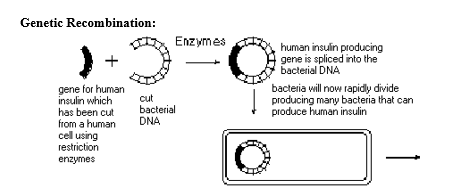
Note: Two of the four offspring in the punnett square at the right have a completely different genetic makeup than that of either parent.
The processes of crossing over and genetic recombination will result in offspring exhibiting variation from the original parents. The variations shown between different sexually produced offspring provide the driving force for the process of natural selection.
(a) Earlier Views of Heredity:
Different theories have been put forward to explain in what physical form the traits pass from the parents to the offsprings.
(i) Preformation theory : This theory was proposed by Antan Von Leeuwenhoek who was the first to observe human sperm. He called them "animalcules". He stated that each sperm has a potential to develop into a new individual when introduced into the woman's womb where it could get nourishment. This theory was rejected because it failed to explain the inheritance of maternal characters by offsprings.
(ii) Particulate theory : A French biologist Mauperkius proposed that each animal produces minute particles for reproduction and a new individual is formed by the union of the particles of the two parents. Then a famous English naturalist Charles darwin forwarded the theory of pangensis for the inheritance of characters. He assumed that tiny particles called pangenes or gemmules by him were formed in the various parts of the body and migrate to the reproductive cells and hence to the offsprings to guide the formation of the respective parts. Thus, the young one has a blend (mixture) of the pangenes hence, there is a presence of the characters of both the parents.
Mendel was the first to give the particulate theory of heredity. He had experimented on pea plants to study how traits are transferred or inherited. He unfortunately failed to explain the cause of inheritance. He also proposed various principles to explain the inheritance. Later on other scientists lead to the discovery of genes and chromosomes.
Mendel’s Experiments And Laws Of Inheritance
In human beings, the rules for the inheritance of traits are related to the fact that both the father and the mother contribute practically equal amounts of genetic material to the child. Each trait in the child is influenced by both paternal and maternal DNA (deoxyribo nucleic acid). In other words, for each trait, there will be two versions in each child, one from father and another from mother. Gregor Johann Mendel was the first scientist to work out the basic rules of such inheritance of traits more than a century ago. This involved the transfer of characteristics from parents to offspring. He did this by using different varieties of pea plants (Pisum sativum) which he grew in his garden.
Contrasting characters of pea plant studied by Mendel
- Plant height — Tall/short
- Flower colour — Violet/white
- Pod colour — Green/yellow
- Pod shape — Smooth/wrinkled
- Seed colour — Green/yellow
- Seed shape — Round/wrinkled
Some general terms used by him are :
- Dominant trait : The trait which appears in F1 generation is called as dominant trait. It is denoted by capital letter. e.g. TT (tall).
- Recessive trait: The traits which does not appears in F1 generation is called as recessive trait. It is denoted by small leter e.g. tt(dwarf)
- Monohybrid cross : It involves the study of inheritance of one pair of contrasting characters. e.g. Inheritance of tail and dwarf characters.
- Dihybrid cross: It is the inheritance of two pairs of contrasting characters.
- Trihybrid cross: It is the inheritance of three pairs of contrasting characters.
- Back cross: The cross between F1 generation with any of the parents is known as back cross.
- Test cross: The cross between F1 generation and the recessive parent is called as test cross.
- Genotype: It is the genetic representation of a trait. e.g. TT or Tt for a tall plant.
- Reciprocal cross: The reciprocal cross involves two crosses concerning the same characteristic but with reverse sex. It means if in the first cross A is female and B is male then in the second cross A will be male and B will be female.
- Phenotype: It is the expression of a trait e.g. Tall pea plant. It can be noted by direct observation of an individual.
- Allele: Term allele refers to each of the members of a genetic pair.
- Homozygous traits: They have similar alleles for specific trait (TT er tt). They produce only one type of gametes.
- Heterozygous traits: They have dissimilar alleles for a specific trait (Tt). They produce two types of gametes.
Mendel's Experimental Plant:
Mendel selected garden pea plant (Pisumsativum) for series of hybridization experiments because it had the following special features:
(i) It had a short life cycle and, therefore, it was possible to study a number of generations quickly.
(ii) Garden pea plant had distinct, easily detectable contrasting variants of features. For instance, some plants were tall and some dwarf; some had violet flowers and some had white flowers; some plants had round seeds and some had wrinkled seeds and so on. Mendel, in fact, noted seven pairs of such contrasting characters in garden pea plant.
The characters which always appear in two opposing conditions are called contrasting characters.
(iii) All the contrasting traits existed in every generation because plants had bisexual flowers and normally resorted to self-pollination.
(iv) In these bisexual plants, artificial cross-fertilization could easily be achieved. It was done by removing the stamens (male part) before maturity of the female part of flower and later dusting the pistil (female part) of this flower with the matured pollens from a desired plant.
(v) Each pea plant produced many seeds in one generation.
(vi) The garden pea plants could easily be raised, maintained and handled.
Crossing Technique Employed by Mendel:
Since garden pea is self - fertilizing, the anthers have to be removed before maturity. This operation is called as emasculation. The stigma is protected against any foreign pollen with the help of a bag The pollens then at the dehiscence stage, is brought from the plant to be used as male parent and is dusted on the feathery stigma of the emasculated flower. At the time of pollination, the pollens should be mature and the stigma should be receptive.
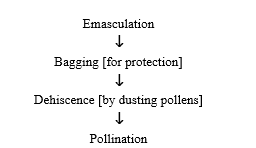
(i) Traits chosen by Mendel for his experiment: There are seven traits which Mendel has chosen, they are as follows:
| S.No. | Characters | Dominant | Recessive |
| 1. | Stem height | Tall | Dwarf |
| 2. | Flower colour | Violet_ | White |
| 3. | Flower position | Axial | Terminal |
| 4. | Pod shape | Inflated | Constricted |
| 5. | Pod colour | Green | Yellow |
| 6. | Seed shape | Round | Wrinkled |
| 7. | Seed colour | Yellow | Green |
(ii) Mendel performed experiments in three stages:
(A) He made sure that, the plant which he had chosen must be a true breeding plant, by letting the plant to undergo self - fertilization.
(B) He performed the process of cross pollination of alternate forms of traits. The resultant generation obtained was termed as hybrid and these hybrids formed are called F1 generation i.e, first filial generation.
(C) He allowed the hybrids to self pollinate up to five generations and these generations are subsequently termed as F2, F3 F4 and so on.
Precautions taken during experiment
While performing his cross breeding experiments, Mendel took a number of precautions.
(i) He always focused on the inheritance of the specific traits under consideration and simply ignored others. For instance, in his crosses, only one trait, i.e., size of plant (tall or dwarf) or colour of flower (violet or white) etc. was considered. He called such crosses as monohybrid crosses. Mendel also conducted crosses considering two or more contrasting traits of garden pea plant simultaneously. He designated such crosses as dihybrid crosses, trihybrid crosses and so on.
(ii) In cross breeding experiments, most important precaution required is to avoid self-pollination between two varieties or traits of plants. Mendel removed the anthers (male parts) of the flowers well before the maturity of the female part, i.e., gynoecium of the flowers.
This process is called emasculation. Such flowers were covered to avoid entry of any foreign pollen grain from outside by wind or animals. For making desired cross, mature pollen grains from the anther of the flower of the desired plant were transferred on the stigma (female part) of the emasculated mature flower. The seeds formed by such crosses were collected. These seeds belonged to the first filial generation or F1 generation. To draw effective conclusions, Mendel used the seeds of F1 generation to raise the F2 generation by self pollination and also the F2 seeds for raising F3 generation by self-pollination.
(iii) He maintained all the records of his experiments.
Result's of Mendel's Experiments:
(A) When the self pollination was made and F1 generation was obtained, it was found that the generation would express only one of the trait and not the other. The trait which is being expressed is called as dominant, whereas the one which is not expressed is called as recessive trait.
(B) In the F1 generation obtained by self pollination, the dominant and the recessive traits obtained were in the ratio of 3 : 1 i.e. 75% of the offsprings which appeared in F1 generation had dominant trait, while 25% had recessive trait. This ratio of 3 : 1 is also said to be known as Mendelian monohybrid ratio.
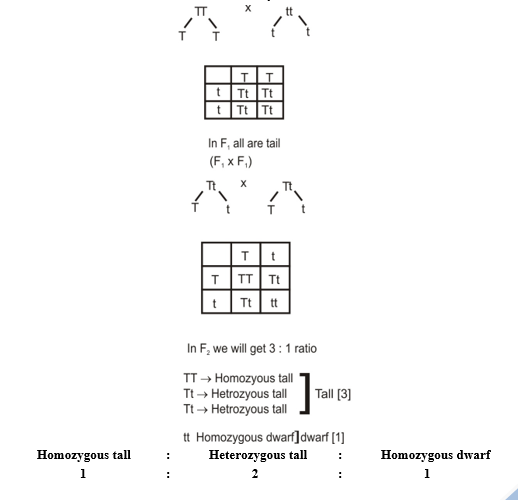
(C) Mendel further found that the phenotypic ratio of 3 : 1 of dominant to actually a genotypic ratio of 1 : 2 : 1 of pure dominant, hybrid and pure recessive forms traits which remain hidden in F1 generation got expressed in F2 generation. This was later proved in F3 generation.
(iii) Reasons for Mendel's success:
- He selected true breeding (pure) pea plant for his experiment.
- He studied single trait at a time.
- He kept an accurate mathematical record of his breeding experiments and noted down the number of each type of offspring produced in each cross.
- He was lucky enough to select the seven traits, as the gene for these traits are located on four different chromosomes.
Mendel’s Laws Of Inheritance
On the basis of the experiments performed and the results obtained Mendel formulated four laws. They are:
- The Principle of Paired Factors : Each character in an individual is governed by two factors called as gene. The alternative form of gene is called as alleles or alleleomorphs. If an individual consists of similar types of alleles, they are called as homozygous e.g. TT, tt while those having different types of alleles are called as heterozygous e.g. Tt etc.
- The Principle of Dominance or Law of Dominance : When two homozygous individuals with one or more sets of contrasting characters are crossed the characters that appear in the F1 hybrids are dominant characters and those which do not appear in F1 are recessive characters .
- The Principle of Segregation or Law of Segregation : (Law of purity of gametes) The law of segregation states that when a pair of contrasting factors or genes or allels are brought together in a heterozygous condition, the two remains together without being contaminated but when gametes are formed from them the two separate out from each other. This is also known as Mendel's first law of heredity.
- The Principle of Independent Assortment or Law of Independent Assortment : If the inheritance of more than one pair of characters is studied simultaneously, the factors or genes for each pair of characters assort out independently. It is called as Mendel's second law of heredity.
Mendel's Dihybrid Cross:
Mendel also studied the inheritance of two characters simultaneously.
A breeding experiment dealing with two characters at the same time is called a dihybrid cross.
In one such cross, Mendel considered shape as well as colour of the seeds simultaneously. He selected pure line plants and then cross-pollinated flowers raised from seeds of round shape and yellow colour with those from wrinkled seeds and green colour. Mendel observed that in F1 generation all seeds had the features of only one parental type, i.e., round shape and yellow colour. He raised plants from F1 generation seeds and allowed the flowers to self, pollinate to produce the seeds of F2 generation. These flowers were kept covered from the beginning. In F2 generation, Mendel observed the appearance of four types of combinations. These included two parental types (round shaped yellow coloured seeds and wrinkled shaped and green coloured seeds) and two new combinations (round shaped green coloured seeds, and wrinkled yellow coloured seeds) in 9 : 3 : 3 : 1 ratio. The dihybrid cross is as follows:
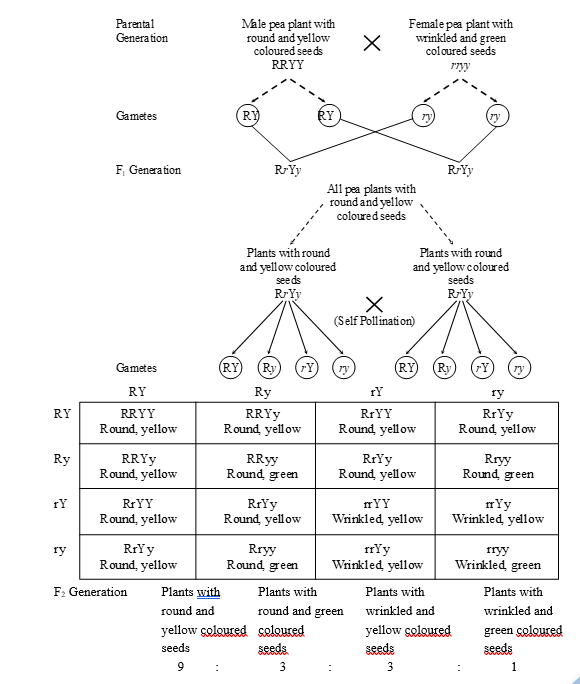
Genes:
The term 'gene' was introduced by Johanssen for Mendelian factor. A gene is a molecular unit of heredity of a living organism. It is a name given to some stretches of DNA and RNA that code for a polypeptide or for an RNA chain that has a function in the organism. Living beings depend on genes, as they specify all proteins and functional RNA chains.
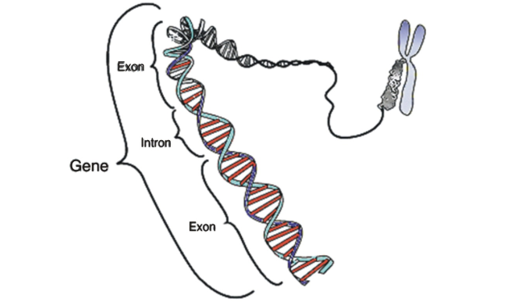
Molecular Structure of Gene:
Chemically gene is formed of DNA, It consists of following parts:
- Recon : It is the smallest unit of DNA capable of undergoing crossing over and recombination.
- Muton: It is the smallest unit of DNA capable of undergoing mutation.
- Cistron : It is a gene in real sense, which consists of number of nucleotides and which is capable of synthesizing a polypeptide chain of enzymes.
- Replicon : It is a unit of replication.
Chromosome
Strasburger discovered chromosomes in 1875. A chromosome is an organized structure of DNA and protein found in cells. It is a single piece of coiled DNA containing many genes, regulatory elements and other nucleotide sequences. Chromosomes also contain DNA-bound proteins, which serve to package the DNA and control its functions.
Chromosomal theory of Inheritance: Sutton and Boveri proposed this theory in 1902. This theory consist of following salient features:
- Somatic cells are dipoled in number i.e., these consist of two sets of chromosomes, one set from the mother and other set from the father.
- The chromosomes retain their structural uniqueness identity and continuity
- The paired condition of chromosomes is restored during fertilization
- The behaviour of chromosomes during meiosis at the time of gamete formation provides evidence that genes are located on chromosomes. This, also explains the mechanism of segregation of characteristic at the time of gamete formation
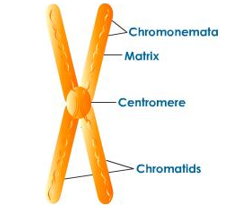
(a) Structure of Chromosomes :
Chromosome structure could be explained with the help of some terminologies as given below.
- Chromatid
- Chromonema or Chromonemata
- Chromomeres
- Primary constriction or Centromere and Kinetochore
- Telomers
- Secondary Constriction
- Nucleolar Organizer
- Satellite
- Chromatid:
Chromosome has two symmetrical structures at mitotic metaphase these are called as chromatids Chromatids are either sister chromatids or non-sister chromatids. Out of these sister chromatids originate from single (only one) chromosome while non-sister chromatids are derived from homologous chromosomes.
- Chromonema or Chromonemata:
Chromosomes appear as very thin filaments during mitotic prophase, These are called as chromonema or chromonemata, these are chromatids in the early stage of condensation. These are present in coiled and twisted form in a chromatid during all stages of mitosis. Genes are located on this structure. Chromatid may contain one or more chromonema.
- Chromomeres:
These are serially aligned, small bead like accumulations of chromatin material that are visible along length of chromosome especially during leptotene and zygotene stages of meiosis.
These are regions of tightly folded DNA, visible when chromosomes are relatively uncoiled. In many organisms, chromomeres situated on corresponding positions on homologous chromosomes align with each other to form homologous pairs.
- Primary constriction or Centromere and Kinetochore:
Centromere is a region of DNA / chromosome (which contains highly repetitive DNA), appear mostly near the middle of a chromosome. It lies within primary constriction. Fibers of mitotic spindle attaches to this during mitosis. Kinetochore is plate or cup like structure (0.20 to 0.25nm) situated upon centromere.
Types of chromosome are listed on the basis of number of centromeres and position of centromere.
- Telomers
At the ends of chromosome long stretches of non-coding DNA are present, these are telomers.
Telomers or chromosome ends has polarity, because of this chromosome segments do not fuse with others. If chromosome breaks, the broken ends do not contain telomers, so they can stick with each other. Telomers also assist in the pairing of homologous chromosomes and crossing over.
- Secondary Constriction
In addition to primary constriction there is secondary constriction. Present at any point on chromosome. The difference between these two constriction can be noticed during anaphase, as chromosome can bend only at the site of primary constriction. Secondary constrictions are constant in their position and extent, hence prove useful to identify a particular chromosome in a set. Secondary constriction may arise because the RNA genes are transcribed very actively and thus interfering with chromosomal condensation.
- Nucleolar Organizer
These are some parts of secondary constrictions which contain the genes coding for 5.8s, 18s and 28s rRNA and that induce the formation of nucleolus. Thus named as “Nucleolar Organizing Region”.
- Satellite:
These are appendages of chromosome either round, elongated or knob like. Satellite is produced if secondary constriction is present in distal region of chromosome arm. It keeps connection with rest of the chromosome by a thin chromatin filament. Shape and size of satellite remains constant.
Satellite chromosome is a chromosome with satellite.
(b) Size and Shape of Chromosomes:
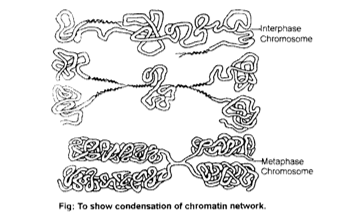
Size of chromosomes greatly vary during cell cycle:
- Interphase: It forms long thread like structure called as chromatin.
- Metaphase: Chromosomes are thickest and shortest and therefore have definite shape and size. At this stage chromosomes can be counted easily.
- Anaphase: They have rod like J shaped or V shaped structures during this phase.
- Telophase: They have thread like structure.
(c) Number of Chromosomes: Each species has a fixed number of chromosomes in its cells. In case of human beings, there are 46 number of chromosomes in each body cell. 46 chromosomes in an ordinary human cell are of 23 different types. So, there are two chromosomes, of each kind. The two chromosomes of each kind are called as homologous chromosomes.
A cell which has the full number of chromosomes with two of each kind is called as diploid cell. In other words a diploid cell has two sets of each type of chromosomes. The gametes (or sex cells) of human being are different from their other body cells because they contain only half the number of chromosomes.
A cell which has half the number of chromosomes, with one of each kind, is called as haploid cell. In other words a haploid cell has only one set of each type of chromosomes e.g. sperm and eggs have only 23 chromosomes each, which is half the number of chromosomes of other body cells. So, the gamete is a haploid cell. Females consist of two similar gametes and therefore called as homogametic and males consist of dissimilar gametes and therefore called as heterogametic.
The terms homomorphism and heteromorphy are also used for females and males respectively. During spermatogenesis two types of sperm cells will be produced one which contains X chromosome and the other which contains Y chromosome. During oogenesis each egg will produce two X chromosomes. If X-chromosome of male fuses with X-chromosome of female it will produce a female child. If Y-chromosome of male fuses with X-chromosome of female it will produce a male child.
(d) Properties of Chromosomes : The chromosomes must possess five important properties:
- Replication : Synthesis of new DNA molecule which is identical to the parent DNA molecule.
- Transcription: Synthesis of RNA molecule from DNA molecule.
- Change in appearance.
- Repair: It means repair of damaged parts of DNA.
- Mutation : Development of genetic changes.
(e) Functions of Chromosomes :
- They carry hereditary characters from parents to offsprings.
- They help the cell to grow, divide and maintain itself by synthesis of proteins.
- They undergo mutation and thus contribute to the evolution of animals.
- They guide cell differentiation during development.
- They also help in metabolic processes.
- They bring about continuity of life.
Sex Determination
The mechanism, by which the sex of an individual is determined as it begins life, is called sex determination.
In diploid organisms having separate sexes, a specific pair of chromosomes in each diploid cell, determines the sex of the individual. They are called sex chromosomes. All other chromosomes are termed autosomes as these have genes, which control the somatic (body) characters.
The two members of each pair of homologous autosomes are similar in size and shape, but this may not be true with sex chromosomes. For instance, In human beings, there are 46 chromosomes. Of these, 44 (22 pairs) are autosomes and 2 (one pair) are sex chromosomes. The sex chromosomes in human beings and also in fruit-fly (Drosophila), are of two types – X chromosome and Y chromosome.
- A male individual contains one X chromosome and one Y chromosome i.e. XY (heteromorphic sex chromosomes having different size and shape). Therefore male produces two different kinds of gametes (sperms); half of the gametes having X chromosome and other half having Y chromosomes. Therefore, male is called heterogametic.
- A female individual contains two similar X chromosomes i.e., XX (homomorphic sex chromosomes of same size and shape). Female, therefore, produces same type of all gametes (ova or eggs). So, female is called homogametic.
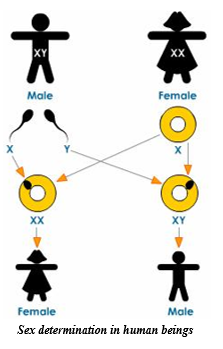
The sex of the child is determined at the time of fertilization when male and female gametes fuse to form zygote.
If a sperm (male gamete) carrying X chromosome fertilizes an egg or ovum (female gamete) carrying X chromosome, then the offspring will be a girl (female). This is because the offspring will have XX combination of sex chromosomes.
If a sperm (male gamete) carrying Y chromosome fertilize an egg or ovum (female gamete) which has X chromosome, then the offspring will be a boy (male). This is because the offspring will have XY combination of sex chromosomes.
So, we can conclude that the sex of the child (offspring) is determined by the type of sperm that fuses with ovum at the time of fertilization. Therefore, there is 50% chance of a male child being born and a 50% chance of a female child being born.
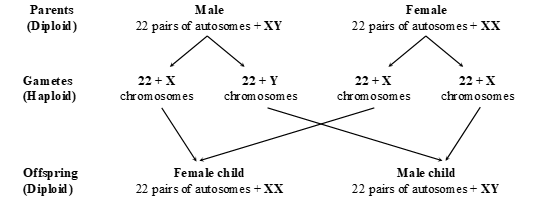
This mechanism of sex determination in human beings and also in fruit-fly (Drosophila) is called XX - XY mechanism. In grasshoppers and some other insects, the male has only one sex chromosome (XO) whereas the female has two homomorphic (of same size and shape) sex chromosomes (XX). This type of sex determination mechanism is called XX – XO mechanism.
Genetic Engineering
Genetic engineering, also called genetic modification, is the direct manipulation of an organism's genome using modern DNA technology. It involves the introduction of foreign DNA or synthetic genes into the organism of interest. The introduction of new DNA does not require the use of classical genetic methods, however traditional breeding methods are typically used for the propagation of recombinant organisms.
Application of Genetic Engineering
- It is applied for modification of plant colours.
- It helps in cloning of transgenic plants.
- It can be proved beneficial in case of plants e.g. “nif" gene is transferred in plants which is responsible for N2 fixation
- It is used for curing various genetic disorders.
- It can be proved beneficial for synthesis of insulin, growth hormone etc.
- It can be used to delay ripening of fruits.
Deoxyribo Nucleic Acid (DNA)
Deoxyribonucleic acid is a nucleic acid containing the genetic instructions used in the development and functioning of all known living organisms (with the exception of RNA viruses). The DNA segments carrying this genetic information are called genes. Likewise, other DNA sequences have structural purposes, or are involved in regulating the use of this genetic information. Along with RNA and proteins, DNA is one of the three major macromolecules that are essential for all known forms of life.
Composition of DNA:
DNA molecules consists of following three components:
- Deoxyribose sugar
- Phosphate group
- Nitrogen hases: they could be purines or pyrimidines
(A) Purines are: Adenine [A] and Guanine [G]
(B) Pyrimidines are: Thymine [T] and Cytosine [C]
- One DNA. Molecule consists of a unit called nucleotide.
- Nucleotide = nucleoside + phosphate
- Nucleoside = nitrogen base + deoxyribose sugar
![Pyrimidines are: Thymine [T] and Cytosine [C]](https://ht.home-tution.com/files/image-20251022173000-10.png)
Some Important Terms
- Karyotype: It includes the details of the number of chromosomes of an organism, their size and it is better achieved in metaphase stage.
- Idiotype : it is a diagrammatic representation of a karyotype.
- Banding technique: For the purpose of identification of particular chromosomes a special staining technique is used. It is called as banding technique.
- In the process of genetic engineering the gene that is transferred into an organism is called as trans-gene. An organism that contains and expresses a transgene is called as transgenic organism or genetically modified organism [GMO].
- Hirudin is a protein that prevents blood clotting. The gene encoding hirudin is chemically synthesized. This is then transferred to Brassica napus, where hirudin is accumulated in seeds. It is then purified and used as medicine.
- A soil bacterium Bacillus thuringenesis, produces a crystal "cry" protein. This protein is toxic to the larvae of certain insects. There are various types of cry protein each resistant to specific type of insect.
- Viral chromosomes consist of proteins and one nucleic acid i.e. DNA or RNA. Nucleic acid may be single or double stranded, may be circular or linear. Virus with RNA as genetic material is called as retrovirus e.g. HIV [Human Immuno Deficiency Virus]
- Replication : DNA is the only molecule capable of self duplication so it is termed as "living molecule". All living beings have the capacity to reproduce because of this characteristic of DNA. DNA replicates in the "S" phase of cell cycle. In the process of replication a new DNA is synthesized in the farm of strands.
These strands are of two types :
- Leading strand: Formation of new strand always takes place in 5' -3' direction . It is a continuous strand.
- Lagging strand: It is farmed as small fragments known as okazaki fragments. These fragments are later on joined by ligase enzymes.
Evolution
The term `Evolution' means "unrolling or unfolding" change from one condition to another. It means members of a species change generation after generation in accordance with environmental requirements to turn into better organized and more complex new species. The changes in the properties of population of organisms or groups of such populations over the course of generations are considered as organic evolution. It is a process of cumulative change of living populations and in the descendant populations of organisms. In other words, it is "descent with modifications." Evolution is a change in the genetic composition of a population. There is an inbuilt tendency of variation during reproduction, both because of errors in DNA copying and as a result of sexual reproduction.
How Evolution Occurs?
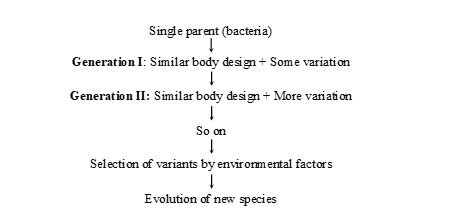
We have already studied that, during reproduction, variations arise either because of errors in DNA copying or as a result of sexual reproduction. Let us study an example to look at some consequences of arising of variations in an attempt to explain how evolution occurs.
Accumulation of variation during reproduction:
J.B.S. Haldane, a British scientist (who became a citizen of India later), suggested in 1929 that life must have developed from the simple inorganic molecules which were present on earth soon after it was formed. He speculated that the conditions on earth at that time, which were far different from the conditions we see today, could have given rise to more complex organic molecules that were necessary for life. The first primitive organisms would arise from further chemical synthesis. How did these organic molecules arise? An answer was suggested by the experiment conducted by Stanley L.
Miller and Harold C. Urey in 1953. They assembled an atmosphere similar to that thought to exist on early earth (this had molecules like ammonia, methane and hydrogen sulphide, but no oxygen) over water. This was maintained at a temperature just below 100ºC and sparks were passed through the mixture of gases to simulate lightning. At the end of a week, 15% of the carbon (from methane) had been converted to simple compounds of carbon including amino acids which make up protein molecules.
e.g. To illustrate, let us imagine that a group of 12 red beetles live on green leaves of some bushes. These beetles have the natural tendency to increase in numbers by sexual reproduction and consequently generate variations. Let us also consider that crows are the natural predators of these beetles. The crows regulate the population of beetles by eating them and, therefore, fewer beetles are available for sexual reproduction.
- Situation 1: In one such situation, let us assume that beetles develop colour variation during reproduction. Consequently In the progeny, one beetle develops green body colour instead of normal red colour. This beetle can inherit this variation in colour on to its progeny so that all its offsprings are green in colour. Crows cannot locate green-coloured beetles on the green leaves of bushes but continue to eat red beetles, which are easily located on green leaves by them. As a result, number of green beetles in beetle population increases in each generation.
- Situation 2: Let us consider a second situation. Another colour variation arises in beetles during sexual reproduction and in the progeny, one beetle develops blue body colour instead of normal red. This beetle can also pass this colour variation to its progeny so that all its offsprings are blue coloured beetles. Crows can detect both red and blue coloured beetles easily on green leaves of bushes and eat them regularly. As the population of beetles expands, initially there are few blue coloured beetles among the majority of red coloured beetles. At this point, an elephant comes by and stamps on the bushes where the beetles live. Consequently, most of the beetles get killed. By chance, most of the survived beetles are now blue coloured. This population again slowly expands and will contain mostly blue coloured beetles over a period of time.
Conclusions
- When we look at the two situations, we find interesting differences. In the first situation, natural selection is exerted by the crows. More the crows are there, more red coloured beetles would be eaten up and more will be the proportion of green beetles in the population. In other words, natural selection is directing the evolution in beetle population in this situation. Green coloured beetles in the population are adapted to fit better in their environment than the red beetles. So, Natural selection is the phenomenon wherein nature, in the wild, selects traits favourable to the species in its environment.
- In the second situation, colour variation in beetles gave no survival advantage to them in the existing environment as crows could easily detect and eat both red and blue beetles on green leaves. However, a simple accident (stamping by an elephant foot) killed majority of the red coloured beetles from the population. Survival of more blue beetles in the population changed the colour characteristic from normal red to blue over a period of time. Had the beetle population been very large, the accident (stamping by an elephant foot) would not have caused such major havoc. In other words, in small populations, accidents can change the frequency of some genes in a population, even if these give no survival advantage to the possessors. This phenomenon is called genetic drift and it provides diversity without any adaptations. So, the elimination of the genes of certain traits from the small population when a section of the species population dies of natural calamity or migrates to other region is called genetic drift. It alters the gene frequency of the remaining population.
- Situation 3: Let us consider a third situation. As the beetle population starts expanding by sexual reproduction, a plant disease spreads resulting in decrease in the amount of leaf material in the bushes. Expanding population of beetles is now poorly nourished. Consequently, the average weight of adult beetles decreases compared to what it used to be when leaves in the bushes were in plenty. After a few years time and a few beetle generations of such scarcity, the plant disease is eliminated. Now, more leaves of bushes are available as food for the beetles.
While considering the third situation, we find that there are two kinds of traits in every organism:
(i) Inherited traits
(ii) Acquired traits
- Inherited traits: These traits are controlled by specific genes and are passed on from one generation to another. Any alteration in the DNA will be passed on, through germ cells, to the progeny resulting in variations in them.
- Acquired traits: Certain traits are acquired by organisms in their life time. For instance, decrease in the body weight of beetles due to starvation is an acquired trait by the beetles during their lifetime. It involves changes in the non-reproductive tissues caused by environmental factors. It will not bring any change in the DNA. Therefore, even if some of the generations of beetles are low in weight because of starvation, this trait cannot be inherited by the progeny over generations.
e.g. Let us take another example. If a group of mice are normally bred, all their progeny will have tails. Now, if the tails of these mice are cut by surgery in each generation, tailless mice will not be produced. It is so because removal of tails of mice during their life is an acquired character and it will not bring any change in the DNA (genes) of the germ cells of the mice.
Above examples prove the importance of heredity and genetics in understanding evolution and also help us to differentiate inheritable traits from acquired traits. Even Charles Darwin, who gave the theory to explain evolution of species by natural selection, failed to explain how the variations in the organisms arise.
Charles Robert Darwin (1809-1882) explained the evolutionary principle in his famous book “The origin of species”. The basis of his theory about evolution was his observations of nature during his voyage on the ship H.M.S. Beagle and the population theory of Malthus. Darwin explained that despite having the enormous potential of fertility, the population size of any kind of organism remains within a limit. It is due to struggle between members of same species and different species for food, space and mate. The struggle eliminates the unfit individuals. In other words, the fit organisms possess some variations which are favorable, and they can leave the progeny to continue the favorable variations. This is called ‘natural selection’. These variations, when accumulated for a long time, lead to origin of a new species. Though Darwinism got wide acceptance, but it was criticized too, on the ground that it could not explain how the variations arise.
Specification:
Speciation is Origin of New Species: A species comprises of several populations. Interbreeding Y is very frequent among the individuals of a population and is occasional among the populations of a species whereas inter breeding is absent among the individuals of different species. There is a free gene flow within the members of a population and a free gene flow could be maintained among the members of different population of a species, provide an opportunity to interbreed. But free gene flow between two species does not occur on account of marked difference in their genotype, it means new species arise by the establishment of reproductive isolation (intrinsic barrier to interbreeding of natural population)
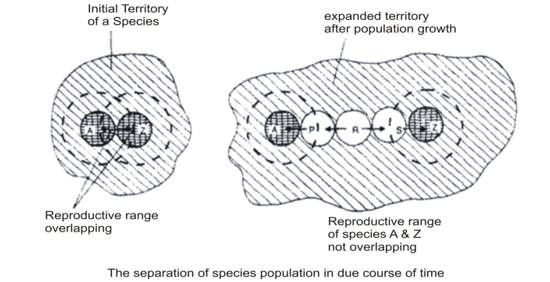
Consider that beetle population has become very large and has spread over a mountain range. The individual beetles feed mostly on a few nearby bushes throughout their life time. So, in this huge population of beetles, there will be sub-populations in neighbourhood. The process of reproduction will occur mostly within these sub populations or rarely between two different sub-populations. So, gene flow will take place between two different sub populations. If, however between two such sub-populations a large river or a creeping glacier or a mountain cut develops then the two populations will be further isolated.
The levels of gene flow will further decrease between two populations. Over generations the process of natural selection and genetic drift will further isolate two sub-populations of beetles. Now, members of these two sub-groups will be incapable of reproducing even after they meet each other. There can be a number of ways by which interbreeding between two beetles of two subgroups stop. The changes in DNA structure or number of chromosomes will make the gametes incompatible and prevent fertilization. The morphology of reproductive organs may change, which prevents compatibility and fertilization. The difference in the behaviour of male and female will also prevent mating. The organisms may have developed different breeding periods.
Origin of Life:
Several theories have been put forward to explain the origin of life.
- Theory of special creation: According to this theory, all the different forms of life that occur today on planet earth, have been created by God, the almighty. This idea is found in the ancient scriptures of almost every religion. According to Hindu mythology, Lord Brahma, the God of Creation, created the living world in accordance to his wish. According to the Christian belief, God created this universe, plants, animals and human beings in about six natural days. The Sikh mythology says that all forms of life including human beings came into being with a single word of God. Special creation theory believes that the things have not undergone any significant change since their creation.
The theory of Special Creation was purely a religious concept, acceptable only on the basis of faith. It has no scientific basis.
- Theory of Spontaneous Generation: This theory assumed that living organisms could arise suddenly and spontaneously from any kind of non-living matter. One of the firm believers in spontaneous generation was Aristotle, the Greek philosopher (384-322 BC).
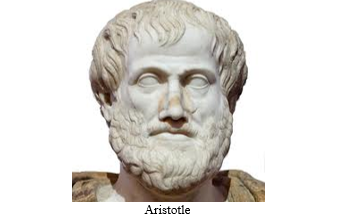
He believed that dead leaves falling from a tree into a pond would transform into fishes and those falling on soil would transform into worms and insects. He also held that some insects develop from morning dew and rotting manure. Egyptians believed that mud of the Nile river could spontaneously give rise to many forms of life. The idea of spontaneous generation was popular almost till seventeenth century.
Many scientists like Descartes, Galileo and Helmont supported this idea. In fact, Von Helmont went to the extent stating that he had prepared a 'soup' from which he could spontaneously generate rats! The 'soup' consisted of a dirty cloth soaked in water with a handful of wheat grains. Helmont stated that if human sweat is added as an 'active principle' to this, in just 17 days, it could generate rats!
Theory of Catastrophism:
It is simply a modification of the theory of Special Creation. It states that there have been several creations of life by God, each preceded by a catastrophe resulting from some kind of geological disturbance. According to this theory, since each catastrophe completely destroyed the existing life, each new creation consisted of life form different from that of previous ones.
A French scientist Georges Cuvier (1769-1832) and Orbigney (1802 to 1837) were the main supporters of this theory.
Cosmozoic Theory (Theory of Panspermia):
According to this theory, life has reached this planet Earth from other heavenly bodies such as meteorites, in the form of highly resistance spores of some organisms. This idea was proposed by Richter in 1865 and supported by Arrhenius (1908) and other contemporary scientists. The theory did not gain any support. This theory lacks evidence, hence it was discarded.
Modern Theory (Naturalistic Theory): Life originated upon earth by a long series of physiochemical changes which brought about a gradual evolution of first inorganic and then organic compounds (chemical evolution). It results in the formation of protoplasm. This includes
(i) Oparin - Haldane Theory.
This theory is also known as Materialistic Theory or Physico-chemical Theory. According this theory, Origin of life on earth is the result of a slow and gradual process of chemical evolution that probably occurred about 3.8 billion years ago. This theory was proposed independently by two scientists - A.I.Oparin, a Russian scientist in 1923 and J.B.S Haldane, an English scientist, in 1928.
According to this theory:
- Spontaneous generation of life, under the present environmental conditions is not possible.
- Earth's surface and atmosphere during the first billion years of existence, were radically different from that of today's conditions.
- The primitive earth's atmosphere was a reducing type of atmosphere and not oxidising type.
- The first life arose from a collection of chemical substances through a progressive series of chemical reactions.
- Solar radiation, heat radiated by earth and lighting must have been the chief energy source for these chemical reactions.
(ii) Stanley Miller and H.C. Urey Experiment (Experiment for verification of prebiotic soup) :
This experiment verified the Oparin Haldane theory by creating (stimulating) in their laboratory the probable conditions on the primitive earth.
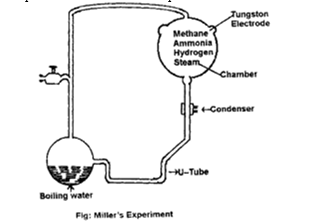
- They built an apparatus of glass tubes and flasks and created an atmosphere containing H2 CH4 NH3, H2O in one chamber energy was also supplied by electric sparks.
- The resultant mixtures were allowed to condense. Experiment was run for one week. Chemical composition of the liquid revealed glycine, alanine and aspartic acid.
- Thus, biotic synthesis of organic molecules was confirmed.
Organic Evolution
- Though life originated by chemical evolution on the primitive earth. It was later replaced by organic evolution.
- Organic evolution states "Descent with modification" i.e. present day complex living organisms have evolved from earlier simpler organisms by small but gradual changes which have occurred over millions of years.
- Though living organisms show great diversity in size, structure, function, behaviour etc. They also show basically similar metabolic processes indicating some common ancestors.
Fossils:
- The plants and animals that lived in remote past have in many cases left proofs of their existence in the form of remains in the rocks. These are called as fossils.
- Paleontology is the study of fossils.
- Leonardo-da -Vinci is called as the father of Paleontology.
- Founder of modern palaeontology is George Cuvier.
(a) Fossils can be of Three Different Types:
- Petrified: Replacement of some of the organic parts by mineral deposits is called as petrification.
- Moulds and casts : Moulds are hardened and fossilized mud that surrounds a dead organism. Sometimes the moulds are found with petrified fossils of the organisms and then they are called as casts.
- Prints : Foot prints or prints of wings, skin, leaves, stem etc. made in soft mud which subsequently became fossilized.
(b) Dating of Fossils:
It is also called as the "clock of fossils". It is the process of determining the age of fossils. This include the following 3 methods:
- Lead method
- Radio Carbon method
- Potassium -Argon method
How do fossils form layer by layer?
Let us start 100 million years ago. Some invertebrates on the sea-bed die, and are buried in the sand. More sand accumulates, and sandstone forms under pressure.
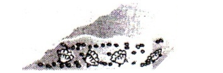
Millions of year later, dinosaurs living in one area die and their bodies, to, are buried in mud. This mud is also compressed into rock, above the rock containing the earlier invertebrate fossils.
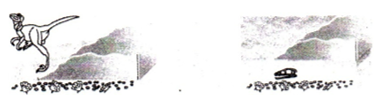
Again millions of years later, the bodies of horse-like creatures dying in the area are fossilised in rocks above these earlier rocks.
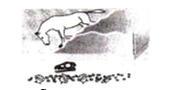
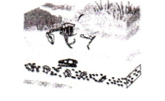
Much later, ersion by, say, water flow, wears away some of the rock and exposes the horse-like fossils. As we dig deeper, we will find older and older fossils.
Morphological Evidence of Evolution
These evidences are based on the similarities in the external and internal features of the different kinds of organisms. These features are:
(a) Homologous organs
(b) Analogous organs
(c) Vestigial organs
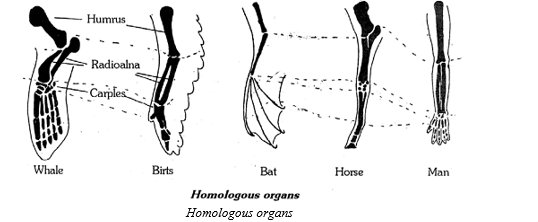
- Homologous organs: Organs, which have a common fundamental anatomical plan and similar embroyonic origin whatever varied functions they may perform are regarded as homologous organs. For instances the flippers of a whale, a bats wing, fore-limb of a horse, a birds wing and forelimbs of human are structurally as well as functionally different . Whale’ this flippers help in swimming, wings of birds and bat are used in flying, horse’ this forelimb help in running and human’s hand is meant for grasping.
They are structurally modified accordingly. However, anatomically they have similar bones, humerus in the upper arm, radius ulna in the forearm, carpals and metacarpals in the wrist and hand. Presence of homologous organs in different groups of animals indicates their common origin or ancestry and degree of closeness to difference among various groups.
- Analogous Organs: The organs, which are quite different in fundamental structure and embryonic origin but perform same function and may superficially look alike in entirely different species, are called analogous organs.
The wings of an insect and a bird are analogous organs. It is so because both these organs in entirely different animals perform similar functions, i.e., they are used for flying in the air. However, they are very different in structure. An insect wing is a fold of membrane (an extension of the integument), which is supported with few muscles. On the other hand, wings of a bird are formed of limb bones covered with flesh, skin and feathers. The superficial similarity of these organs is due to adaptation to fly rather than inheritance from a common ancestor. The insects and birds, in fact, have evolved from separate ancestral populations, but perform similar functions, i.e., flying as a means of more efficient mode of locomotion.
Similarly, the wing of a bat (mammal) and the wing of a bird are analogous organs. A close examination of these structures will reveal that wings of bats are skin folds stretched mainly between elongated fingers. However, the wings of a bird are feathery covering all along the arm. The basic designs of the wings of bat and the bird, their structure and components are very different. They only look similar because both are adapted for flying but their origins are not common.
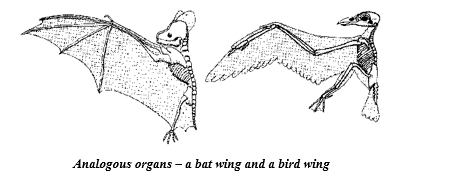
Wings of bats and birds can also be considered as homologous structures in that, they are, in both cases modifications of the forelimb bone structure of early reptiles. Therefore, the wings of birds and bats are homologous as forelimbs, and analogous as flight structures. So, sometimes it is unclear whether similarities in structure in different organisms are analogous or homologous.
- Vestigial organs: The morphological and anatomical studies of the organisms provide us the knowledge of vestigial organs. The organs, which occur in reduced form and are useless to the possessor, but are homologous to the fully developed, functional organs in the ancestors or related forms, are called vestigial organs. For instance, vermiform appendix of the large intestine and nictitating membrane in the eye of human beings are vestigial organs.
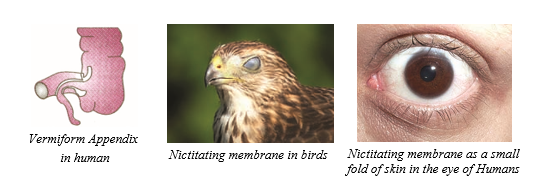
Appendix is found to be functional among the herbivore ruminant mammals. Similarly, the nictitating membrane is functional in birds to provide protection to the eye, but in humans it is represented as a small fold of skin in the eye.
The presence of vestigial organs like appendix (in the large intestine) and the nictitating membrane in the eye of human beings provides evidence for evolution by telling us that the human beings have evolved from the ancestors who had a functional appendix and a functional nictitating membrane in them. However, these are gradually disappearing in the living forms due to change in their mode of life.
Embryological Evidences:
Embryology can be defined as a branch of science that deals with study of development of an organism from zygote to an adult form inside the egg or mother's womb.
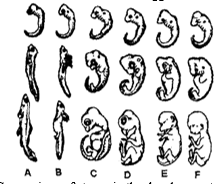
Comparison of stages in the development of vertebrate embryos A. Fish, B. Salamander Tortoise, D. Chick, E. Calf, F. Human
The study of embryo's from various organisms reveals similarity in the early stages of embryo development and this theory suggests that these organisms have evolved from common ancestors. e.g. Embryos of fish, tortoise, child, rabbits and man show the similarity during embryo development.
Palaeontological Evidences:
It is the study of prehistoric life. It includes the study of fossils to determine organisms' evolution and interactions with each other and their environments (their paleoecology). As a "historical science" it attempts to explain causes rather than conduct experiments to observe effects. Palaeontological observations have been documented as far back as the 5th century B.C.E.
The science became established in the 18th century as a result of Georges Cuvier's work on comparative anatomy, and developed rapidly in the 19th century. The term itself originates from Greek: (palaios) meaning "old, ancient," - (on, ont-), meaning "being, creature" and (logos), meaning "speech, thought, study". Palaeontology lies on the border between biology and geology, and shares with archaeologya border that is difficult to define. It now uses techniques drawn from a wide range of sciences, including biochemistry, mathematics and engineering.
Use of all these techniques has enabled palaeontologists to discover much of the evolutionary history of life, almost all the way back to when Earth became capable of supporting life, about 3,800 million years ago. As knowledge has increased, paleontology has developed specialized sub-divisions, some of which focus on different types of fossil organisms while others study ecology and environmental history, such as ancient climates.
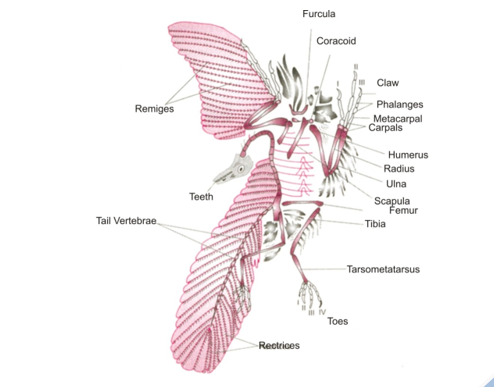
e.g. The fossil bird, Archaeopteryx lived in the Jurassic period about 180 million years ago. It had feathers, which are exclusively bird structures. It also had fused bones, beak and some other bird structures. But, it also had number of features, which are found in reptiles, e.g., teeth in the jaws, claws on free fingers, a long tail, etc. Thus, Archaeopteryx represents a stage midway between the reptiles and birds, and is often called the lizard bird. This example provides a clue that the birds have evolved from reptiles. Therefore, Archaeopteryx is called a missing link between reptiles and birds.
Evidences from Atavism (Reversion):
Sometimes in some individuals such characters suddenly appear which were supposed to be present in their ancestors but were lost during the course of development. This phenomenon is known as atavism or reversion. Atavism proves that animals developing atavistic structures have evolved from such ancestors in which these structures were fully developed. e.g.
- Human baby with tail
- Cervical fistula
- Long and pointed canine teeth represent carnivorous ancestors.
- Large and thick body hair reflects our relationship with apes.
- Presence of extra nipples (more than two)
Evidences from Physiology And Biochemistry:
Different organisms show similarities in physiology and biochemistry. Some clear examples are -
- Protoplasm: Structural and chemical composition of protoplasm is same from protozoa to mammalia.
- Enzymes : Enzymes perform same functions in all animals like trypsin digests protein from Amoeba to man, amylase digests starch from porifera to mammalia.
- Blood : Chordates show almost same composition of blood.
- ATP : This energy rich molecule is formed for biological oxidation in all animals
- Hormones : Secreted in different vertebrates perform same functions.
- Hereditary material : Hereditary material is DNA in all organisms and its basic structure is same in all animals.
- Cytochrome C: It is a respiratory protein situated in the mitochondria of all organisms. Physiology and biochemistry thus prove that all animals have evolved from some common ancestor.
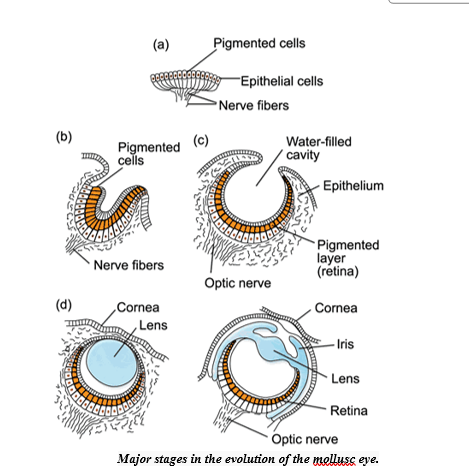
Evolution of EYES:
The evolution of the eye has been a subject of significant study, as a distinctive example of a homologous organ present in a wide variety of taxa. Certain components of the eye, such as the visual pigments, appear to have a common ancestry – that is, they evolved once, before the animals radiated. However, complex, image-forming eyes evolved some 50 to 100 times – using many of the same proteins and genetic toolkits in their construction.
Complex eyes appear to have first evolved within a few million years, in the rapid burst of evolution known as the Cambrian explosion. There is no evidence of eyes before the Cambrian, but a wide range of diversity is evident in the Middle Cambrian Burgess shale, and the slightly older Emu Bay Shale. Eyes show a wide range of adaptations to meet the requirements of the organisms which bear them. Eyes vary in their acuity, the range of wavelengths they can detect, their sensitivity in low light levels, their ability to detect motion or resolve objects, and whether they can discriminate colours.
Evolution OF Feathers
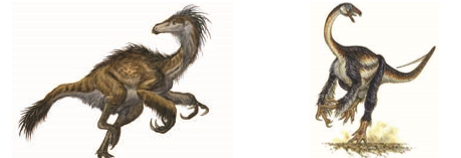
Sometimes an evolutionary change produced in an organism for one purpose later on becomes more useful for an entirely different function.
e.g. Feathers of the birds were evolved for providing insulation to their bodies in cold weather but later on these feathers became more useful for the purpose of flying. Some dinosaurs too had feathers though they could not fly. However, birds adapted feathers for flying. The presence of feathers on birds tells us that birds are closely related to reptiles as dinosaurs which had feathers were also reptiles.
Evolution by Artificial Selection:
Long before Darwin and Wallace, farmers and breeders were using the idea of selection to cause major changes in the features of their plants and animals over the course of decades. Farmers and breeders allowed only the plants and animals with desirable characteristics to reproduce, causing the evolution of farm stock. This process is called artificial selection because people (instead of nature) select which organisms get to reproduce.
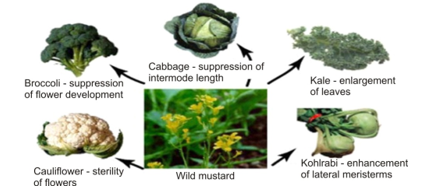
As shown below, farmers have cultivated numerous popular crops from the wild mustard, by artificially selecting for certain attributes.
These common vegetables were cultivated from forms of wild mustard. This is evolution through artificial selection.
Importance of Artificial selection:
By artificial selection, animal breeders have been able to produce improved varieties of several domestic animals such as dogs, horses, pigeons, poultry, cows, goats, sheep and pigs from their wild ancestors.
Plant breeders, too, have obtained improved varieties of useful plants, namely, wheat, rice, sugarcane, cotton, pulses, vegetables, fruits and ornamental (flowering and foliage) plants.
Differences between artificial selection and natural selection:
| Artificial Selection | Natural Selection |
| 1. It is an artificial process. | 1. It is a natural phenomenon. |
| 2. It is controlled by man on a limited scale in specific laboratories. | 2. It is conducted by nature on a vast scale all over the world. |
| 3. Traits selected for improvement are beneficial to man. | 3. Traits selected for evolution are beneficial to the species. |
| 4. Results are achieved in a short period. | 4. Results are achieved over a long period of time. |
Darwinism or Theory of Natural Selection:
"Darwinism" or Theory of natural selection was proposed jointly by Charles Darwin and Alfred Wallace in 1859. This theory was later on explained by Charles Darwin in his Book "The origin of species" by means of "Natural Selection" (1859).
(A) Postulates of Darwinism : He had proposed six important postulates namely
(i) Multiplication of individual of a species in a geometric proportion.
(ii) Existence of variation.
(iii) The operation of natural selection on the existing variability in order to select the best fitted variations.
(iv) Due to geometric multiplication and due to the availability of limited food and space for these individuals the struggle for existence is seen. Since the requirement of the members of the same species would be similar, such a struggle would be more intense amongst the members of the same species.
(v) Variations: They are rule of nature and proved to be beneficial for better existence.
(vi) Natural selection : Natural selection is the principle element of Darwin's theory. The principle by which the preservation of useful variations is brought about was called as natural selection.
(B) Merit of Darwinism:
The major achievement of Darwin was to recognize one of the major factor in adaptation i.e. natural selection.
(C) Demerits of Darwinism:
(i) In Darwin's natural selection principle the death of the unit and the survival of the fittest was conceived.
(ii) Darwin also believed that the natural selection operates on variations but he did not consider the possibility of the origin of new hereditary variations, which are really responsible for origin of species.
(iii) Darwin also did not distinguish between hereditary and environmental variations.
(D) Neo-Darwinism :
- It is a modified form of Darwinism, along with the recent researches of Weisman, Mendel, Huxley, Gates, Devries etc.
- They performed various experiments to remove objections against Darwin's Theory.
Neo-Darwinism comprises three important postulates:
(i) Genetic variability : It means the variations that occur in the genetic constitution of an organism. They could be of following types :
(A) Chromosomal aberrations (deletion, duplication, translocation and inversion)
(B) Chromosomal numbers (haploidy, polyploidy etc.)
(C) Gene mutation
(D) Hybridization
(ii) Natural selection : According to Neo - Darwinism the organism which is more adapted towards environment matures first and produces more progenies, as compared to less adapted organism.
- It shows positive selection method.
- It can overcome environmental stress.
- It produces greater progeny than others
(iii) Reproductive isolation : It is the failure of interbreeding between the related groups of living organisms and is essential to prevent the dilution of differences between the genetically different species.
Lamarckism:
First theory of evolution was proposed by Jean Baptiste de Lamarck (1744-1829) Book Philosophie Zoologique (1809). The term Biology was given by Lamarck & Treviranus.
(a) Basic Concepts of Lamarckism :
- Internal Vital Forces: Some internal forces are present in all organisms. By the presence of these forces organisms have the tendency to increase the size of organs or entire body.
- Effect of environment and new needs : Environment influences all types of organisms. Changing environment gives rise to new needs. New needs or desires produce new structures and change habits of the organism.
- Use and disuse of organs : If an organ is constantly used, it would be better developed whereas disuse of organ results in its degeneration.
- Inheritance of acquired characters : During the life time of an organism new characters develop due to internal vital forces, effect of environment, new needs and use and disuse of organs. These acquired characters are inherited from one generation to another. By continuous inheritance through many generations these acquired characters tend to make new generation quite different from its ancestors resulting in the formation of new species.
Examples in support of Lamarckism :
- Long neck and large fore limbs of Giraffe.
- Aquatic birds stretch their toes and developed webs.
- Snakes have lost their legs.
- Deer become a good runner by the development of strong limbs and streamlined body.
- Retractile claws of carnivorous animals.
(b) Criticism of Lamarckism :
- According to first concept organisms tends to increase their size but it is not a universally truth, e.g. Among angiosperms the trees seem to have been primitive and the shrubs, herbs and grasses evolved from trees but the size is reduced during evolution.
- Second concept is false as we can't have a sprout wings wishing to fly like birds.
- The third concept have some truth like the well developed biceps of black smith and less developed wings in flightless birds. But this concept also have many objections like the eyes of regular reader do not increase in size and power with increasing age, the constantly beating heart maintains a constant size through generations.
- Forth concept is completely false because acquired characters are not inherited.
Weismann:
Weismann cut off the tails of rats for about twenty two generations but there is no reduction in the size of the tail. On the basis of this experiment Weismann proposed the theory of continuity of germplasm.
(a) According to Weismann :
- Two types of matters are present in organisms, somatoplasm and germ plasm.
- Somatoplasm in somatic cells and germplasm in germinal cells.
- Somatoplasm dies with the death of an organism while germplasm is transferred into next generation.
- If any variation develops in germplasm it is inherited while if variation develops in somatoplasm it is not transmitted.
Neolamarckism:
Although Lamarckism remained controversial but some scientists gave following evidences in favour of Lamarckism they are called as neo-Iamarckians. According to neolamarckism environment affected the inheritance of acquired characters. According to it changing environment gives rise to some physical and chemical changes in organism which effect germplasm, and these acquired characters are definitely inherited.
EXERCISE – 1
- When a red flower homozygous pea plant is crossed with a white flower plant what colour is produced in F?
(a) Red (b) White (c) Pink (d) Red and white
- Mendel formulated the law of purity of gametes on the basis of
(a) dihybrid cross (b) monohybrid cross (c) back cross (d) test cross
- A cross between AaBB X aaBB yields a genotypic ratio of
(a) 1 AaBB: 1 aaBB (b) 1 AaBB : 3 aaBB (c) 3Aa BB: 1 aa BB (d) All AaBb
- In monohybrid cross what is the ratio of homozygous dominant and homozygous recessive individuals in F2 -generation ?
(a) 1 : 2 : 1 (b) 2 : 1 / 1 : 2 (c) 3 : 1 / 1 : 3 (d) 1 : 1
- Back cross is a cross between
(a) F1 x F1 (b) F1 x Recessive (c) F1 x Dominant (d) F1 x any parent
- A white flowered mirabilis plant rr was crossed with a red coloured RR, if 120 plants are produced in F2 generation . The result would be
(a) uniformly coloured and 30 white
(b) 90 Non-uniformly coloured and 30 while
(c) 60 Non – uniformfly coloured and 60 white
(d) All coloured and No white
- Which one carries extra nuclear genetic material ?
(a) Plastids (b) Ribosomes (c) Chromosomes (d) Galgi -complex
- Ratio of phenotype in F2 generation of a dihybrid cross is
(a) 3:1 (b) 1 : 2 : 1 (c) 2 : 1 (d)9:3:3:1
- Branch of biology deals with heredity and variation is called
(a) Palaentology (b) Evolution (c) Genetics (d) Ecology
- The factors which represent the contrasting pairs of characters are called
(a) Dominant (b) Recessive (c) Determinants (d) Alleles
- The main aim of plant breeding is
(a) to produce improved varieties (b) to make sail fertile
(c) to control pollution (d) to became more progressive
- Plants having similar genotypes produced by plant breeding are called
(a) clone (b) haploid (c) autopolyploid (d) genome
- Two allelic genes are located on
(a) the same chromosome (c) two non - homologous chromosomes
(b) two homologous chromosomes (d) any two chromosomes
- Mendel's law of segregation is based on separation of alleles during
(a) gamete formation (b) seed formation
(c) pollination (d)embryonic development
- What is the effect of sexual reproduction ?
(a) Offspring is weak (c) Offspring is more vigorous
(b) Offspring is like the parent (d) Offspring is diseased
- Disease resistant varieties can be produced by
(a) crossing a plant with wild variety (b) treating with colchicine
(c) crossing with hormones (d) treating with low temperature
- Heterozygous tall plants were crossed with dwarf plants, what will be the ratio of dwarf plants in the progeny
(a) 50% (b) 25% (c) 75% (d) 100%
- A pure tall plant can be differentiated from a hybrid tall plant
(a) by measuring length of plant
(b) by spraying gibberellins
(c) if all plants are tall after self- pollination
(d) if all plants are dwarf after self - pollination
- Allele is the
(a) alternate trait of a gene pair
(b) total number of genes for a trait
(c) total number of chromosomes of a haploid set
(d) total number of genes present on a chromosome
- In animals sex determination is due to
(a) X-chromosome (b) Y-chromosome (c) A-chromosome (d) B-Chromosome
- Which one of these is likely to have been absent in free form at the time of origin of life ?
(a) Oxygen (b) Hydrogen (c) Ammonia (d) Methane
- The famous book "Origin of Species" was written by Charles Darwin in
(a) 1809 (b) 1859 (c) 1885 (d) 1871
- Charles Darwin toured in a ship for five years it was
(a) Vikrant (b) Phillips (c) Alexander (d) Beagle
- The term evolution in Biology means that
(a) fossils are old (b) life began in Sea
(c) living things constantly change (d) none of the above
- The theory of Natural selection of Darwin to explain organic evolution was based on
(a) modification in organs through use and disuse
(b) probability of reproduction, struggle for existence and survival of the fittest
(c) Inheritance of acquired characters
(d) appearance of sudden large variations, then inheritance and survival of those having these variations
- Homologous structures have
(a) similar origin & dissimilar functions (b) dissimilar origin but similar functions
(c) similar origin & similar functions (d) dissimilar origin and dissimilar structures
- Analogous organs are those which are
(a) structurally similar
(b) functionally similar
(c) structurally as well as functionally similar
(d) normally non-functional
- The idea of "Survival of fittest" was given by
(a) Darwin (b) Herbert Spencer (c) Lamarck (d) Devries
- Evolution is the best defined by
(a) inheritance of acquired characters (b) descent by modifications
(c) spontaneous generation (d) struggle for existence
- 30. Which one is not a vestigial organ in man ?
(a) Vermiform appendix (b) Piica seminaries
(c) Ear muscles (d) Epiglottis
- Who wrote the "Origin of species" ?
(a) G.J. Mendel (b) Lamarck (c) De-Vries (d) Charles Darwin
- When an organ is used it will develop and if it is not used, it weakens to become vestigial. Who could have said this theory ?
(a) Darwin (b) De-Vries (c) Lamarck (d) Mendel
- Fossils are
(a) fovea in the retina of vertebrate eye (b) remains of organisms presents in the rocks
(c) the fossa present in the bones (d) foramens through which nerves pass
- An experiment to prove that organic compounds were the basis of life, was performed by
(a) Oparin (b) Miller (c) Melvin (d) Fox
- Connecting link between Reptiles and Birds is
(a) dimetrodon (b) dodo (c) archaeopteryx (d) sphenodon
- According to the Neo-Darwinian theory which of the following is responsible for the origin of new species ?
(a) Mutations (b) Useful variations
(c) Mutations together with natural selection (d) Hybridization
- Fossils are dated now by
(a) stratigraphic position (b) amount of calcium residue
(c) association with other animals (d) radioactive carbon contents
- Nucleoprotein gave most probably the first sign of
(a) life (b) amino acid (c) soil (d) sugar
- According to one of the most accepted theory the earth atmosphere before any life had originated consisted of water vapour, hydrogen, NH3 and
(a) methane (b) nitrogen (c) oxygen (d) carbondioxide
- Origin of life is due to
(a) spontaneous generation (b) God's will
(c) effect of sun rays on mud (d) chemical evolution
- Who proposed the theory of natural selection?
(a) Mendel (b) Lamarck (c) August Weismann (d) Charles Darwin
- Which law was put forward by Ernst Haeckel?
(a) Law of inheritance (b) The biogenetic law
(c) Law of dominance (d) Law of segregation
- Which of the following is an example of vestigial organ in man?
(a) Nictitating membrane (b) Incisor tooth
(c) Pancreas (d) Liver
- The two DNA strands are held together by
(a) peptide bonds (b) covalent bonds (c) glycosidic bonds (d) hydrogen bonds
- Which of the following are analogous organs?
(a) Wings of insect and bird (b) Forelimbs of frog and bird
(c) Scale of fishes and shell of mollusc (d) All of these
- Name the organ, which is vestigial in man but not in bird.
(a) Appendix (b) Caecum
(c) Nictitating membrane (d) All of these
- Which one is the purine nitrogenous base?
(a) Adenine (b) Cytosine (c) Thymine (d) None of these
- The branch of science that deals with transmission of characters from one generation to other is termed as
(a) genetics (b) heredity (c) evolution (d) biogenetic law
- Name the scientist who first coined the term gene?
(a) Mendel (b) Johannsen (c) August Weismann (d) Boveri
- The remains (or impressions) or dead animals or plants that lived in the remote past are called
(a) Homologous organs (b) Analogous organs
(c) Vestigial organs (d) Fossils
- The reptile in which high incubation temperature results in male progeny is
(a) A lizard (b) A turtle (c) A snake (d) A crocodile
- Besides human beings, XX-XY sex determination mechanism is depicted by
(a) Honeybee (b) Fruit fly (c) Grasshopper (d) Bug
- Archaeopteryx was having characters of
(a) Invertebrates and vertebrates (b) Fishes and amphibians
(c) Birds and mammals (d) Reptiles and birds
- How many chromosomes are present in a human diploid cell?
(a) 48 (b) 46 (c) 8 (d) 2
- Who provided experimental evidence to support theory of origin of life from inanimate matter?
(a) Oparin and Haldane (b) Miller and Urey
(c) Watson and Crick (d) Mendel and Darwin
- Life originated on the primitive earth about
(a) 4.6 billion years ago (b) 4 billion years ago
(c) 3.6 billion years ago (d) 1 billion years ago
- Mendel conducted his famous breeding experiments by working on
(a) Drosophila (b) Pisum sativum (c) Escherichia coli (d) All of these
- Who is known as the father of genetics?
(a) Charles Darwin (b) Gregor J. Mendel
(c) J.B.S. Haldane (d) Morgan
- Which of the following is a recessive trait in garden pea plant?
(a) Tall stem (b) Wrinkled seeds (c) Coloured seed coat (d) Round seeds
- When two hybrids of F1 generation are crossed, the percentage of recessive character is
(a) 25 (b) 100 (c) 50 (d) 75
- One of the following is a correct statement:
(a) Recessive trait can only be expressed in homozygous condition.
(b) Recessive trait can always be expressed in heterozygous condition.
(c) Dominant trait is expressed in homozygous condition.
(d) Dominant trait cannot be expressed in heterozygous condition.
- Galapagos islands are associated with the name of
(a) Wallace (b) Malthus (c) Mendel (d) Darwin
- Genetic drift is a change of
(a) Gene frequency in same generation
(b) Appearance of recessive genes
(c) Gene frequency from one generation to another
(d) None of these
- Genetic drift operates only in
(a) Smaller populations (b) Larger populations
(c) Mendelian populations (d) Island populations
- A Mendelian experiment consisted of breeding tall pea plants bearing violet flowers with short pea plants bearing white flowers. The progeny all bore violet flowers but almost half of them were short. This suggests that the genetic make-up of the tall plant can be depicted as
(a) TTWW (b) TTWW (c) TtWW (c) TtWw
| ANSWERS TO EXERCISE – 1 | |||||||||
| 1. | (a) | 2. | (b) | 3. | (a) | 4. | (d) | 5. | (d) |
| 6. | (b) | 7. | (a) | 8. | (d) | 9. | (c) | 10. | (d) |
| 11. | (a) | 12. | (a) | 13. | (b) | 14. | (a) | 15. | (c) |
| 16. | (a) | 17. | (a) | 18. | (c) | 19. | (a) | 20. | (b) |
| 21. | (a) | 22. | (b) | 23. | (d) | 24. | (c) | 25. | (b) |
| 26. | (a) | 27. | (b) | 28. | (a) | 29. | (b) | 30. | (d) |
| 31. | (d) | 32. | (c) | 33. | (b) | 34. | (b) | 35. | (c) |
| 36. | (c) | 37. | (d) | 38. | (a) | 39. | (a) | 40. | (d) |
| 41. | (d) | 42. | (b) | 43. | (a) | 44. | (d) | 45. | (a) |
| 46. | (c) | 47. | (a) | 48. | (b) | 49. | (b) | 50. | (d) |
| 51. | (a) | 52. | (b) | 53. | (d) | 54. | (b) | 55. | (b) |
| 56. | (c) | 57. | (b) | 58. | (b) | 59. | (b) | 60. | (a) |
| 61. | (a) | 62. | (d) | 63. | (c) | 64. | (a) | 65. | (c) |
EXERCISE – 2
- What factors could lead to the rise of new species?
- Name two purine nitrogenous bases present in a DNA molecule.
- Name two pyrimidine nitrogenous bases present in a DNA molecule.
- Give examples of analogous organs.
- Give examples of homologous organs found in plants.
- What is the modern name given to Mendel's 'factors', which are said to be the carriers of hereditary information?
- Name the type of reproduction, which brings variations in the offsprings.
- Name the pentose sugar present in each nucleotide unit of DNA molecule.
- How many types of nucleotides are present in the DNA molecule?
- What is the length of each helical turn of DNA?
- Which sex chromosomes are heteromorphic?
- Who gave the biogenetic law?
- Define ontogeny.
- How would you briefly explain the biogenetic law?
- What are fossils?
- Name the fossil bird, which had characters of both reptiles and birds.
- What types of bonds are formed between the nitrogenous bases of two strands of DNA?
- Which of the following determines the sex of the child: (a) Sperm (b) Egg.
- Which of the following combinations of sex chromosomes produces a male child, XX or XY?
- Name the plant on which Mendel performed his experiments.
- How are two strands of the DNA molecule joined together?
- What is heredity?
- Define variation.
- Define a gene.
- What is a sex chromosome?
- What do you understand by evolution and heredity?
- Define homologous organs. Explain with examples.
- What does a nucleotide consist of in a DNA molecule?
- Why is DNA called a polynucleotide?
- Name one reptile in each case where higher incubation temperature leads to the development of
(a) male progeny (b) female progeny
- (i) Name the theory of evolution given by Charles Darwin.
(ii) Give the name of book in which theory of evolution was given by Darwin.
- Write the names of the components of DNA.
- How do embryological studies provide evidences for evolution?
- Why are acquired characters not inheritable?
- What is artificial selection? Why is artificial selection beneficial?
- What are heteromorphic chromosomes and homomorphic chromosomes?
- Why do the animals have certain useless organs (vestigial organs) in their body?
- How analogous organs provide evidence in favour of evolution?
- What is meant by ‘homologous organs’ and ‘analogous organs’? Explain with examples.
- What do you understand by the term ‘evolution’? State Darwin’s theory of evolution.