Chapter-17. Judiciary
“Judiciary” introduces the structure and functioning of India’s judicial system. It explains the roles of the Supreme Court, High Courts, and Subordinate Courts. Students learn how the judiciary ensures justice, interprets laws, and protects citizens’ rights. NCERT Solutions for Class 8 provide clear answers to questions on judicial independence and the hierarchy of courts. Class 8 Notes simplify key terms like Public Interest Litigation (PIL) and judicial review. With Class 8 Home Tuition, students can discuss landmark cases and understand how courts safeguard democracy. This chapter helps students respect the judiciary’s role in maintaining equality and justice in society.
In India we have the rule of law. What this means is that laws apply equally to all persons and that a certain set of fixed procedures need to be followed when a law is violated. To enforce this rule of law, we have a judicial system that consists of the mechanism of courts that a citizen can approach when a law is violated. As an organ of the State, the judiciary plays a crucial role in the functioning of India's democracy.
What is the role of the Judiciary?
Courts take decisions on a very large number of issues. Broadly speaking, the work that the judiciary does can be divided into the following :
- Dispute Resolution: The judicial system provides a mechanism for solving disputes between citizens, and the government, between two state governments and between the centre and state governments.
- Judicial Review: The judiciary has the power to strike down particular laws passed by the Parliament if it believes that these are a violation of the basic structure of the Constitution. This is called judicial review.
- Upholding the Law and Enforcing Fundamental Rights: Every citizen of India can approach the Supreme Court or the High Court if they believe that their Fundamental Rights have been violated.
Do Check: How, When and Where Class 8 Notes
What is an independent judiciary?
- One aspect of this independence is the 'separation of powers'. The other branches of the State like the legislature and the executive - cannot interfere in the work of the judiciary. The courts are not under the government and do not act on their behalf.
- All judges in the High Court as well as the Supreme Court are appointed with very little interference from other branches of government. Once appointed to this office, it is also very difficult to remove a judge.
Independence of the judiciary allows the courts to play a central role in ensuring that there is no misuse of power by the legislature and the executive. It also plays a crucial role in protecting the Fundamental Rights of citizens because anyone can approach the courts if they believe that their rights have been violated.
What is the structure of Courts in India?
- There are three different levels of courts in our country. There are several courts at the lower level while there is only one at the apex level. Subordinate or district courts are usually at the district or Tehsil level or in towns and they hear many kinds of cases. Districts are presided over by a District Judge. Each state has a High Court which is the highest court of that state (Punjab and Haryana share a common High Court at Chandigarh, and the seven north-east states have a common High Copurt at Guwahati) . At the top is the Supreme Court that is located in New Delhi and is presided over by the Chief Justice of India. The decisions made by the Supreme Court are binding on all other courts in India.
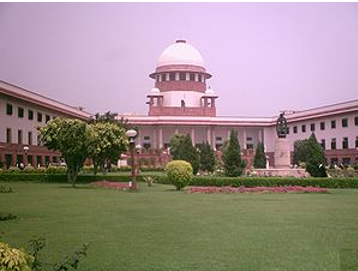
- These different levels of courts are connected to each other. The decisions made by higher courts are binding on the lower courts. Appellate system also integrates the court system in India. Appellate system means that a person can appeal to a higher court if they believe that the judgement passed by the lower court is not just.
Do Check: Ruling the Country Side Class 8 Notes
The appellate system can be understood by tracking a case, State (Delhi Administration) vs Laxman Kumar and Others (1985), from the lower courts to the Supreme Court.
In February 1980, Laxman Kumar married 20-year-old Sudha Goel and they lived in a flat in Delhi with Laxman's brothers and their families. On 2 December 1980 Sudha died in hospital due to burns. Her family filed a case in court. On the basis of evidence the Trial Court convicted Laxman, his mother Shankutala and his brother-in-law Subash Chandra and sentenced all three of them to death. The accused appealed in High court against the verdict of the trial court. The High Court acquitted them on the basis of argument of all the lawyers. Women groups aorcss the country spoke out against `dowry deaths'. They protested against the failure of courts to bring these cases to justice. The above High Court judgement deeply troubled women and they held demonstrations and filed a separate appeal against this High Court decision in the Supreme Court through the Indian Federation of Women Lawyers. The Supreme Court heard the arguments of the lawyers and reached a decision that was different from that of the High court. They found Laxman and his mother guilty but acquitted the brother-in-law Subhash because they did not have enough evidence against him. The Supreme Court decided to send the accused to prison for life.
Different Branches of the Legal System
There are two branches of legal system. The criminal and the civil. The above case of the dowry death falls within what is considered a `crime against society' and is a violation of criminal law. In addition to criminal law, the legal system also deals with civil law cases.
| S.No. | Criminal Law | Civil Law |
|
1 |
Deals with conduct or acts that the law defines as offences. For example, theft, harassing a woman to bring dowry, murder. | Deals with any harm or injury to rights of individuals for example, disputes relating to sale of land, purchase of goods, rent matters, divorce cases. |
| 2. | It usually begins with the lodging of an First Information Report (FIR) with the police who investigate the crime after which a case is filed in the court. | A petition has to be filed before the relevant court by the affected party only. In a rent matter, either the landlord or tenant can files a case. |
| 3. | If found guilty, the accuced can be sent to jail and also fined. | The court gives the specific relief asked for. For instance, in a case between a landlord and a tenant, the court can order the flat to be vacated and pending rent to be paid. |
Does Everyone have access to the courts
In principle, all citizens of India can access the courts in this country. This implies that every citizen has a right to justice through the courts. If any citizen believes that their rights are being violated, then they can approach the court for justice to be done. While the courts are available for all, in reality access to courts has always been difficult for a vast majority of the poor in India. It is because the legal procedures involves a lot of money and paperwork as well as take up a lot of time. For a poor person who cannot read and whose family depends on a daily wage, the idea of going to court to get justice often seems remote.
Do Check: When People Rebel Class 8 Notes
- The Supreme Court in the early 1980s devised a mechanism of Public Interest Litigation or PIL to increase access to justice. It allowed any individual or organisation to file a PIL in the Nigh Court or the supreme court on behalf of those whose rights were being violated. Even a letter or telegram addressed to the Supreme Court or the High Court could be treated as a PIL. The mid-day meal that children now receive in government and government aided schools is because of a PIL.
- For the common person, access to courts is access to justice. The courts exercise a crucial role in interpreting the Fundamental Rights of citizens.
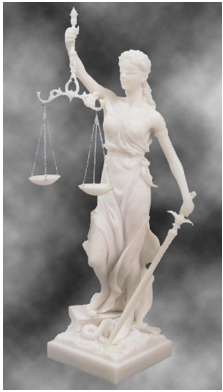
- There are also court judgements that people believe work against the best interests of the common person. For example, activists who work on issues concerning the right to shelter and housing for the poor believe that the recent judgements on evictions are a far cry from earlier judgements. They believe that the eviction will lead to deprivation of their livelihood and consequently to the deprivation of life.
- Another issue that affects the common person's access to justice is the inordinately long number of years that courts take to hear a case.
There is no denying that the judiciary has played a crucial role in democratic India, serving as a check on the powers of the executive and the legislature as well as in protecting the Fundamental Rights of citizens. The members of the Constituent Assembly had quite correctly envisioned a system of courts with an independent judiciary as a key feature of our democracy.
Exercise
Ques. The judiciary has the power to strike down particular laws passed by the Parliament if it believes that these are violation of the basic structure of the constitution. This is called -
(A) Dispute Resolution
(B) Judicial Review
(C) Amendment
(D) All of the above
Ques. if the citizen of India believe that their Fundamental Rights have been violated, they can move to
(A) Supreme Court
(B) High Court
(C) District Court
(D) both (A) & (B)
Ques. What are the steps taken by government to ensure the independence of the judiciary ?
(A) other branches of the state cannot interfere in the work of the judiciary
(B) all judges of the SC & HC are appointed with very little
(C) once appointed to this office, it is also very difficult to remove a judge.
(D) all of the above
Do Check: Resources, Types And Development Class 8 notes
Ques. The courts that most people interact with are -
(A) Supreme Court
(B) High Court
(C) Subordinate or district court
(D) Ail of the above
Ques. The decisions made by the__________are binding on all other courts in India.
(A) Supreme Court
(B) High Court
(C) Subordinate
(D) District Court
Ques. A person can appeal to a higher court if they believe that the judgement passed by the lower court is not just. This is termed as :
(A) Judiciary system (B) Pyramid system
(C) Appellate system (D) Original jurisdiction
Ques. Deals with conduct or acts that the law defines as offences above.
(A) Criminal law
(B) Civil law
(C) Both of the above
(D) None of the
Ques. The mechanism devised by Supreme Court in the early 1980's to increase access to justice -
(A) Appellate system
(B)Affidavit
(C) Judicial Review
(D) PIL
Ques. of the constitution on the right to life include the right to food.
(A) Article 17
(B) Article 19
(C) Article
(D) Article 23
Ques. The_________has played a crucial role in democratic India, serving as a check on the powers of the executive and the legislature as well as in protecting the fundament right of citizens.
(A) President (B) Central Government
(C) State government (D) Judiciary
Subjective Questions
- In what ways can the work of judiciary be divided ?
- When was the Supreme Court of India established ?
- Who presides over the Supreme Court?
- Which states share a common High Court?
- What is a PIL ?
- What is dispute resolution ?
- What is judicial review?
- With reference to independence of judiciary what does the separation of powers mean ?
- What are subordinate courts ?At which level do they work ?
- 8y which different names are the subordinate courts known ?
- Public Interest Litigation was used to secure justice on a large number of issues. Name two of them.
- There are certain judgements that people believe work against the best interests of the common person. Give one example of it.
- In India, we have an integrated judicial system. What does it mean ?
- Why was the Public Interest Litigation introduced by the Supreme Court ?
- Write the difference between criminal law and civil law.
- How do you think the Right to Constitutional Remedies connects to the idea of judicial review ?
- Why do you think an independent judiciary is necessary to carry out the important function of ‘upholding the law and Enforcing Fundamental Rights'?
Answer to Exercise
- (B)
- (D)
- (D)
- (C)
- (A)
- (C)
- (A)
- (D)
- (C)
- (D)