Chapter-4. Tribals, Dikus and The Vision of a Golden Age
This chapter highlights how tribal communities lived, worked, and resisted British control. “Tribals, Dikus and the Vision of a Golden Age” describes traditional forest practices, shifting cultivation, and how new laws restricted their lifestyle. Students learn about major tribal uprisings and leaders who fought against colonial exploitation.
NCERT Solutions for Class 8 make complex tribal movements easy to grasp, while Class 8 Notes simplify terms like “Dikus” and “Golden Age” for quick learning. For deeper understanding, Class 8 Home Tuition sessions provide real-life examples, interactive discussions, and map-based learning that make this topic come alive. By mastering this chapter, students gain a clear perspective on how economic and social policies affected indigenous groups, fostering empathy and historical awareness.
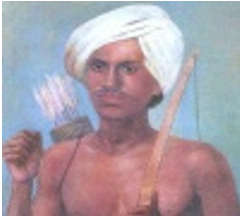
Birsa Munda
In 1895, a man named Birsa was seen roaming the forests and villages of Chota Nagpur in Jharkhand. People said he had incredible powers - he could cure all diseases and multiply grain. Birsa himself declared that God had appointed him to save his people from trouble, free them from the slavery of dikus (outsiders). Soon thousands began following Birsa, believing that he was bhagwan (God) and had come to solve all their problems.
Birsa was born in a family of Mundas. His followers included other tribals of the region - Santhals and Oraons. All of them were unhappy with the changes they were experiencing and the problems they were facing under British rule.
Characterstics of the Tribal Societies
- Most tribes had customs and rituals that were very different from those laid down by Brahmans.
- These societies also did not have the sharp social divisions that were characteristic of caste societies.
- All those who belonged to the same tribe thought of themselves as sharing common ties of kingship. However, this did not mean that there were no social and economic differences within tribes.
Do Check: How, When and Where Class 8 Notes
How did Tribal groups live?
Tribal people in different parts of India were involved in a variety of activities.
Some were Jhum Cultivators
- Jhum cultivation or shifting cultivation was done on small patches of land, mostly in forests. The cultivators cut the treetops and burnt the vegetation on the land to clear It for cultivation. They spread the ash from the firing, which contained potash, to fertilize the soil. They scattered the seeds on the field instead of ploughing the land and sawing the seeds. Once the crop was ready and harvested, they moved to another field. A field that had been cultivated once was left fall for several years.
- Shifting cultivators were found in the hilly and forested tracts of north-east and central India. The lives of these tribal people depended on free movement within forest and on being able to use the land and forests for growing their crops.
Some were hunters and Gathers
- Many tribal groups lived by hunting animals and gathering forest produce. The Khonds, a community living in the forests of Orissa regularly went out on collective hunts, ate fruits and roots collected from the forest and cooked food with the oil they extracted from the seeds of the sal and mahua. They used many forest shrubs and herbs for medicinal purposes. And sold forest produce in the local markets.
- At times the tribal groups exchanged goods. At other times they bought goods with the small amount of earnings they had. Some of them did odd jobs in the villages, carrying loads or building roads, while others laboured in the fields of peasants and farmers. But many of them like the Baigas of central India - were hesitant to do work for others. It was below the dignity of a Baiga to become a labourer.
- Tribal groups often needed to buy and sell in order to be able to get the goods that were not produced within the locality. This led to their dependence on traders and moneylenders. Moneylenders charged the interest on the loans, which was usually very high. So for the tribals, market and commerce often meant debt and poverty. They saw the moneylender and trader as evil outsiders and the cause of their misery.
Some Hereded Animals
Many tribal groups lived by herding and rearing animals. They were pastoralists who moved with their herds of cattle or sheep according to the seasons. The Van Gujjars of the Punjab hills and the Labadis of Andhra Pradesh were cattle herders, the Gaddis of Kulu were shepherds, and the Bakarwals of Kashmir reared goats.
Some took to settled cultivation
- Even before the nineteenth century, many from within the tribal groups had begun settling down, and cultivating their fields in one place year after year, instead of moving from place to place. In many oases, like the Mundas of Chota Nagpur, the land belonged to the clean as a whole. All members of the clan had rights on the land. Very often some people within the clan acquired more power than others, some became chiefs and others followers. Powerful men often rented out their land instead of cultivating it themselves.
- British officials saw settled tribal groups like the Gonds and Santhals as more civilised then hunter gatherers or shifting cultivators.
How did Colonial rule affect Tribal lives
The lives of tribal groups changed during British rule.
What happened to Tribal Chiefs
- Before the arrival of the British, tribal chiefs enjoyed a certain amount of economic power and had the right to administer and control their territories. They had their own police and decided on the local rules of land and forest management.
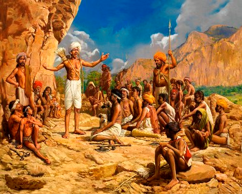
- Under British rule, the functions and powers of the tribal chiefs changed considerably. They lost much of their administrative power and were forced to follow laws made by British officials in India, They had to pay tribute to the British, and discipline the tribal groups on behalf of the British. They lost the authority they had earlier enjoyed amongst their people, and were unable to fulfill their traditional functions.
Do Check: Ruling the Country Side Class 8 Notes
What happened to the shifting cultivators
- For British, settled peasants were easier to control and administer then people who were always on the move. To ensure a regular revenue source, the British introduced land settlements. Some peasants were declared landowners, others tenants. The tenants were to pay rent to the landowner who in turn paid revenue to the state.
- The British effort to settle jhum cultivators was not very successful. In fact, Pum cultivators who took to plough cultivation often suffered, since their fields did not produce good yields. Facing widespread protests, the British had to ultimately allow them the right to carry on shifting cultivation in some parts of the forest.
Forest Laws and their Impact
- The life of tribal groups, was directly connected to the forest. So changes in forest laws had a considerable effect on tribal lives. The British declared that forests were state property. Reserved forest produced timber which the British wanted. In these forests people were not allowed to move freely, practise jhum cultivation. Collect fruits or hunt animals.
- Once the British stopped the tribal people from living inside forests, they faced the shortage of labour to cut trees for railway sleepers and to transport logs.
- Colonial officials came up with a solution. They decided that they would give jhum cultivators small patches of land in the forests and allow them to cultivate these on the condition that those who lived in the villages would have to provide labour to the forest department and look after the forests.
- Many tribal groups reacted against the colonial forest laws. They disobeyed the new rules, continued with practices that were declared illegal and at times rose in open rebellion. Such was the revolt of Songram Sangma in 1906 in Assam, and the forest satyagraha of the 1930s in the Central Provinces.
The problem with Trade
During the nineteenth century. Tribal groups found that traders and money-lenders were exploiting the tribals and making a good fortune for themselves. For e.g., the silk agents in Hazaribagh gave loans to the Santhai tribals who reared cocoons and collected the cocoons from them. The growers were paid very low amount i.e. Rs. 3 to Rs. 4 for a thousand cocoons. These were then exported to Burdwan or Gaya and were sold at five times the price. The middlemen thus made huge profits. The silk growers earned very little. Understandably, many tribal groups saw the market and the traders as their main enemies.
The Search for Work
The plight of the tribals who had to go far away from their homes in search of work was even worse. Tribals were recruited in large numbers to work in the tea plantations of Assam and the coal mines of Jharkhand. They were recruited through contractors who paid them miserably low wages, and prevented them from returning home.
A Closer Look
Through the nineteenth and twentieth centuries, tribal groups in different parts of the country rebelled against the changes in laws, the restrictions on their practices, the new taxes they had to pay, and the exploitation by traders and moneylenders. The Kols rebelled in 1831-32. Santhals rose in revolt in 1855. The Bastar Rebellion in Central India broke out in 1910. The Warli Revolt in Maharashtra in 1940.
Birsa Munda
- Birsa was born in the mid-1870s. As an adolescent. Birsa heard tales of the Munda uprisings of the past and saw the sirdars (leaders) of the community urging the people to revolt. They talked of a golden age when the Mundas had been free of the oppression of dikus and ancestral right of community would be restored. They reminded people of the need to win back their kingdom.
- From the sermons of missionaries, Birsa heard that it was possible for the Mundas to attain the Kingdom of Heaven, and regain their lost rights. Birsa also spent some time in the company of a prominent Vaishnav preacher. He wore the sacred thread, and began to value the importance of purity and piety.
- Birsa was deeply influenced by many of the ideas he came in touch with in his growing-up years. He aimed at reforming tribal society. He urged the Mundas to give up drinking liquor, clean their village, and stop believing in witchcraft and sorcery. Birsa also turned against missionaries and Hindu landlords. He saw them as outside forces that were ruining the Munda way of life.
- In 1895 Birsa urged his followers to recover their glorious past. Birsa also wanted people to once again work on their land, settle down and cultivate their fields.
- British got worried of the political aim of the Birsa movement which wanted to drive out missionaries, moneylender Hindu landlords, and the government and set up a Munda Raj with Birsa at its head. The movement identified all these forces as the cause of the misery the Mundas were suffering. British officials arrested Birsa in 1895, convicted him on charges of rioting and jailed him for two years.
- When Birsa was released in 1897 he began touring the villages to gather support. He used traditional symbols and language to rouse people against the dikus and the Europeans. Birsa's followers began targeting the symbols of diku and European power. They attacked police stations and churches, and raided the property of moneylenders and zamindars. They raised the white flag as a symbol of Birsa Raj.
- In 1900 Birsa died of cholera and the movement faded out.
- The movement was significant in at least two ways.
First - it forced the colonial government to introduce laws so that the land of the tribals could not be easily taken over by dikus.
Second - it showed once again that the tribal people had the capacity to protest against injustice and express their anger against colonial rule.
Do Check: When People Rebel Class 8 Notes
Exercise
Ques. For whom the term `diku' was used ?
(A) Chowkidar
(B) Thikanedar
(C) Outsiders
(D) None
Ques. The Santhal tribals belong to -
(A) Uttar Pradesh
(B) Madhya Pradesh
(C) Jharkhand
(D) Maharashtra
Ques. Type of cultivation in which farmer left the land after two or three years of cultivation -
(A) shifting agriculture
(B) primitive agriculture
(C) commercial agriculture
(D) none of the above
Ques. During which period the live of tribal groups mostly changed ?
(A) Mughals
(B) Sultanat
(C) After independence
(D) British period
Ques. Who were the followers of Birsa other than Munda tribe ?
(A) Khasi and Toda
(B) Santhal and Oraons
(C) Baiga and Khond
(D) Santhal and Khond
Ques. Who were Khonds ?
(A) Hunters
(B) Settled
(C) Food gatherers
(D) Jhum cultivaters
Ques. Which tribe reared cocoons ?
(A) Kol
(B) Baiga
(C) Khond
(D) Santhals
Ques. Warli revolt took place in -
(A) Rajasthan
(B) Gujarat
(C) Maharashtra
(D) Tamilnadu
Do Check: Resources, Types And Development Class 8 notes
Ques. Santhal revolt took place in -
(A) 1850
(B) 1855
(C) 1852
(D) 1890
Ques. In 1910 which tribe revolted in Central India ?
(A) Bastar
(B) Gond
(C) Khond
(D) Munda
Ques. Which tribe was reluctant to work for others ?
(A) Khond
(B) Munda
(C) Baiga
(D) Kol
Ques. Van Gujjars and Labadis were.
(A) Cattle herders
(B) settled cultivaters
(C) hunters
(D) Food gatherers
Subjective Questions
- Why people believed that Birsa was bhagwan (God) ?
- Why tribals didn't like outsiders ?
- Why Birsa against missionaries and Hindu landlords ?
- In which areas shifting cultivators were found ?
- Why the Khonds collected the seeds of the sal and mahua ?
- Why the Baigas were reluctant to do work for others ?
- Name a few tribal groups who lived by herding and rearing animals ?
- Why the British were uncomfortable with groups who did not have a fixed home ?
- Why the Santhals and Oraons didn't like the British rule ?
- Write few characteristics of the tribal societies ?
- Write the features of a tribal group which lived by hunting animals and gathering forest produce.
- What made tribal groups dependent on traders and moneylenders ?
- What was the dream of Birsa Munda ?
- How the tribals were forced to leave shifting cultivation ?
- What made tribals to work in the tea plantation and the coal mines ?
- How Forest law affected the life of tribals ?
- What was the impact of colonial rule on tribal life ?
- Write in brief the living patterns of tribes .
- Why tribals revolted against British ?
- What was the significance of the movement started by Birsa Munda ?
Answer to Execise
- (C)
- (C)
- (A)
- (D)
- (B)
- (A)
- (D)
- (C)
- (B)
- (A)
- (C)
- (A)