Chapter-7. Resources: Types and Development
The chapter introduces the concept of resources — natural, human, and man-made — and how they are utilized for development. “Resources: Types and Development” teaches how resource management ensures sustainability.
NCERT Solutions for Class 8 help clarify distinctions between renewable and non-renewable resources, while Class 8 Notes summarize key points on resource planning and conservation. Class 8 Home Tuition further supports students with examples of local and global resource management, helping them connect theory with practice. This chapter builds environmental awareness and encourages responsible use of natural assets, making it a foundation for advanced geography learning.
What are the Resources?
- Any thing that can be used to satisfy human need is a resource.
- Utility or usability is what makes an object or substance a resource.
- Any physical material becomes a resource when humans find them useful and attach some value to it, such as rocks, minerals, soils, rivers, plants and animals.
- By developing human skills only, other resources can be developed.
- The things become resources only when they have a value.
- Time and technology are two important factors that can change substances into resources. For example discovery of fire led to the practice of cooking.
Worth of Resources
Human needs and desires grow and become complex with the progress of a society. Gift of nature acquire value with reference to the needs of people living in a region and the technology. Natural endowments were already present on earth when humans appeared on the scene. But, these were not of much value till humans discovered their use and found appropriate technology to make them usable.
Value can be -
- Economic -When resources are used for production.
- Legal -When clean Air Act is attached to the quality of air.
- Aesthetic -When we think of natural beauty of forests, mountains, lakes and rivers.
- Ethical -When we preserve our National Parks for future generations.
Types of Resources
- Natural Resource
- Human Resource
- Human made Resource
Natural Resources
Any matter or energy derived from the environment that is used by human beings such as air, water, soil, mineral, fossil fuels, plants and wildlife is called a natural resource.
- On the basis of the source of origin, Natural resources may be categorised as a abiotic or biotic. Abiotic resources are non-living while biotic resources are living. Soils, rocks and minerals are abiotic but plants and animals are biotic resources.
- On the basis of stage of development of a resource, Natural resources may be categorised as
Potential Resources - Those resources which are found in a region, but have not been put to a proper use are called potential resources. e.g. Africa has a potential of water resources but all have not yet been determined fully.
Actual Resources - The resources which have been surveyed, quantities have been determined properly, technology is available and cost involved is feasible are called actual resources.
For example, coal in Ruhr region of Germany, soils of Deccan plateau in Maharashtra.
Reserve Resources - These resources can be put into use with the help of existing technical 'know-how' but their use has not been started. These can be used for meeting future requirements.
- On the basis of renewability, Natural resources can be classified as -
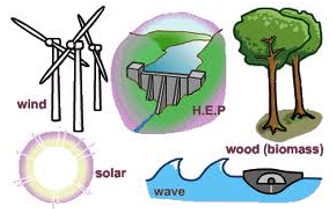
- Renewable resources - Resources which get renewed or replenished fast, are called renewable resources e.g.. Solar and wind energy. Renewable resources, such as wind, solar or geothermal power, will always be available.
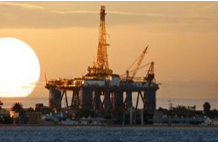
- Non-renewable resources - Resources which are built over a very long geological time are called non-renewable resources. The rate of their formation is extremely slow, they cannot be replenished within a time frame meaningful to people e.g.. Mineral and fossil fuels. Non-renewable resources such as oil, coal and natural gas will eventually run out.
Non-renewable resources can be further classified as :
- Recyclable non-renewable resources - Metallic ores are recyclable in nature. It means that the metal content drawn from the ore many be used again and again after necessary processing. e.g. Minerals like gold, silver and iron.
Plants, vegetables, fruits and timber are organic materials that can be recycled through composting. Recycling organic material through composting breaks down dead resources, which makes for a nutritious soil to help young plants grow.
- Non recyclable non-renewable resources - Some resources get exhausted forever once consumed hence they are non-recyclable e.g.. Fossil fuels (coal, mineral oil and natural gas).
Non-renewable resources cannot be replaced. Oil, coal, gas and minerals are resources that will never be replaced once they are used. Non-renewable resources can be made into plastic beverage bottles, aluminum cans and metal cans. These resources can then be recycled and made into new products.
- On the basis of distribution : On this basis resources can be ubiquitous or localised. Resources that are found everywhere like the air we breathe, are ubiquitous. But those which are found only in certain places are localised, like copper and iron ore.
Human Resources
It is the ability of humans that help in transforming the physical materials into valuable resources, so the number and abilities (mental and physical) of the people is called as Human Resources.

Health and education make people competent for developing resources. improving the quality of people's skill so that they are able to create more resources is known as human resource development.
Human Made Resources
Those aids of production which have been created by people to utilise the physical materials of the environment are called Human made resources e.g. machines, tools etc.
Human made resources have gained importance because they help in enhancing the productivity. This is done by:
- Growth in physical capital -The equipments and buildings used to produce other things, contributes a great deal to productivity.
- Technology -The method of doing or making things is an important contributor to productivity growth.
- Political institutions - Enforcement of the rule of law and of property rights reduces uncertainty. The laws of a nation concerning openness to international trade and investment also influence productivity.
Use of Resources
With economic development, the demand for resources increases faster. Developed countries use more resources than developing countries. They have a higher standard of living and can influence demand for resources. They possess latest technology and can exploit their resources fully. Their productivity per hour is higher than that of developing nations. The rising demand for various resources has caused degradation or depletion of many valuable resources.
- Overuse of soil has caused infertility in many areas.
- Widespread deforestation and killing of animals and birds have endangered many animal and plant species.
- The quality of air, water and land resources have also been affected badly due to misuse and overuse.
How do we conserve resources
- Using resources carefully and giving them time to get renewed is called resource conservation.
- Balancing the need to use resources and also conserve them for the future is called sustainable development.
- There are many ways of conserving resources. Each person can contribute by reducing consumption, recycling and reusing thing. Ultimately it makes a difference because all our lives are linked.
Sustainable Development of Resources
It means that resources are utilised carefully so that besides meeting the present requirements it also takes care of the future generation and should take place without damaging the environment.
The future of earth and its people depend on our ability to maintain, preserve and sustain the life support system which nature has provided us.
Some principles of sustainable development:
- Respect and care for all forms of life.
- Minimize the depletion of natural resources.
- Conserve the earth's vitality and diversity
- Change personal attitude and practices towards the environment
- Improve the quality of human life
Indian Side of Sustanaible Development
Sustainable development in India encompasses a variety of development schemes in social, cleantech (clean energy, clean water and sustainable agriculture) and human resources segments, having caught the attention of both Central and State governments and also public and private sectors.
In fact, India is expected to begin the greening of its national income accounting, making depletion in natural resources wealth a key component in its measurement of gross domestic product (GDP).
India's sustained efforts towards reducing greenhouse gases (GHG) will ensure that the country's per capita emission of GHG will continue to be low until 2030-31, and it is estimated that the per capita emission in 2031 will be lower than per capita global emission of GHG in 2005, according to a new study. Even in 2031, India's per capita GHG emissions would stay under four tonnes of CO2, which is lower than the global per capita emission of 4.22 tonnes of CO2 in 2005.
Exercise
Ques. Resources being used for production have:
(A) legal value
(B) economic value
(C) aesthetic value
(D) ethical value
Ques. Which one of the following does NOT make substance a resource ?
(A) quantity
(B) utility
(C) value
(D) all the three
Ques. Which is a non renewable resource ?
(A) Solar energy
(B) Water energy
(C) Coal
(D) Wind energy
Ques. Which of the following is not a non recyclable resource ?
(A) coal
(B) mineral
(C) natural gas
(D) metallic ore
Ques. Those resources which are found in a region, but have not been put to a proper use are called:
(A) actual resources
(B) biotic resources
(C) potential resources
(D) resources
Ques. Human made resources have gained importance because of:
(A) Growth in physical capital
(B) Technology
(C) Political institutions
(D) All the above
Ques. Which of the renewable resource takes a comparatively longer time to renew itself ?
(A) Wind
(B) Solar energy
(C) Water
(D) Forests
Ques. Which is not a human made resource ?
(A) buildings
(B) tools
(C) machines
(D) mineral
Ques. Development of Actual resources depends upon :
(A) resource surveyed
(B) technology
(C) cost involved
(D) All the above
Ques. Highly processed products are consumed by
(A) Developed societies
(B) Developing societies
(C) Underdeveloped societies
(D) Both (A) and (C)
Subjective Questions
- What are the gifts of nature ?
- Name any five Renewable resources ?
- What are the four values associated with resource ?
- Name three categories of resources ?
- Which is the most important natural resource available to man ?
- Give two examples of human made resources ?
- Mention the resources which get used up with the passage of time ?
- What do you mean by a reserve ?
- What causes the degradation or depletion of many valuable resources ?
- Why are resources distributed unequally over the earth ?
- Describe with examples `natural resources'?
- Explain with examples the resources having 'aesthetic value and' ethical value' ?
- How does technology help in the development of resources ?
- How are resources classified on the basis of stages of development ?
- Classify resources on the basis of their continued availability ?
- What are the factors which determine the utility of resources ?
- Why is land an important resource for the human being ?
- Why is human resource considered very crucial ?
- What is meant by human made resources ?
- 'Developed countries' use more resources than developing countries. Comment.
- On what different basis have the resources been classified ? Explain the categories briefly.
- What do you understand by sustainable development ? Why is it necessary for people on our earth ?
- Now can sustainable development be achieved ?
- What are the causes of depletion of many valuable resources ?
Answer to Exercise
- (B)
- (A)
- (C)
- (D)
- (C)
- (D)
- (D)
- (D)
- (D)
- (A)