Chapter-22. Law and Social Justice
The final chapter, “Law and Social Justice,” focuses on how laws ensure fairness and protect citizens from exploitation. Students learn about labor laws, environmental regulations, and consumer rights. NCERT Solutions for Class 8 provide complete answers to textbook exercises, ensuring clarity of legal terms. Class 8 Notes summarize essential concepts like minimum wages, child labor, and industrial safety. With Class 8 Home Tuition, tutors explain the connection between laws, human rights, and equality. This chapter encourages students to become socially aware individuals who understand how laws promote justice and protect society’s most vulnerable sections.
Private companies, contractors, business persons normally want to make as much profit as they can. In the drive for profits, they might deny workers their rights and not pay them wages, for example. In the eyes of the law it is illegal or wrong to deny workers their wages. Similarly to ensure thatworkers are not underpaid, or are paid fairly, there is a law on minimum wages. Aworker has to be paid not less then the minimum wage by the employer. The minimum wages are revised upwards every few years.
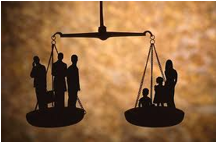
As with the law on minimum wages, which is meant to protect workers, there are also laws that protect the interests of producers and consumers in the market. These help ensure that the relations between these three parties-the worker, consumer and producer are governed in a manner that is not exploitative. But merely making laws is not enough. The government has to ensure that these laws are implemented. This means that the law must be enforced. Enforcement becomes even more important when the law seeks to protect the weak from the strong.
When workers are poor or powerless, the fear of losing future earnings or facing reprisals often forces them to accept low wages. Employers know this well and use their power to pay workers less than the fair wage. In such cases; it is crucial that laws are enforced.
Through making, enforcing and upholding these laws, the government can control the activities of individuals or private companies so as to ensure social justice. Many of these laws have their basis in the Fundamental Rights guaranteed by the Indian Constitution.
Do Check: How, When and Where Class 8 Notes
What is a Worker's Worth?
One reason why foreign companies come to India is for cheap labour. Wages that the companies pay to workers, say in the U.S.A., are far higher than what they have to pay to workers in poorer countries like India. For lower pay, companies can get longer hours of work. Additional expenses such as for housing facilities for workers are also fewer. Thus, companies can save costs and earn higher profits.
Cost cutting can also be done by other more dangerous means. Lower working conditions including lower safety measures are used as ways of cutting costs.
In developing countries, there is sharp differences in safety standards in comparison to developed countries. Even after the disaster happens, the compensation to the victims is very low. This happens because one worker can be easily replaced by another. Since there is so much unemployment, there are many workers who are willing to work in unsafe conditions in return for a wage. Making use of the workers' vulnerability, employers ignore safety in workplaces. Thus, even so many years after the Bhopal gas tragedy.
Enforcement of Safety Laws
As the lawmaker and enforcer, the government is supposed to ensure that safety laws are implemented. It is also the duty of the government to ensure that the Right to Life guaranteed under Article 21 of the Constitution is not violated.
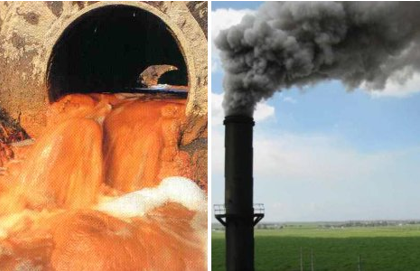
First, the safety laws were lax in India. Second, even these weak safety laws were not enforced.
In the case of Bhopal Gas tragedy government officials refused to recognise the plant as hazardous and allowed it to come up in a populated locality. When some municipal officials in Bhopal objected that the installation of an MIC production unit in 1978 was a safety violation, the position of the government was that the state needs the continued investment of the Bhopal plant, which provides jobs. It was unthinkable, according to them, to ask Union Carbide (UC) to shift to cleaner technology or safer procedures. Government inspectors continued to approve the procedures in the plant, even when repeated incidents of leaks from the plant made it obvious to everybody that things were seriously wrong.
Instead of protecting the interests of the people, their safely was being disregarded both by the government and by private companies.
With more industries being set up both by local and foreign businesses in India, there is a great need for stronger laws protecting workers' rights and better enforcement of these laws.
Do Check: Ruling the Country Side Class 8 Notes
New Laws to Protect the Environment
The Bhopal disaster brought the issue of environment to the forefront. Several thousands of persons who were not associated with the factory in any way were greatly affected because of the poisonous gases leaked from the plant. This made people realize that the existing laws, though weak, only covered the individual worker and not persons who might be injured due to industrial accidents.
The Indian government introduced new laws on the environment. Henceforth, the polluter was to be held accountable for the damage done to environment. The environment is something that people over generations will share, and it could not be destroyed merely for industrial development.
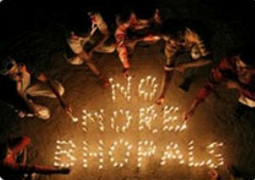
The courts also gave a number of judgment upholding the right to a healthy environment as intrinsic to the Fundamental Right to Life. In Subhash Kumar vs. State of Bihar (1991), the Supreme Court held that the Right to Life is a Fundamental Right under Article 21 of the Constitution and it includes the right to the enjoyment of pollution-free water and air for full enjoyment of life. The government is responsible for setting up laws and procedures that can check pollution, clean rivers and introduce heavy fines for those who pollute.
Conclusion
Laws are necessary in many situations, whether this be the market, office or factory so as to protect people from unfair practices. Private companies, contractors, business persons, in order to make higher profits, resort to unfair practices such as paying workers low wages, employing children for work, ignoring the conditions of work, ignoring the damage to the environment and hence to the people in the neighbourhood etc.
A major role of the government, therefore, is to control the activities of private companies by making, enforcing and upholding laws so as to prevent unfair practices and ensure socialjustice. This means that the government has to make appropriate laws and also has to enforce the laws.
While the government has a leading role in this respect, people can exert pressure so that both private companies and the government act in the interests of society. Environment, as we saw, is one example where people have pushed a public cause and the courts have upheld the right to healthy environment as intrinsic to the Right to Life. People now must demand that this facility of healthy environment be extended to all. Likewise, workers' rights is an area where the situation is still very unfair. People must demand stronger laws protecting workers' interests so that the Right to Life is achieved for all.
Do Check: When People Rebel Class 8 Notes
Exercise
Ques. What forces the workers to accept low wages ?
(A) workers are poor or powerless
(B) fear of losing future earnings or facing reprisals
(C) both of the above
(D) none of the above
Ques. Which right says that no one can be forced to work for low wages or under bondage ?
(A) Right to freedom
(B) Right to equality
(C) Right against exploitation
(D) Right to constitutional Remedies
Ques. Why foreign companies come to India rather then investing in their own countries ?
(A) Payment of workers are higher in the developed countries in comparison to poorer countries like India.
(B) Additional expenses are fewer in India
(C) Companies can get longer hours of work
(D) Companies can save costs and earn higher profits
Ques. What needs to be improved, as more industries are being set up both by local and foreign businesses in India ?
(A) Stronger laws protecting workers rights
(B) Better enforcement of these laws
(C) Both of the above
(D) None of the above
Ques. The Bhopal disaster brought the issue of __________to the forefront.
(A) Lack of safety amongst industries
(B) Health facilities
(C) Profit motives of the industries
(D) Environment
Ques. Who is responsible for setting up laws and procedures that can -heck pollution, cleaning rivers and introducing heavy fines for those who pollute ?
(A) industries
(B) Public
(C) Individuals
(D) Government
Do Check: Resources, Types And Development Class 8 notes
Ques. While the government has a leading role in making laws and implementing then,_________can exert pressure, so that both private companies and the government act in the interests of society.
(A) People
(B) Politicians
(C) Economists
(D) Industries
Subjective Questions
- Why are laws made to protect the interests of producers and consumers in the market ?
- Mention the health problems faced by the survivors of Bhopal Gas Tragedy.
- Why did Bhopal Gas tragedy occur ?
- Why does a recent report by Centre for Science and Environment has shown the presence of high levels of toxic substances in the air ?
- How does the government ensure social justice ?
- Was Bhopal Gas Tragedy as accident ? If not why ?
- What is the difference between safety systems in industries in India and USA ?
- Explain with an example that how the safety of workers in industries is disregarded both by the government and by private companies.
- Bhopal disaster brought the issue of enviornment to the forefront. Explain how ?
- What are the advantages to foreign companies in setting up production in India ?
- Do you think the victims of the Bhopal gas tragedy got justice ? Discuss.
- What do we mean when we speak of law enforcement ? Who is responsible for enforcement ? Why is enforcement so important ?
- How can laws ensure that markets work in a manner that is fair ? Give two examples to support your answer.
Answers to Exercise
- (C)
- (C)
- (D)
- (C)
- (D)
- (D)
- (A)